
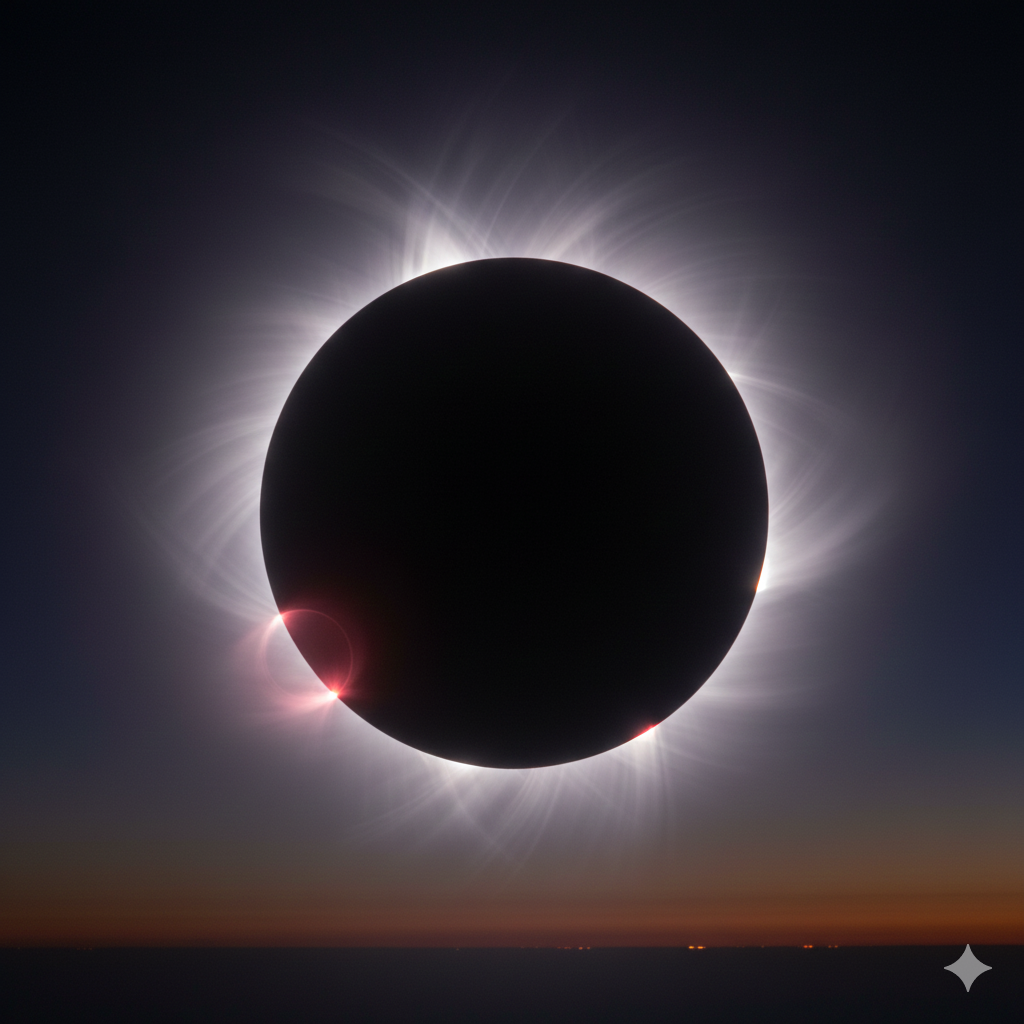
Ever wondered what it feels like when day turns into night in a matter of seconds? A total solar eclipse is not just an astronomical event — its the kind of experience that gives you goosebumps, turning the sky into something completely different for a few unforgettable minutes.
The science, no fluff
A total solar eclipse happens when the Moon lines up exactly between the Earth and the Sun. Heres the curious part: the Sun is about 400 times bigger than the Moon, but its also 400 times farther away. That cosmic coincidence means both discs appear almost the same size from Earth — just enough for the Moon to completely cover the Sun and reveal the solar corona, the outer atmosphere thats normally invisible because the Suns glare drowns it out.
What it actually feels like
People who have experienced totality up close tend to describe the same handful of things, and none of it comes across in photos:
- The temperature drops: the air cools suddenly, sometimes by up to 10°C (18°F), according to eyewitness accounts.
- Birds go quiet: nature gets genuinely confused. Many birds stop singing and head back to their nests, convinced night has fallen.
- Shadow bands appear: just before totality, faint wavy lines of light and dark can ripple across the ground, like light at the bottom of a swimming pool.
How to watch without frying your retinas
Never look directly at the Sun without certified ISO 12312-2 eclipse glasses. Regular sunglasses — no matter how dark — wont protect your eyes from permanent damage.
That said, if you ever get the chance to stand in the shadow of totality, take it. It lasts only a few minutes, but its the kind you remember for the rest of your life.