
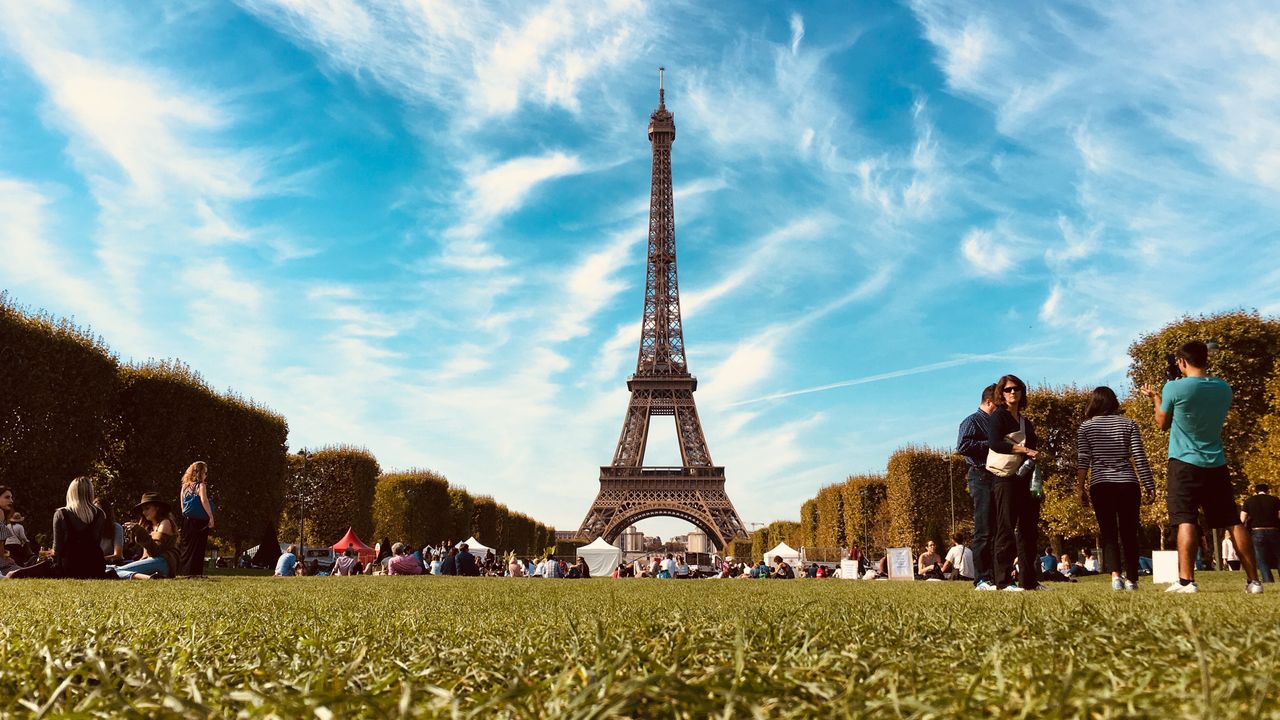
In 1925, a con man pulled off the impossible: he sold the Eiffel Tower to a Parisian businessman who believed every word. Picture this: a government official invites you to a swanky Paris hotel. He tells you, dead serious, that the Eiffel Tower is about to be torn down and sold for scrap. And that if you slip him the right amount of cash under the table, the world’s most famous landmark could be yours. Sounds like a scam a toddler could spot, right? Well, in 1925 several Parisian businessmen bought it hook, line and sinker. One of them actually paid up. And when the con man realized nobody had reported him, he pulled the exact same trick on a different buyer just weeks later.
The mastermind behind history’s greatest real-estate swindle was Victor Lustig, an Austro-Hungarian con artist with an uncanny gift for charm and disguise. According to Smithsonian Magazine, Lustig stumbled on a small newspaper article noting that the Eiffel Tower — originally built only as a temporary centerpiece for the 1889 World’s Fair — was becoming too expensive to maintain. Some officials were even floating the idea of demolishing it. What’s today a forgotten footnote in old newspaper archives became the seed of a perfect con.
A secret meeting in a luxury hotel
Lustig had forged official stationery from the French Ministry of Posts and Telegraphs. Posing as the ministry’s deputy director-general, he invited five of Paris’s top scrap metal dealers to a confidential meeting at an upscale hotel. There, with all the gravitas of a career bureaucrat, he explained that the government had secretly decided to get rid of the tower and was quietly seeking bids before the news leaked to the press and sparked public outrage.
The genius — and genuinely twisted — detail is that Lustig didn’t just lie about the sale itself. He also hinted, very delicately, that as a government man he could “help” make sure a particular bidder won, in exchange for a bribe. That small suggestion of corruption is what made the whole thing believable: after all, what fake scheme would bother including a bribe request as a side dish?
André Poisson, the perfect mark
Out of the five dealers in the room, Lustig zeroed in on André Poisson, a businessman eager to break into the industry’s inner circle. By most accounts, he was a little insecure about his standing. Lustig worked him privately, assuring him he’d be the chosen buyer if he paid generously and kept quiet about it. Convinced he’d stumbled onto the deal of a lifetime, Poisson agreed and handed over roughly 70,000 francs — a sum worth several hundred thousand dollars today.
Lustig pocketed the cash from having sold the Eiffel Tower, hopped on a train to Austria, and vanished. When Poisson realized he’d been conned, he was so mortified at having fallen for it that he never even reported the crime. He’d rather swallow the humiliation than publicly admit he’d paid for an iron tower that was never for sale.
Doing it again: how he sold the Eiffel Tower twice
Here’s the part that turns this into legend: once Lustig confirmed the scandal never made the papers, he figured the formula was too good to use just once. He rounded up another group of scrap dealers and ran the exact same play, new buyer and all. This time, though, the victim did go to the police, and Lustig had to flee again — this time across the Atlantic to the United States.
There, he kept right on conning people — at one point he even managed to swindle Al Capone himself out of money with an investment scheme — until U.S. authorities finally caught up with him in 1935. He was sentenced to twenty years and spent his final days in the legendary Alcatraz prison. It’s the very island that tourists now pay admission to visit — ironically, to see something they can’t actually buy either.
The strangest part of all? A century later, the Eiffel Tower is still standing exactly where it’s always stood. In the end, the man who really sold the Eiffel Tower — twice — needed nothing more than a smile, a forged letterhead, and a handful of overly trusting businessmen.
1 thought on “The Con Man Who Sold the Eiffel Tower… Twice”