
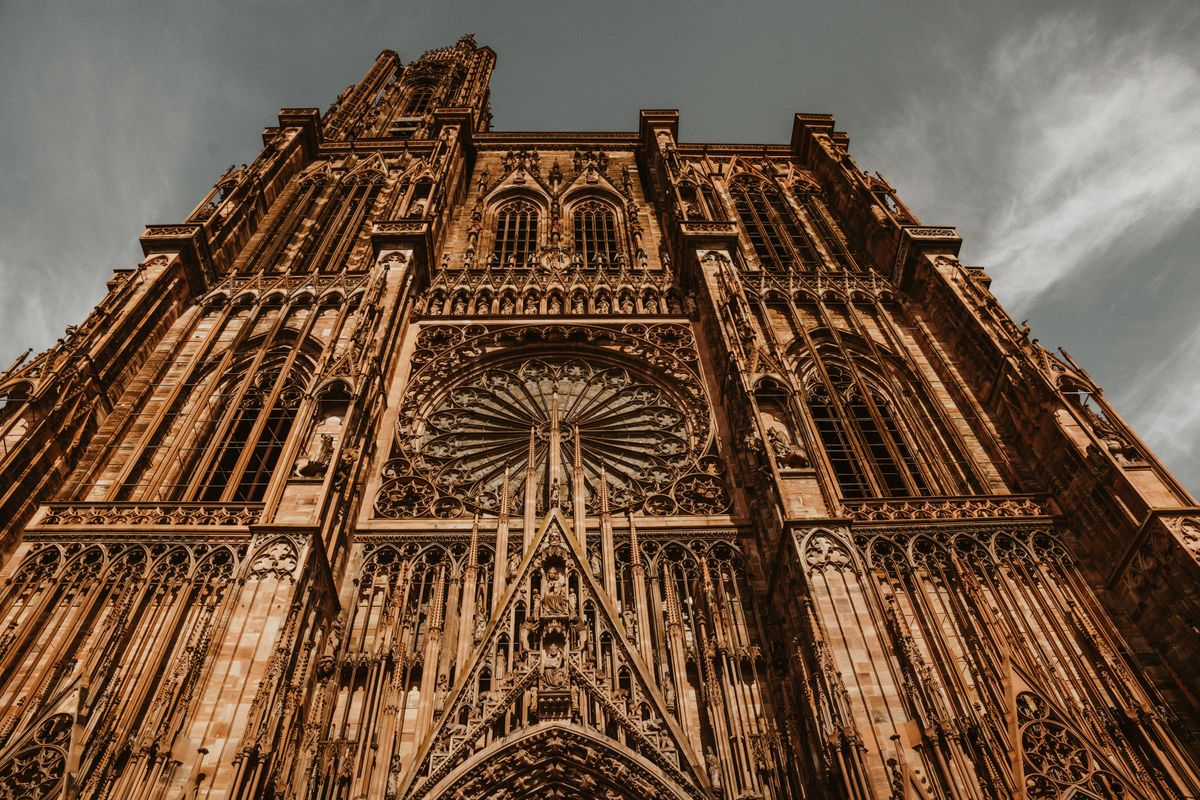
On July 14, 1518, in Strasbourg, a woman named Frau Troffea stepped into the street and started dancing. No music was playing. There was no festival going on. And yet she couldn’t stop: she danced for hours, then for an entire day. When she finally collapsed from exhaustion, she got back up the next morning and kept going. Within a week, more than 30 people had joined her. Within a month, the number had climbed to roughly 400. That’s how one of the strangest episodes in European history kicked off: the dancing plague of 1518.
A whole city dancing for no reason
The unsettling part of the dancing plague wasn’t that people were dancing. It’s that they couldn’t stop. According to accounts from the time, many of the afflicted danced for days, even weeks, barely pausing to eat, drink, or sleep. As a result, their feet swelled and bled. Dozens died along the way, worn out or felled by heart attacks and strokes brought on by sheer physical strain. This wasn’t some exaggerated chronicle or a figure of speech: people were literally dancing themselves to death.
Meanwhile, what’s genuinely bizarre is how Strasbourg’s authorities responded. Instead of banning the dancing, they decided the cure was… more dancing. They cleared out two guildhalls and the open-air grain market. They also built a wooden stage across from the horse fair. Just in case that wasn’t enough, they hired musicians and professional dancers to keep the afflicted moving. The thinking at the time was that the dancing would eventually burn itself out on its own. However, it didn’t: far from fading, the outbreak kept growing.
Ergot poisoning, moldy rye, or plain old mass stress?
For a long time, the main suspect was ergotism: a type of poisoning caused by a fungus, ergot (Claviceps purpurea), that grows on damp rye and can trigger spasms and hallucinations. It’s an appealing theory. After all, the Rhine valley, where several similar outbreaks of “dancing mania” occurred over the centuries, was rye-growing country. Still, historian John Waller, author of the book A Time to Dance, a Time to Die, has poked serious holes in it. For one, ergot also restricts blood flow to the extremities, which would make dancing nonstop for days nearly impossible. Moreover, it seems wildly unlikely that hundreds of people poisoned by the same fungus would all develop the exact same, oddly specific symptom.
The explanation most historians lean toward today is far more human — and, frankly, more unsettling: stress-induced mass hysteria. 1518 was a rough year in Alsace. Famine and diseases like smallpox and syphilis were circulating. On top of that, there was a widespread belief in curses sent by angry saints, specifically St. Vitus, who got (unfairly) linked to this kind of episode. In a climate of shared fear and superstition, a particularly susceptible person’s body could “release” that tension through an uncontrollable physical trance. The phenomenon would therefore spread through sheer psychological contagion as others watched it happen. That’s not unlike how we now understand certain outbreaks of collective fainting in schools or factories.
The (Relatively) Happy Ending of the Dancing Plague
Since dancing their way out of the dancing clearly wasn’t working, by September the afflicted were taken in procession to a shrine dedicated to St. Vitus in Saverne. There, they underwent a kind of religious exorcism against the curse they were believed to be suffering from. In fact, according to contemporary records, most of the dancers recovered almost immediately after the ritual. Through a 21st-century lens, it probably wasn’t magic. A change of environment and stepping away from the crowd fueling the social contagion likely helped. On top of that, the symbolic relief of a shared ritual may well have been enough to break the cycle.
What makes this even more fascinating is that Strasbourg 1518 wasn’t a one-off. In fact, records describe similar “dancing mania” episodes from as early as the 7th century all the way through the 17th, almost always near rivers like the Rhine or the Moselle. Centuries later, that summer’s dancing plague remains one of history’s strangest reminders of the mind’s grip on the body. It shows just how far it can drag the body along, even without a single note of music playing. A different kind of unexplained phenomenon, though far gentler, is the case of the walking rocks of Death Valley. That’s another mystery that took centuries to find a convincing scientific answer.
You can read more about this historical episode in this National Geographic feature.