
Ecuador just added two spiders to its already overflowing biodiversity trophy case. One of them showed up with a Hollywood name tag: the spider with horns named after Maleficent. Scientists have formally described two new species of crab spider in the genus Sidymella. One of them is called Sidymella malefica — yes, after Maleficent, the horned sorceress Angelina Jolie played in Disney’s 2014 film. The other, a bit more low-key in name but just as interesting, is Sidymella ayahuma.
The spider with horns and a witch’s name
Sidymella malefica turned up in Baños de Agua Santa, in the Andean province of Tungurahua. That’s the touristy town ringed by volcanoes and waterfalls that anyone who’s backpacked through central Ecuador will recognize. The name is no accident. This spider with horns carries curved, pointed projections on its abdomen that, up close, look uncannily like the horns Jolie made iconic on screen. Researchers from Ecuador’s National Biodiversity Institute (Inabio), led by David R. Díaz-Guevara and Miguel Machado, didn’t stop at the visual pun, either. They noted something else, too: the name also nods to Jolie’s work as an ambassador for UNESCO’s “Women for Bees” program. That program trains female beekeepers and protects pollinators. Call it a tribute with two layers: the spider mimics the villain, but the gesture credits the conservationist.
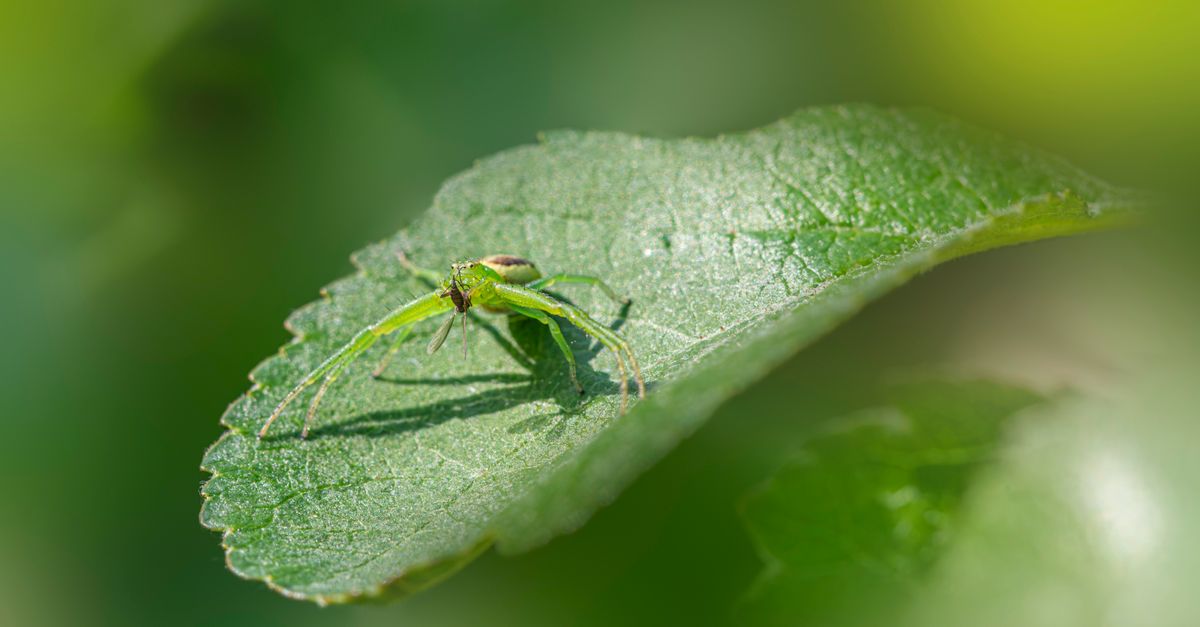
Like every crab spider (family Thomisidae), malefica doesn’t bother spinning a web to hunt. It sits perfectly still, camouflaged among leaves and flowers. Its front legs splay out like a crab’s claws — which is where the group gets its name. There, patience and camouflage do all the work while it waits for an unsuspecting insect to wander within reach.
Its cousin from the Andean Chocó
The second species, Sidymella ayahuma, was found in the Mashpi Reserve. It’s in the Andean Chocó region of northwestern Pichincha province, one of the most biodiverse patches of land per square meter anywhere on Earth. Its name honors Ayahuma, a spiritual figure from Andean tradition tied to Inti Raymi. That Indigenous sun festival is still celebrated every year across the Ecuadorian Andes. Less pop culture, more local roots, but just as fitting. It shares with its cousin the long bristles (setae, in scientific terms) covering its back. It also has the angular abdominal projections typical of the genus.
The discovery was formally published in June 2026 in the journal Zootaxa, under the title “On fork-tailed crab spiders: Two new species of Sidymella Strand, 1942 (Araneae: Thomisidae) from Ecuador.” The paper is the result of a collaboration between Inabio, the Waska Amazonía Foundation, the Llanganates-Sangay Connectivity Corridor Research Network, the Uru Foundation, and the Pontifical Catholic University of Rio Grande do Sul in Brazil.
Why bothering to name one more spider actually matters
It might sound like a footnote, but it isn’t. Before this study, only three Sidymella species were known in all of Ecuador. These two bring the count to five. That’s a 66% jump in what we know about a single genus in a single country. Ecuador, for its size, is one of the most species-dense countries on the planet. Yet a huge share of that diversity, especially among small invertebrates, still has no formal scientific name. Naming a spider, a beetle, or a frog is never just trivia for a list. In fact, not long ago, another Ecuadorian species, the snake Lielaphis slashi, named after guitarist Slash, made similar headlines. Every scientific name is, in reality, a valuable data point: it helps draw conservation maps, decide which forests deserve priority protection, and understand what happens to an ecosystem when a single species quietly vanishes from it.
So next time someone says a spider gives them the creeps, remind them of something. This particular spider with horns might carry the name of an Oscar-winning actress. On its own tiny scale, it also wears a storybook villain’s horns. And it remains a key piece of the puzzle in one of the most biodiverse countries on Earth.