
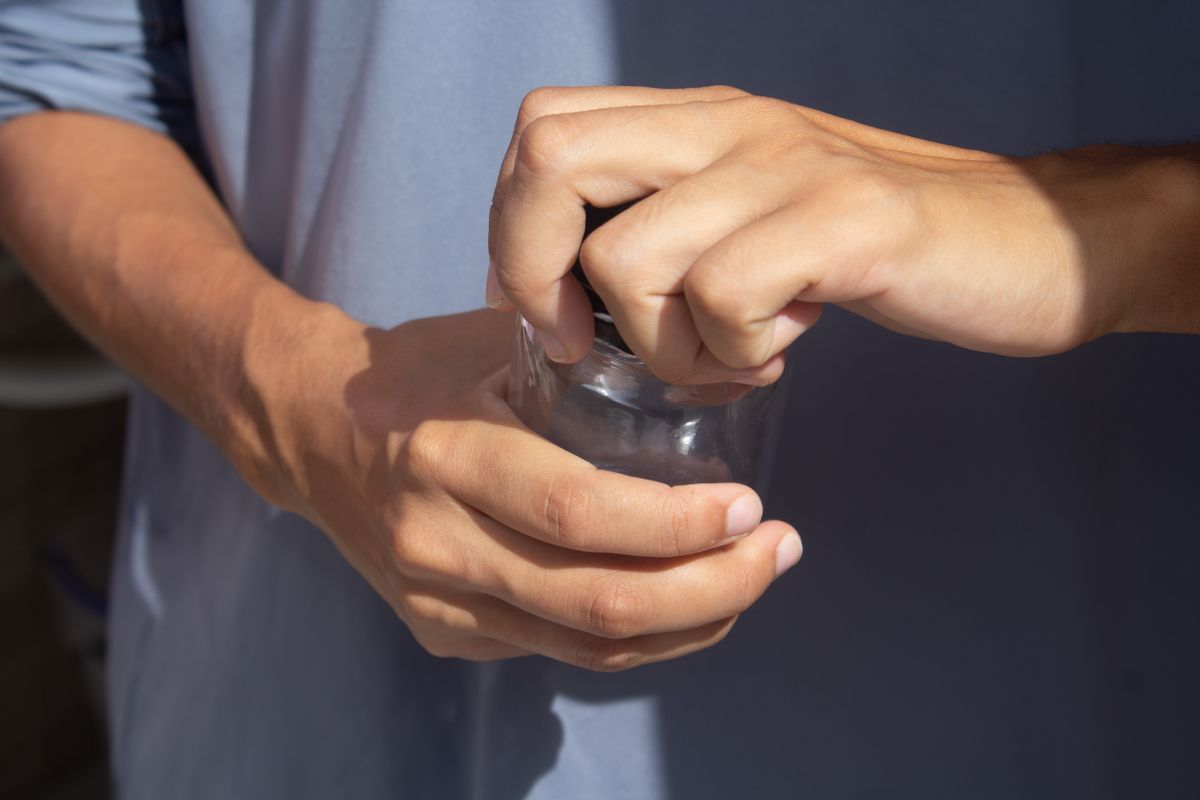
We’ve all been there: a jar of jam, pickles, or chickpeas that refuses to budge no matter how hard you twist. Before you call in your strongest neighbor for backup, there’s a fix that actually works: the hot water trick. It involves pouring hot water over the metal lid for a few seconds, then twisting. This isn’t an old wives’ tale — it’s textbook physics, and a rather elegant piece of it too.
How to do it
- Heat up tap water until it’s good and hot — no need to bring it to a boil.
- Pour the water directly onto the metal lid, concentrating it on the center, for about 20-30 seconds. If you can, avoid splashing the glass part of the jar: the more you heat only the lid, the better the trick works.
- Dry the lid with a towel, and if you want extra grip, use that same towel or a rubber band to keep your hand from slipping.
- Twist firmly. You’ll usually hear a small “pop” as the seal breaks.
- If it doesn’t give the first time, pour more hot water and try again — the metal needs that second thermal push.
Why the hot water trick works
The trick hinges on how differently metal and glass respond to heat. According to Georgia State University’s physics department in its reference resource HyperPhysics, the thermal conductivity of a steel lid is about 63 times higher than that of glass. So when you pour hot water over it, the lid absorbs and conducts that heat almost instantly, while the glass jar lags behind, staying barely warm.
It’s the same physics behind why dropping a metal spoon into a glass keeps boiling water from cracking it: metal conducts heat far faster than glass, so the two materials heat up — and expand — at very different rates.
Since metal also expands more than glass when heated — its thermal expansion coefficient is roughly 1.44 times greater — the lid ends up growing just slightly more than the mouth of the jar. That mismatch, even if it’s a fraction of a millimeter, is enough to open up a microscopic gap between the two surfaces.
There’s a second factor at play, too: many preserved-food jars (jams, sauces, vacuum-packed pickles) are sealed thanks to a pressure difference. As the jar cools after canning, the air inside contracts and creates a partial vacuum that clamps the lid down like a suction cup. The localized heat on the metal helps break that seal by expanding the lid right at the point of contact, releasing the suction that was making your life difficult.
HyperPhysics itself is candid about something important: the expansion involved is small — barely noticeable to the naked eye. The trick doesn’t work because the metal inflates like a balloon, but because that tiny mismatch, combined with partially breaking the vacuum, is exactly what you need to overcome the initial friction holding the lid in place. Once that first fraction of a millimeter gives way, the rest is just a flick of the wrist.
So next time a jar puts up a fight, before you wrestle it with brute force (and risk ending up with a sore hand and a bruised ego), try hot water instead. It’s free, takes thirty seconds, and has actual science on its side.