
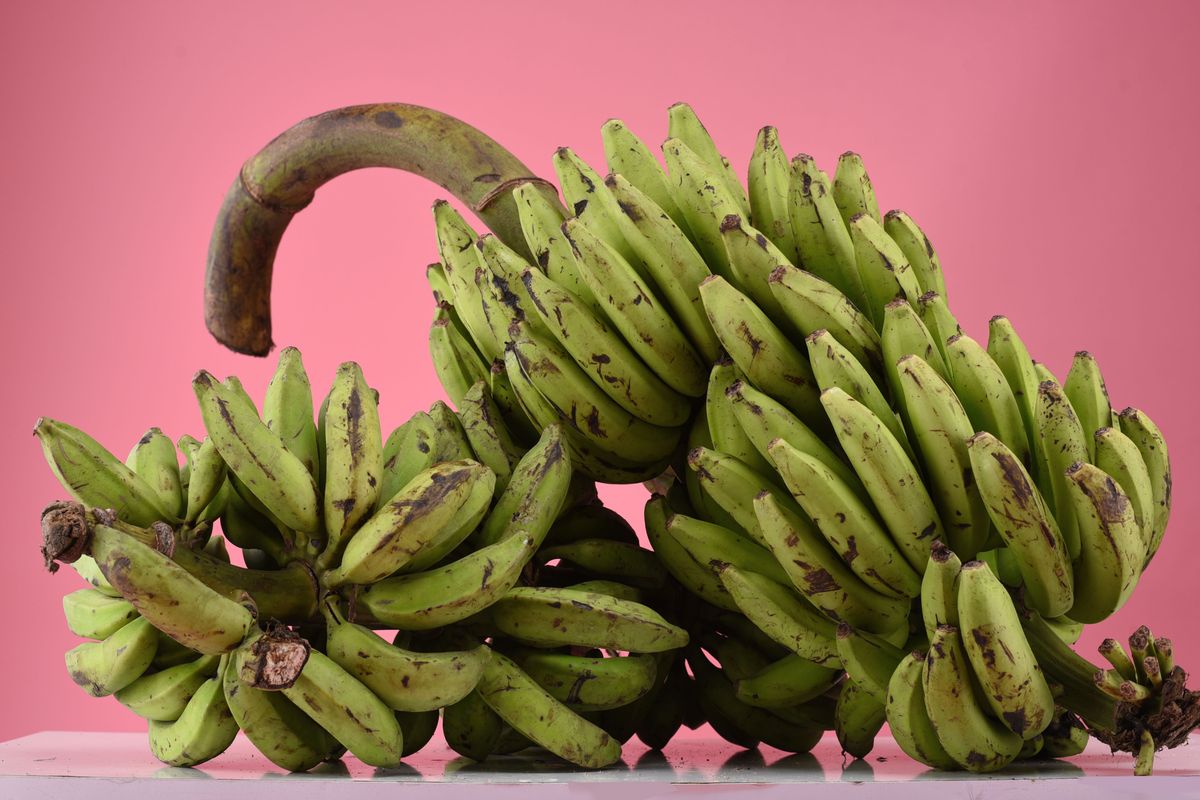
The trick is this: pull the bananas apart from the bunch and wrap the little stem of each one (that brown stub where it was cut from the plant) in plastic wrap. That’s it. Do that and they’ll take several extra days to get covered in the brown freckles that announce it’s either “eat me now” or “into the blender for banana bread.”
How to do it
- Separate the bananas from the bunch as soon as you get home, instead of leaving them all clustered together.
- Cut a small piece of plastic wrap, just enough to cover the stem of each banana.
- Wrap it snugly around that cut area, like putting a tiny bandage on it.
- Store the bananas somewhere cool, out of the fridge and away from other fruit.
- If they still start ripening faster than you can eat them, throw the whole banana, peel and all, into the freezer — it turns black on the outside but stays perfect for smoothies or banana bread.
Yes, that’s the same little strip of plastic you’ve seen wrapped around bunches at the grocery store. It’s not a packaging accident — it’s there on purpose.
Why it works
Bananas are what plant physiologists call a climacteric fruit: they keep ripening after being picked, unlike fruits such as strawberries or grapes. The engine behind that process is a gaseous plant hormone called ethylene, which the banana itself produces and releases into the air as it ripens.
Here’s the part almost nobody knows: the spot where the banana was cut from the plant — that little stem — is where most of the ethylene production and gas exchange with the surrounding air actually happens. It’s basically the faucet the hormone leaks out of. Sealing it with plastic wrap cuts down gas exchange at that one spot and slows the chain reaction that triggers softening, color change, and those brown speckles. The rest of the banana keeps “breathing” more or less normally, but it gets a much fainter “time to ripen” signal from the stem.
The Postharvest Research and Extension Center at the University of California, Davis, which studies exactly this — how to extend the shelf life of fruits and vegetables after harvest — documents this ethylene physiology in bananas, and it explains why the industry does the exact opposite on purpose: green bananas are exposed to controlled ethylene concentrations (100 to 150 ppm) for a day or two in chambers kept at 15-20 °C, so they all ripen together before hitting store shelves. In other words, the same gas your grandmother was trying to trap by sealing bananas in a paper bag with an apple is what wholesalers deliberately pump in to force ripening. You’re just playing that same game in reverse.
According to home tests written up by several food outlets, a bunch with individually wrapped stems can last up to twice as long before going overripe, compared to an identical unwrapped bunch stored right next to it. There’s no magic and no preservatives involved — you’re simply shutting the door on a hormone the banana itself is pumping out to slowly self-destruct. A thirty-second trick that can save you disappointment and wasted fruit the next time you buy a whole bunch telling yourself “I’ll definitely eat these in time.”