
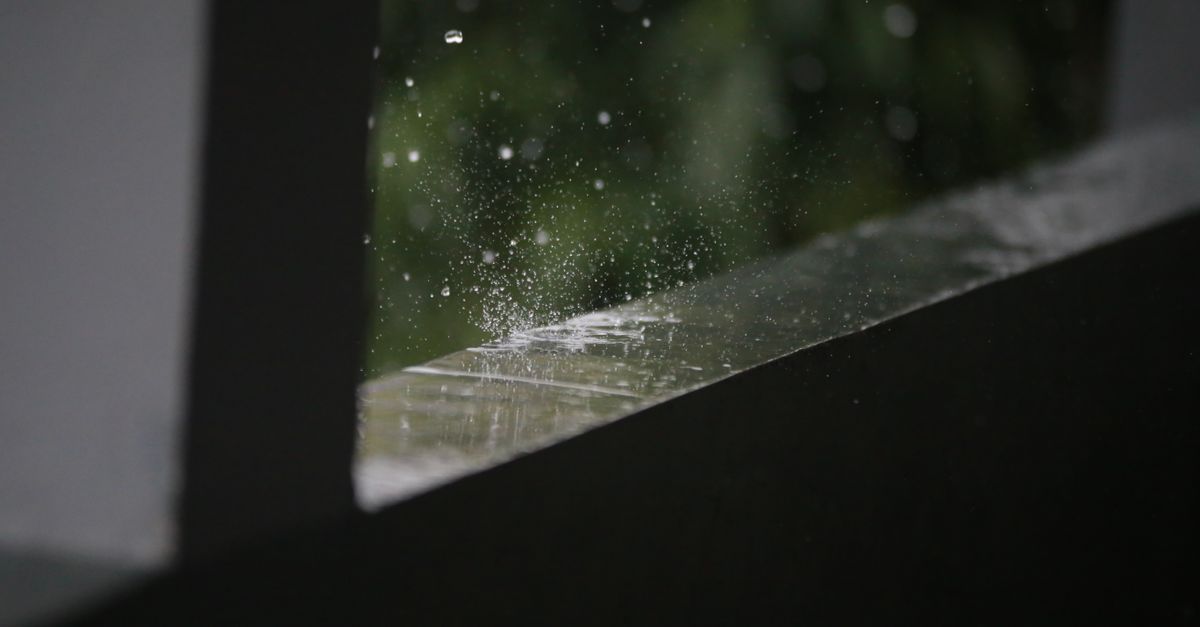
There’s a smell of rain that almost everyone recognizes instantly but can rarely name. That fresh, earthy scent shows up right as rain starts falling, especially after a long dry spell. It’s had a proper scientific name since 1964: petrichor, from the Greek for “stone” and “ichor.” In Greek mythology, ichor was the blood of the gods. In fact, it’s one of those rare words that sounds exactly like what it describes. Two Australian scientists, Isabel Bear and Richard Thomas, coined it to describe something that had been happening forever, right under our noses. However, nobody had bothered to explain it properly until then.
The secret ingredient is right under your feet
The main culprit behind the smell doesn’t come from the clouds or the water itself. Instead, it comes from the ground. When soil has been dry for a while, bacteria called actinobacteria keep working away underground. There, they produce a compound called geosmin, the same molecule responsible for the “earthy” taste of beets or the musty note in some wines. Human noses are absurdly sensitive to it. In fact, we can detect it at concentrations of just a few parts per billion, a sensitivity well below what most lab instruments can pick up. In other words, we’re biologically wired to notice rain before we even see it falling. It’s a reflex not unlike the one that makes some people sneeze just from looking at the sun.
While the soil stays dry, geosmin keeps piling up at the surface with nowhere to go. Therefore, it needs a physical push to escape into the air. That push comes, fittingly, from the raindrop itself.
Microscopic bubbles that release the smell of rain
For decades, scientists knew what compound caused the smell of rain, but not exactly how it reached our noses. The most convincing answer arrived in 2015. That year, MIT engineers filmed hundreds of raindrop impacts on different types of soil with high-speed cameras. In fact, what they saw was startling: when a drop lands on a porous surface, it traps tiny air bubbles right at the point of impact. Those bubbles race up to the surface of the drop. When they burst, they fling a cloud of microscopic aerosols loaded with geosmin and other soil compounds into the air. This is exactly what the MIT team found, in a study led by engineer Cullen Buie alongside researcher Youngsoo Joung.
It’s basically the ground sneezing its smell upward every single time a drop touches it.
Why a drizzle smells stronger than a downpour
Here’s the counterintuitive part: a torrential storm doesn’t actually produce the strongest smell of rain. According to the same study, light to moderate raindrops generate far more aerosols than the big, fast drops of a heavy downpour. Still, these heavier drops hit the ground so quickly that the bubbles barely have time to form. So the next time it starts drizzling after a heatwave, that’s precisely the sweet spot for petrichor. Still, it comes down to three things: very dry soil, light rain, and the best smell of the year, all for free.
There’s even a rather lovely evolutionary theory behind all of this. Some researchers think the scent may have helped guide animals toward water in arid landscapes. Meanwhile, the burst of aerosols itself helps spread bacteria and spores through the soil nearby, a kind of natural delivery system disguised as a pleasant perfume. Nature, once again, turns out to never give anything away for free. In fact, even the most romantic smell in the world comes with logistics attached.
So next time someone says something “smells like rain,” you can tell them, with complete seriousness, that it actually smells like soil bacteria. Those bacteria are released by microscopic bubble explosions. Still, maybe it’s less poetic that way, but it’s definitely more interesting.