
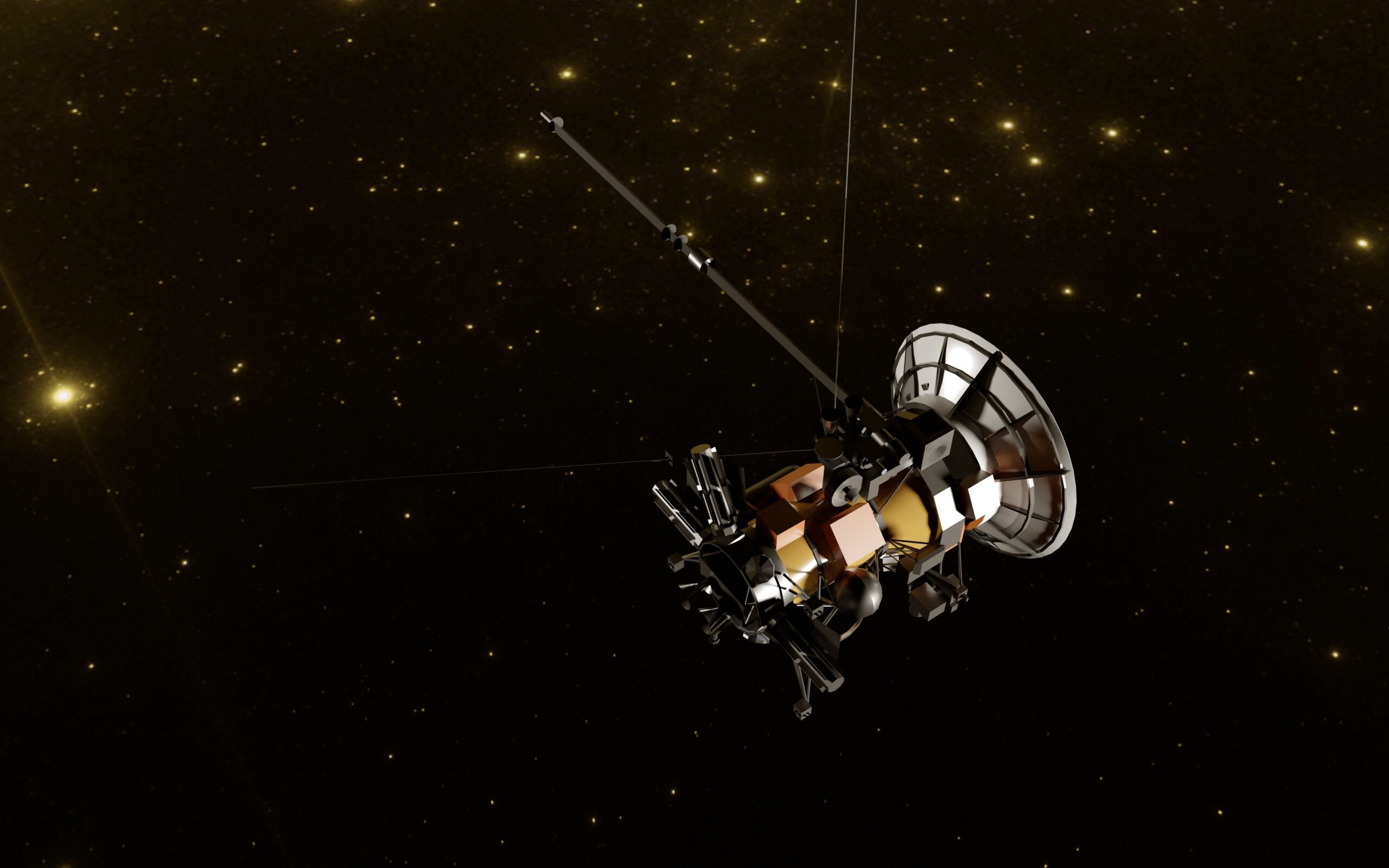
Back in September 2022, NASA did something that sounds like a cartoon villain’s plan: it flew a fridge-sized spacecraft straight into an asteroid at nearly 14,000 mph, just to see what would happen. Four years later, the Hera probe is finally showing up at the scene of the “crime” to measure the damage with a tape measure.
The mission belongs to the European Space Agency (ESA), and this November it’s reaching the Didymos-Dimorphos asteroid system — the very same spot where NASA’s DART spacecraft went out in a blaze of glory. As Space.com reports, the Hera probe is arriving specifically to inspect the wreckage of that intentional crash: humanity’s first real-world rehearsal for nudging a dangerous asteroid off course.
A cosmic punch that landed harder than planned
Dimorphos is a tiny “moonlet,” barely 500 feet across, orbiting its bigger sibling Didymos every few hours. Neither rock ever posed any real threat to Earth — they were picked precisely because they made a safe, easy-to-watch target for backyard telescopes.
DART’s impact happened on September 26, 2022, at 23:14 UTC, and the outcome surprised even the scientists running the show. Before the hit, Dimorphos took 11 hours and 55 minutes to complete one lap around Didymos. Pre-impact calculations suggested a straightforward collision should shave roughly 7 minutes off that orbit. Reality hit much harder: the orbital period shrank by 33 minutes, nearly five times more than predicted.
Why the gap? According to the study published in Nature and picked up by observatories worldwide, the answer is debris. The impact didn’t just shove the asteroid with the spacecraft’s own mass — it also blasted a huge amount of rock and dust into space, and that ejected material delivered a second, much stronger kick than the collision itself. It’s a bit like stomping into a mud puddle: you don’t just get splashed by the water your foot displaces, mud flies out in every direction too, and all that flying mud adds its own shove in directions you don’t fully control.
The Hera probe, the detective sent to take measurements
Here’s the catch: so far we only know Dimorphos moved more than expected, not exactly why, or how reliably that result would repeat on an asteroid of a different size or makeup. That’s where Hera comes in, acting as a genuine space forensic investigator.
The probe, launched in October 2024, arrives with two shoebox-sized companion satellites, named Milani and Juventas, which will detach from the mothership for a closer look. Between the three of them, the mission will tackle jobs like:
- Photographing and precisely measuring the crater DART left behind on Dimorphos’s surface.
- Calculating the asteroid’s actual mass, something that until now could only be estimated.
- Probing the rock’s interior with radar, to find out whether it’s a solid chunk or more of a loose pile of rubble — basically a sandcastle floating in the vacuum of space.
That last question matters a lot: a hollow, porous asteroid reacts to an impact very differently than a solid boulder does, and that difference largely decides how much “bonus push” you can squeeze out of a collision.
Why this data matters even without an incoming threat
No known asteroid currently has a meaningful chance of hitting Earth in the coming decades. However, planetary science works a lot like insurance: you build the plan before you ever need to use it. If a rock on a collision course were ever spotted, the “give it a shove to redirect it” strategy only works if we know precisely how hard that shove needs to be — and that depends on exactly the kind of data the Hera probe is about to collect.
So while Didymos and Dimorphos keep calmly spinning around each other hundreds of millions of miles away, a European probe is closing in this week to photograph the scar left by history’s first planetary defense test. Not bad for a project that, stripped of all the fancy framing, basically boils down to: smash something into a space rock, then send someone to check how it turned out. If missions to small solar system bodies interest you, another worth following is Japan’s MMX probe, heading to Phobos, the moon of Mars.