
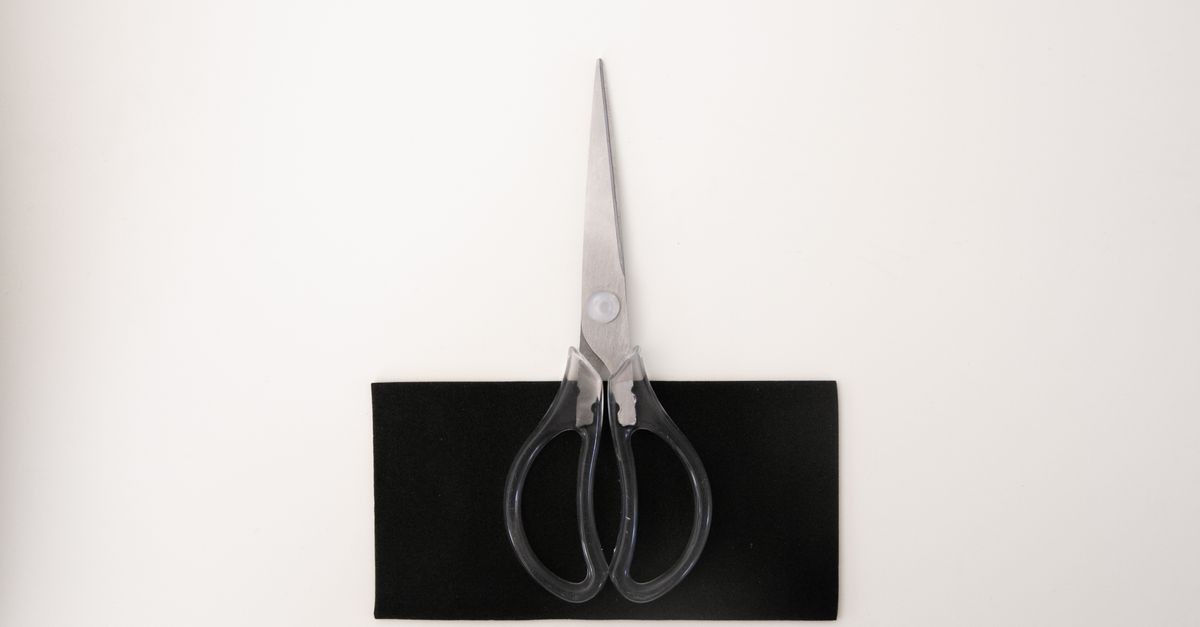
Got a pair of scissors that just won’t cut cleanly anymore — leaving loose threads in fabric, crumpling paper instead of slicing it? Before you toss them or hunt down a sharpening stone, try this: cut through a wad of folded aluminum foil a few times. Within a couple of minutes, they’ll cut noticeably better. The surprising part isn’t that it works — it’s why it works, because it’s not what most people assume.
How to do it
- Tear off a strip of aluminum foil noticeably longer than your scissor blades.
- Fold it over itself until you have about 6-8 layers.
- Open the scissors all the way and cut through the foil using the full length of the blade, not just the tip.
- Repeat the cut 8-10 times, shifting the foil to work different points along the blade.
- Wipe off any foil residue with a dry cloth and test the scissors on regular paper or fabric.
With ordinary kitchen, sewing, or office scissors, the difference is usually obvious right away — cleaner cuts, and none of that mid-blade “snag” you get from a tired pair of scissors.
Why it works (and why it’s not actually sharpening)
Here’s the catch: aluminum foil doesn’t sharpen anything, strictly speaking. Sharpening means removing metal to create a brand-new edge, and aluminum is far too soft compared to the steel in your blades to grind anything away.
What’s actually happening has a name: burnishing. When scissors go dull, it’s rarely because the steel has simply worn down — instead, the microscopic edge of the blade bends slightly to one side, forming what metalworkers call a “burr.” That bent edge is exactly what makes scissors slide over material instead of slicing through it cleanly.
When you repeatedly close the blades on several taut layers of foil, the pressure and friction push that burr back into alignment — similar to how a chef runs a knife along a honing steel before cooking, which doesn’t remove any metal, just straightens the edge. On top of that, the softer aluminum smears microscopically into tiny nicks along the blade, filling them in and smoothing out the cutting surface.
The result is scissors that cut noticeably better for a while — but the effect is temporary. Since no metal was removed and no new edge was created, the burr will eventually bend out of alignment again with normal use, and you’ll either need to repeat the trick or, if the blades are genuinely worn, take them to be properly sharpened. Home-hack outlets that have looked into the science, including House Digest, land on the same explanation: it’s a temporary fix through burnishing, not a substitute for real sharpening.
So next time your scissors start giving you grief, skip the trip to the store and grab a sheet of foil from the kitchen drawer first. It’s not magic, and it’s not rocket science either — just metal physics quietly working in your favor for a couple of minutes.