
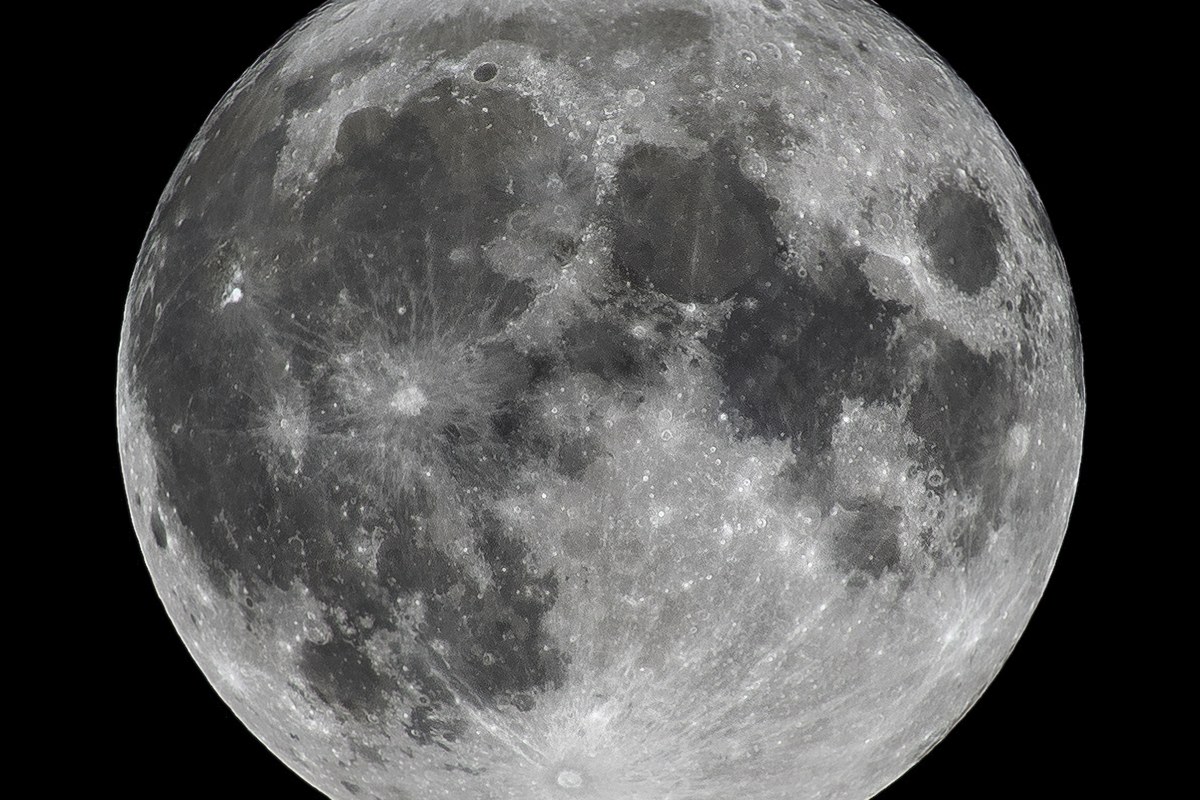
On August 5, 2026, at 2:35 a.m. Eastern time, something slammed into the Moon at more than 8,700 km/h (5,400 mph). It wasn’t an asteroid or a stray meteorite. It was the second stage of a SpaceX Falcon 9 rocket, a piece of space junk that had been drifting aimlessly for about a year and a half until lunar gravity finally made the call for it.
Two weeks later, NASA did what it does best: took pictures. Its Lunar Reconnaissance Orbiter (LRO), which has been circling the Moon for more than fifteen years, photographed the freshly made crater near Einstein crater, on the Moon’s western near side. The result: a hole about 18 meters (60 feet) wide and 3 meters (10 feet) deep, surrounded by a starburst of bright and dark rays, where deeper material thrown up by the impact stands out against the older, darker dust coating the surface.
How did a rocket end up there?
The piece that hit wasn’t just any debris. It was the upper stage that launched Firefly Aerospace’s Blue Ghost 1 lunar lander back in January 2025. Once its job was done, the stage was supposed to stabilize itself and sit relatively still in a high Earth orbit. That maneuver failed. Left uncontrolled, its orbit slowly decayed over the following months until the Moon’s gravity caught it and pulled it in.
To pin down the exact impact site, the LRO team had to tilt the spacecraft’s cameras while it flew over the surface at more than a mile per second, using data from South Korea’s Danuri probe to narrow the search area. Spotting an 18-meter hole on a body with more surface area than Africa and Europe combined isn’t exactly finding a needle in a haystack. It’s finding one in a haystack the size of a continent.
The Moon is quietly filling up with junk
Here’s the less amusing part. The Moon has no atmosphere, so there’s no friction to burn anything up on the way down: whatever lands there stays there, permanently, exactly as it fell. Recent estimates put the number of human-made objects scattered across the lunar surface at around 3,000, weighing a combined 209 tons: spent rocket stages, decommissioned landers, leftovers from decades-old missions, and now, this new crater.
It’s not just a matter of tidiness. As space agencies and private companies ramp up lunar missions, with permanent bases on the table for the next decade, the amount of debris in lunar orbit, some of it on slow-motion collision courses, keeps climbing. Without a serious international system for tracking objects and safely deorbiting them, the odds of a future lunar base getting an unscheduled visit from a chunk of metal moving at thousands of km/h are looking less and less hypothetical.
This isn’t the first time a human-made object has hit the Moon, on purpose or by accident. During the Apollo era, NASA deliberately crashed spent rocket stages into the surface so that seismometers left behind by astronauts could record the shockwaves and help map the Moon’s interior. In 2022, another rocket body of uncertain origin, likely Chinese, left behind a surprising double crater that puzzled scientists. The difference this time is that we know exactly what hit, when, and why: a luxury space debris doesn’t usually afford us.
For now, the Falcon 9’s crater is mostly an astronomical curiosity, one small new mark on a landscape that has been collecting impact scars for billions of years. But it’s a reminder that even though the Moon feels like a remote, unchanging place, we’re leaving a bigger, and very literal, footprint on it every year. You can see NASA’s original before-and-after images in this NASA Science article.