
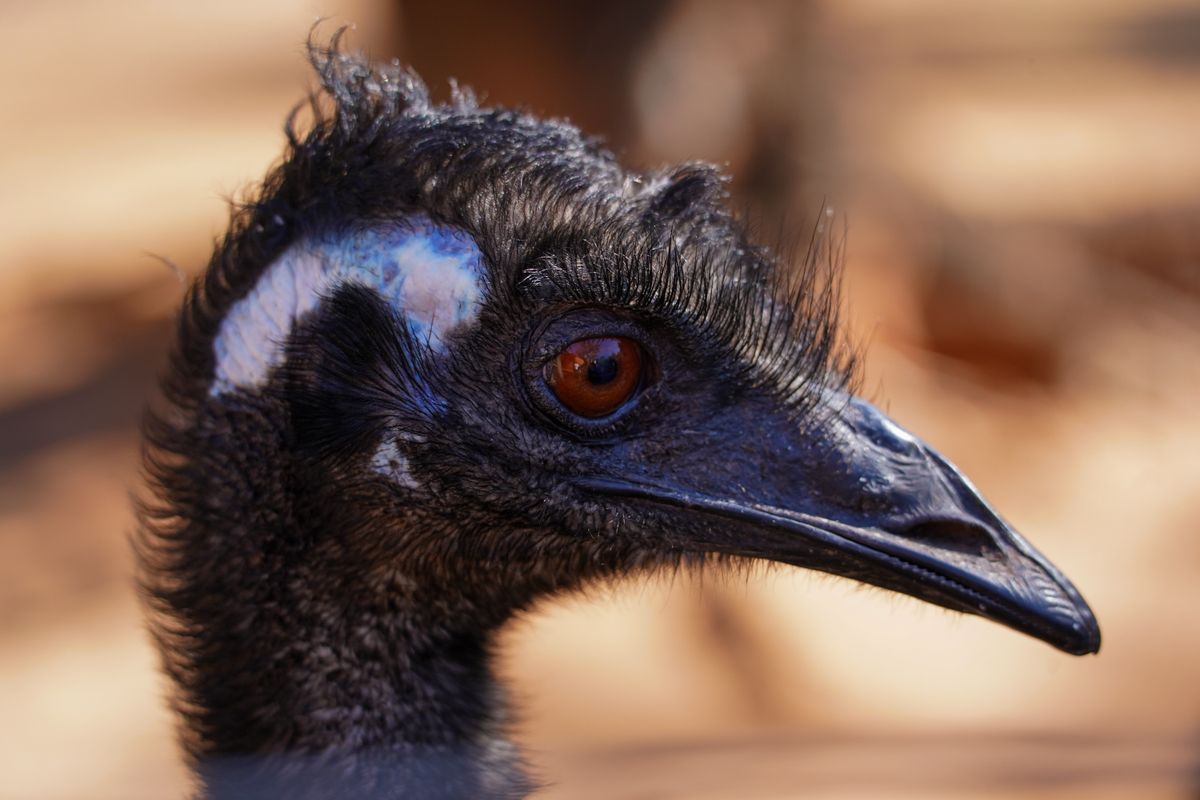
In 1932, the Australian government declared war on roughly twenty thousand birds. It sent soldiers, machine guns, and thousands of rounds of ammunition. And it lost.
This isn’t a metaphor or a clickbait exaggeration. It’s a real event, reported in newspapers at the time and recorded ever since in military history books, known as the Great Emu War. It sounds like a punchline, but the reasons behind it say a lot about how badly a plan can go when you underestimate the enemy — especially when that enemy can sprint at 50 km/h and has zero interest in military strategy, mostly because it’s a giant flightless bird with no natural predators.
The real problem wasn’t the emus, it was the wheat
The story starts after World War I, when the Australian government encouraged thousands of veterans to settle as farmers in Western Australia, promising fertile land and solid wheat harvests. Reality turned out to be much harsher: poor soil, unreliable rainfall, and, to top it off, the Great Depression crushing grain prices right when these new farmers needed to sell.
Then, in 1932, came the final straw: around 20,000 emus migrated inland during their breeding season and stumbled onto something far more appealing than dry desert scrub — entire fields of freshly planted wheat. The emus didn’t just eat the crops; they also tore holes through fences that rabbits, another long-standing pest in the region, then used to get in. Fed up, the farmers asked the government for military help.
Machine guns versus birds who never agreed to a war
The Ministry of Defence said yes. Partly because the veterans themselves had asked for ammunition and machine guns for “training,” which looked a lot better on a budget line than “bird hunting.” The army then sent Major G. P. W. Meredith of the Royal Australian Artillery, along with two soldiers armed with two Lewis machine guns and about 10,000 rounds of ammunition. On paper, the plan was simple: corner the emus and open fire.
In practice, it was a textbook logistical disaster. The emus turned out to be far harder to hit in a group than anyone expected — they scattered in every direction the moment shooting started, outran the vehicles trying to chase them across rough terrain, and seemed to organize in small squads, each with a “lookout” warning the rest. In one of the most retold moments of the whole campaign, around a thousand emus were funneled into a perfect ambush… and the machine gun jammed right as the birds came into range.
How the Emu War ended: an official defeat
After nearly two months of operations, between late November and December 1932, the army had fired thousands of rounds to bring down, by the most generous estimates, fewer than 1,000 emus out of the 20,000 roaming the region. Meredith himself reportedly joked, only half-joking, that if Australia needed a military unit with the emus’ resilience and marksmanship-dodging skills, it could take on any army in the world. The government pulled the troops out and officially ended the campaign: the emus had won.
Farmers weren’t left completely without help, though. In the following years, quieter and far more effective solutions took over — sturdier fencing and bounty programs for culling — which actually did bring emu numbers down in farming areas, no artillery required.
Today, the Great Emu War is practically a piece of Australian folklore. It’s cited in military history books as one of the few documented cases of a modern army being beaten by wild animals, and it has inspired documentaries, comics, and no shortage of internet memes. It isn’t the only oddball war in history, either: the war Zanzibar fought against the British Empire lasted just 38 minutes and also ended in defeat. It’s also a pretty funny reminder that technological superiority doesn’t count for much when the enemy simply refuses to fight by your rules. The emu, meanwhile, still holds its spot on Australia’s coat of arms — arguably with more justification than whoever designed it ever imagined.
You can read more verified details about this episode in the Encyclopaedia Britannica’s entry on the Emu War.