
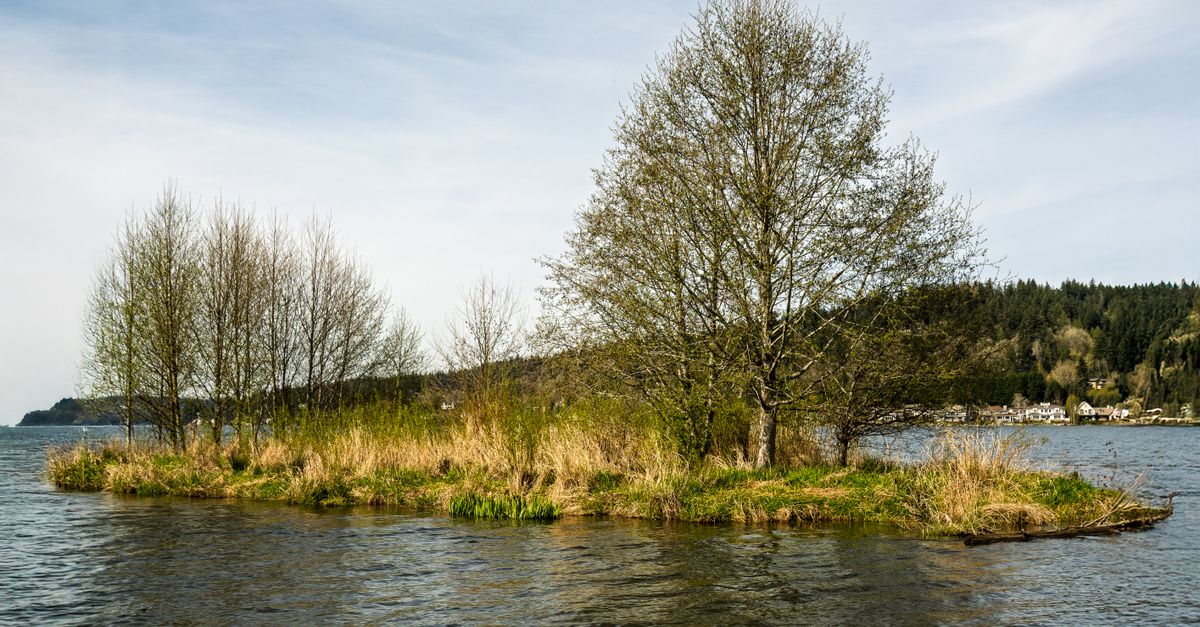
Right in the middle of the Bidasoa River, exactly where Spain and France stare each other down between Irún and Hendaye, sits a tiny islet of barely 6,800 square meters — roughly the size of a small city block. It doesn’t fully belong to either country. It’s called Pheasant Island, and it belongs to both, just never at the same time. From February 1 to July 31, it’s Spanish soil. From August 1 to January 31, it’s French. It’s been swapping back and forth like clockwork for more than 360 years.
Pheasant Island, the world’s oldest condominium
Pheasant Island (Isla de los Faisanes in Spanish, Île des Faisans in French, depending on which bank you’re standing on) holds the official title of the oldest condominium in the world. That means a territory under shared sovereignty between two states. Here’s the twist: almost every other condominium in history splits power simultaneously. This one, however, is the only one that does it in shifts, like two neighbors handing off the keys to a house nobody actually lives in.
Every six months, on February 1 and August 1, a small delegation of naval and military officials from both countries meets on the island. It’s normally off-limits, even from the riverbanks, but on those two days it hosts a brief, highly formal ceremony: one flag comes down, the other goes up, papers get signed, and that’s it. The whole thing lasts only a few minutes. Even so, it’s been carried out with the exact same solemnity since the 17th century, surviving wars and revolutions. In fact, the island is uninhabited and only opens to visitors on a handful of special permit days each year.
A peace treaty and a royal wedding
This oddly specific arrangement traces back to the Treaty of the Pyrenees, signed on that very islet on November 7, 1659. That treaty ended 24 years of war between Spain and France. Moreover, part of the deal also arranged the marriage of King Louis XIV of France to the Spanish Infanta María Teresa of Austria. The wedding took place right there, on June 9, 1660. To avoid any dispute over who actually owned the ground where peace had just been sealed, both crowns simply agreed it would belong to neither — or rather, to both. Nobody gave up territory, nobody lost face: shared sovereignty, peace intact.
The wedding that cost the court painter his life
Here’s the part most travel guides skip. Organizing that 1660 royal meeting — the gala pavilion, the decorations, the banquets, the costumes, even the island’s landscaping — fell to a name you definitely know: Diego Velázquez. The painter behind Las Meninas served at the time as chief quartermaster to King Philip IV. For nearly two months he ran himself ragged overseeing every last detail, shuttling back and forth between Madrid and the border. The ceremony went off without a hitch. Velázquez returned to Madrid exhausted, and just weeks later, on August 6, 1660, he died. Many historians therefore point to the accumulated strain of those weeks as the final trigger behind his death at age 61.
It wasn’t the only royal wedding staged on that little strip of river, either. Back in 1615, it had already served as neutral ground for a double wedding — Louis XIII of France to Anne of Austria, and Elisabeth of Bourbon to the future Philip IV. For centuries, whenever Spain and France needed a spot where neither crown was technically “on the other’s turf,” the Bidasoa River and its islet did the job.
A tiny symbol that still works
Today Pheasant Island serves no practical purpose whatsoever: no houses, no shops, no mass tourism, no territorial disputes left to settle. And maybe that’s exactly why the tradition survives. It costs nothing to keep going, and it symbolizes something that’s still oddly rare in the 21st century: two countries that, instead of fighting over a single square meter of land, simply take turns with it like sharing a TV remote. The most recent handover, with the ritual still fully intact three and a half centuries later, was covered by Naiz in this report on the world’s smallest condominium.
So next time you cross the border between Irún and Hendaye, glance toward the river. That little patch of trees, barely visible from the road, changes passports every six months, answering to nothing but tradition. If quirky borders are your thing, the 38-minute war between Britain and Zanzibar belongs to the same odd family of stories.