
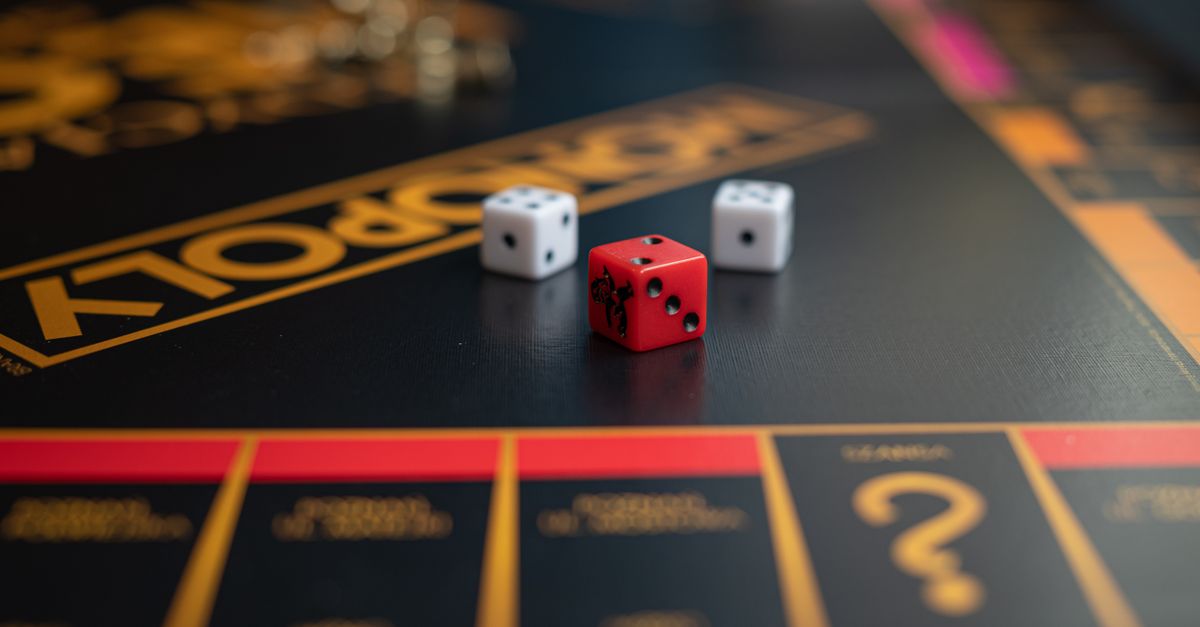
They own palaces, the Crown Jewels, and roughly half the real estate in the United Kingdom. Yet there’s one small box of plastic and cardboard that never makes it onto the family game table: Monopoly. This isn’t a Christmas-dinner urban legend. Prince Andrew confirmed it himself back in 2008, during an official visit to the headquarters of the Leeds Building Society. When someone handed him a copy of the game as a gift, he turned it down right away. His answer summed up what’s now known as the royal Monopoly ban: “We’re not allowed to play Monopoly at home.”
The reason has nothing to do with royal protocol or some decree signed by the Queen. It’s far more human than that: by several family members’ own admission, the Windsors are almost pathologically competitive. Queen Elizabeth II reportedly imposed the ban after family game nights kept ending in actual arguments. Andrew put it bluntly to reporters: “it gets too vicious.”
When buying Park Lane turns into a war
Here’s the fun part: this wasn’t a one-generation quirk. Decades later, Prince William admitted in an interview that things still get heated when he plays board games with his own wife and children. This suggests the competitive streak didn’t stay behind with his grandmother’s generation. Instead, it got passed down like just another title. It’s almost funny to picture future heirs to the throne bickering over who gets Mayfair. After all, in real life they own land that doesn’t even appear on the board.
And that’s actually where the royal Monopoly ban gets properly ironic.
The game that was invented to warn people about people like them
The Monopoly we know today wasn’t dreamed up by Charles Darrow. Parker Brothers credited him as the inventor in 1935, and he was the one who took the fame — and the money — for it. The original design was called The Landlord’s Game, patented in 1903 by a woman named Elizabeth Magie. She was a follower of the economist Henry George.
Magie wasn’t trying to build a harmless family pastime. Her goal was to call out the power of the great monopolists of her era — people like Andrew Carnegie and John D. Rockefeller — who built fortunes by buying up land and collecting rent while everyone else got poorer. So she designed the game with two separate rule sets. In the “anti-monopolist” version, every player benefited when wealth was created together. In the “monopolist” version, on the other hand, the winner was whoever managed to bankrupt everyone else by hoarding property. The idea was that after playing both, people would see just how unfair the second model really was.
However, the version that survived and took off was exactly the monopolist model. That’s the one that eventually reached toy stores worldwide, against its creator’s original intent. It works by crushing your opponents: buy up streets and charge rent until they go broke. Magie’s cautionary message got lost along the way. What was left was precisely the kind of game that can turn even the most buttoned-up family on the planet — royalty included — into rivals over a little green house on Park Lane.
The royal Monopoly ban in the 21st century
Buckingham Palace has never issued a formal statement confirming an official ban, and it probably never will. After all, this is an informal family tradition rather than a matter of state. Still, Andrew’s 2008 admission, backed up by William’s more recent confession, makes it pretty clear the Windsors would rather keep the board locked in a cupboard. Nobody wants a Christmas dinner turning rowdier than a session in the House of Commons.
So next time a game of Monopoly with your own family ends in shouting over a hotel on Boardwalk, take some comfort in this. Not even British royalty has managed to play it without someone losing their temper. According to Hello! Magazine, the royal Monopoly ban is still standing decades later. And if quirky bits of British history are your thing, don’t miss the 38-minute war Britain fought against Zanzibar, the shortest war ever recorded.