
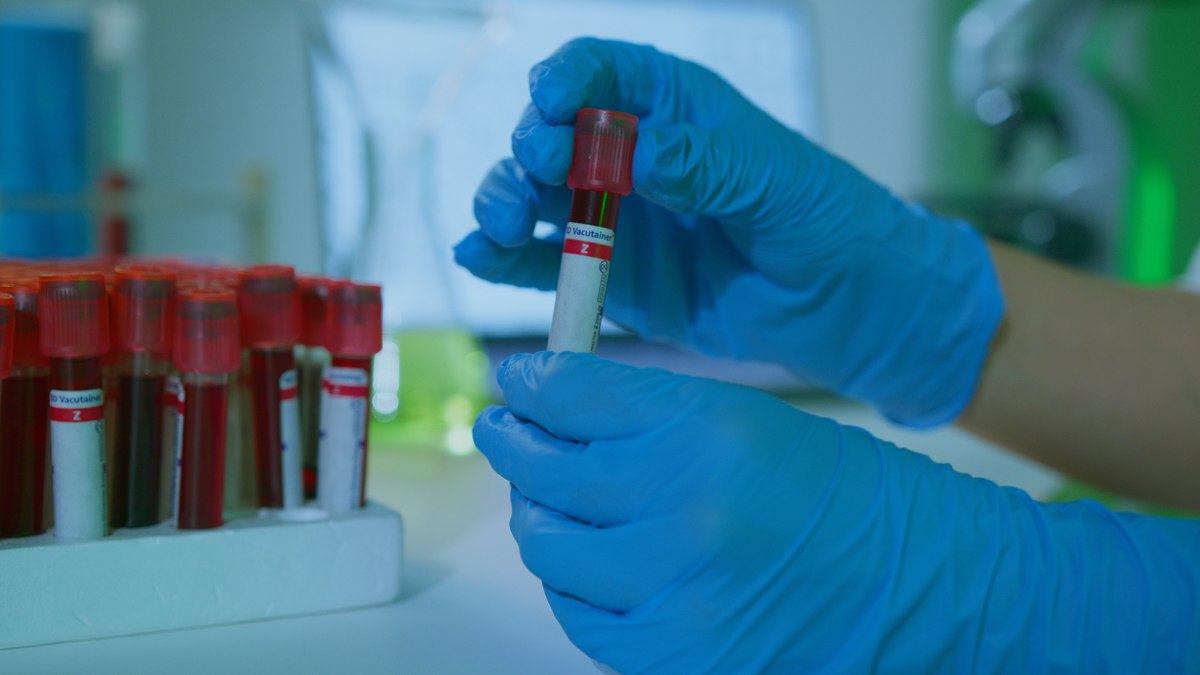
You probably know your blood type off the top of your head: A, B, AB, or O, plus a positive or negative Rh. But that’s just the tip of the iceberg. There are actually dozens of separate blood group systems. Until recently, one of them, the MAL blood group, had been floating in scientific limbo for over 50 years. Doctors knew it existed, but had no idea what caused it. Until now.
An Antigen With No Last Name Since 1972
The story starts in 1972. That year, the UK’s blood group reference laboratory made an odd discovery. They found it in the blood of a pregnant patient: her red blood cells didn’t react the way almost everyone else’s do to a known antigen called AnWj. More than 99.9% of people are “AnWj positive,” so finding someone negative was already a rarity. The catch is that for five decades, nobody could pin down which gene made the antigen or which protein carried it. It was a ghost blood group: everyone agreed it was there, nobody knew where it came from.
The Discovery That Named the MAL Blood Group
A team from NHS Blood and Transplant and the University of Bristol set out to crack the mystery. To do it, they used whole exome sequencing, a technique that scans every protein-coding region of the genome. So, by comparing the DNA of AnWj-negative people against everyone else, they found the culprit. It came down to mutations that completely wipe out the MAL gene. That gene builds a tiny membrane protein called Mal.
AnWj-positive people carry the full-length Mal protein on the surface of their red blood cells. AnWj-negative people simply don’t, because they’re missing both copies of the gene. With that, the team didn’t just solve a decades-old puzzle: they also officially opened the books on the MAL blood group system, the 47th ever discovered in the history of medicine.
So What’s the Actual Point, Beyond Trivia Night?
Here’s where it gets practical. In fact, almost nobody lacks this antigen for genetic reasons. Most “AnWj negative” cases are actually caused by blood disorders or certain cancers, not by the genes themselves. However, the rare people who are born without it face a real risk during a transfusion. If they receive AnWj-positive blood, their immune system can react dangerously. And without knowing which gene to look for, there was really no way to flag them in advance.
Now that the exact genetic cause is known, labs can build targeted genotyping tests. That way, they can pick out these rare-among-the-rare individuals, both among patients and potential compatible donors. In other words, a half-century-old lab mystery just turned into something concrete: safer transfusions for the people who can least afford a mistake. If you love stories about genetics solving old medical riddles, don’t miss Evolutionary Highways: Why Your DNA Never Turns Back.
So next time someone asks your blood type, remember something: “A positive” is just the headline. Underneath it sits a genetic map that’s still being filled in. And every once in a while, science takes fifty years to fill in a single box.