
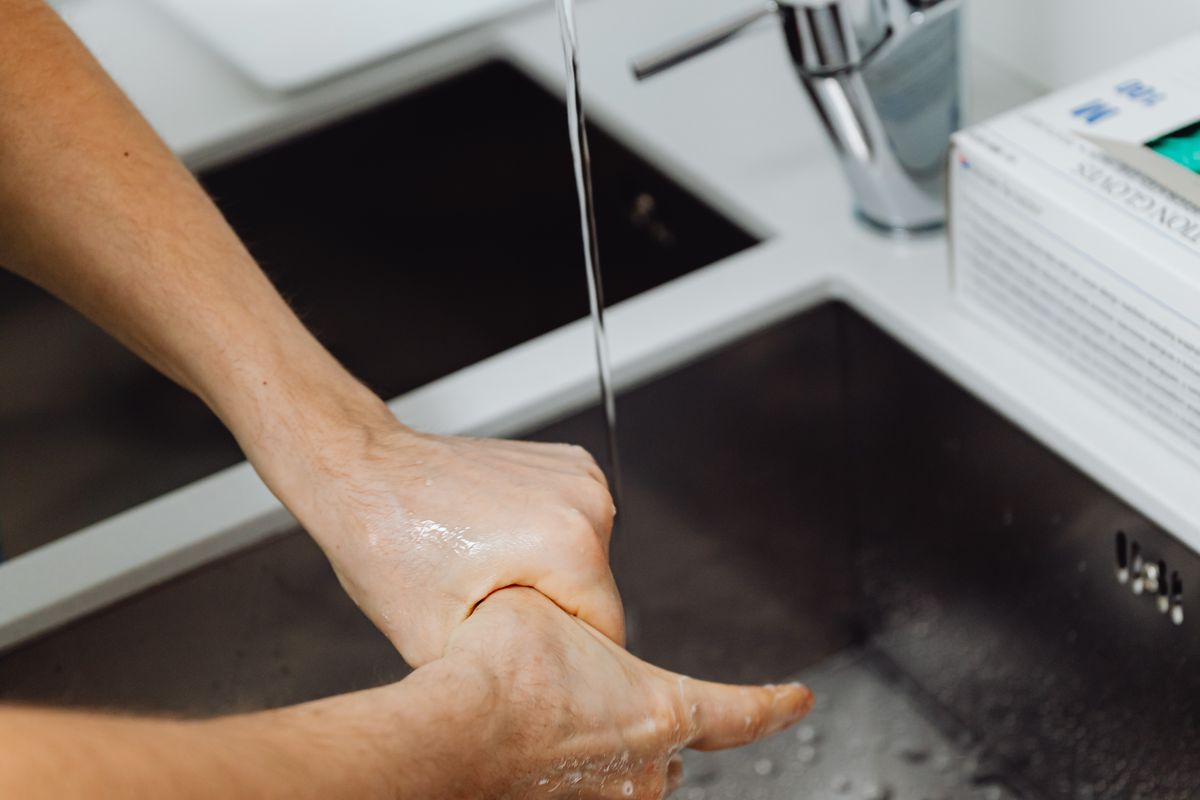
You chop half an onion and crush a couple of cloves of garlic. Half an hour later, your hands still smell like you just walked out of an Italian kitchen mid-service. The trick that’s been floating around the internet for years is simple. Rub your hands under cold water against something made of stainless steel, like the kitchen tap, a spoon, or a pan. Supposedly, the smell disappears almost completely. It sounds like kitchen witchcraft. However, there’s a pretty solid chemistry lesson hiding behind it.
How to do it
- Grab anything stainless steel you have lying around: the sink faucet, a spoon, a saucepan, or one of those novelty “steel soap” bars sold specifically for this.
- Turn on cold water. Hot water doesn’t help, and may actually “cook” the sulfur compounds further into your skin.
- Rub your palms, between your fingers, and around your nails against the metal surface for about 15-30 seconds, as if you were washing your hands with it.
- Rinse it off and, if you want to finish the job properly, follow up with regular soap.
No fancy soaps or miracle products needed: any stainless steel item at home works. That said, there are novelty “steel soap” bars shaped like ordinary soap made purely for this purpose — basically stainless steel dressed up as soap.
Why stainless steel works
The smell of garlic and onion comes from volatile sulfur compounds like allicin, released when you cut or crush the clove and its cells rupture. Those compounds bind to proteins in your skin. As a result, they slowly release into the air over time, which is why the smell lingers for hours after you’re done cooking.
Stainless steel isn’t just plain steel: it contains at least 10.5% chromium, which forms a thin oxide layer on its surface. According to science communicators at BBC Science Focus, that oxide layer can react with sulfur compounds through an oxidation-reduction reaction. The iron and chromium atoms in the metal also take part in that reaction, trapping those compounds on the surface instead of leaving them floating on your skin. It’s essentially the same chemistry behind silver tarnishing when it comes into contact with sulfur in the air: the metal “grabs” the sulfur.
Here’s the honest part: although the chemical mechanism is plausible and has circulated as an explanation for decades, rigorous experimental evidence is scarce. There aren’t large lab studies precisely measuring how much sulfur the steel actually removes compared to, say, just washing your hands with soap and water for the same amount of time. It’s possible a good chunk of the effect simply comes from the friction and cold-water rinse rather than the metal itself. Even so, thousands of home cooks swear they notice the difference. And as tricks go, it costs nothing and carries zero risk — worst case, you’ve just washed your hands a bit longer than usual.
So next time your hands smell like garlic three hours after dinner, try the faucet before reaching for scented soap. And if someone catches you rubbing your hands against a spoon in the kitchen, now you know exactly what to tell them. If you like these kitchen tricks, check out the onion trick that keeps cut avocado from turning brown.