
Can hot water freeze faster than cold water? It sounds like the kind of trick question a physics teacher shuts down in two seconds flat. Except a Tanzanian teenager asked that exact question in 1963, and his teacher told him it was impossible. Sixty years later, physicists are still arguing over the now-famous Mpemba effect.
How the Mpemba effect began: a teenager versus his physics teacher
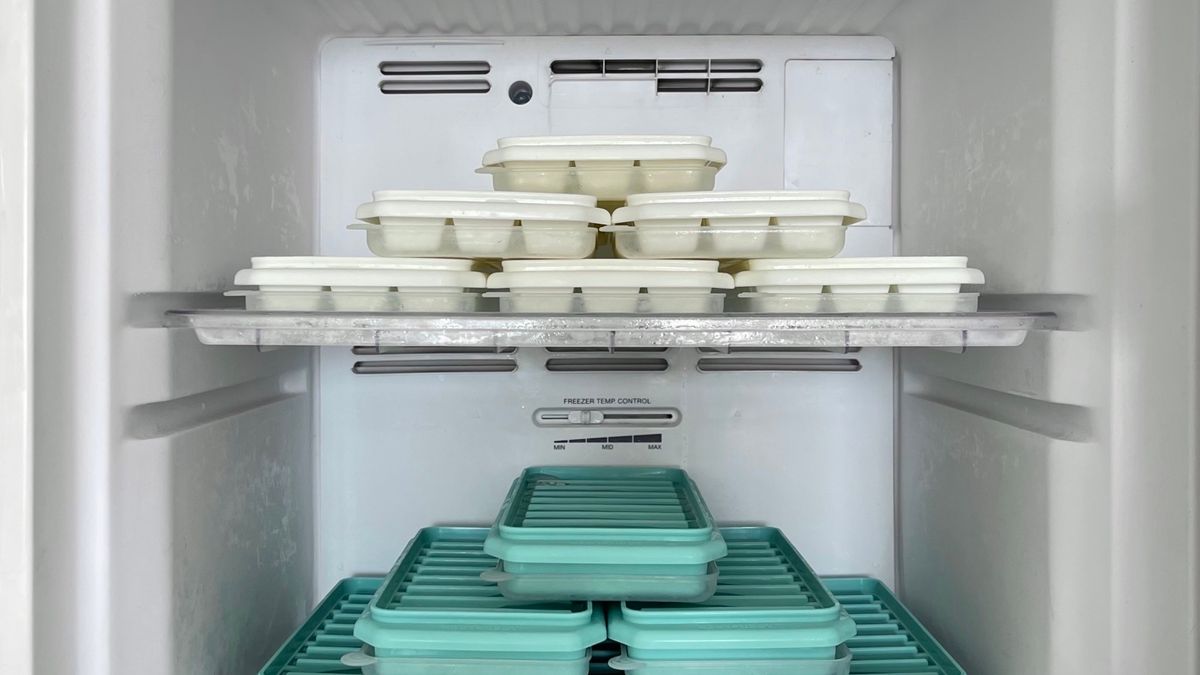
The story actually starts in a cooking class, not a physics one. Erasto Mpemba, a secondary school student in Tanzania, was making homemade ice cream: boil milk with sugar, then stick it in the freezer to set. Since the school freezer was cramped, Mpemba put his mixture in while it was still hot instead of waiting for it to cool first, which his classmates thought was a rookie mistake. To everyone’s surprise, his ice cream was ready before theirs, even though they’d started from an already-cooled mixture. Ice cream, by the way, has its own reputation for playing tricks on your brain: if you’ve ever felt a sudden jolt of pain from eating too fast, that’s called brain freeze.
When he asked his teacher why that had happened, all he got back was a flat “that’s not possible,” no explanation attached. However, the local ice cream vendors already knew this from experience: hot liquid, under the right conditions, beats cold liquid to the finish line in the freezer. Years later, Mpemba met physicist Denis Osborne, who actually took the question seriously, tested it in the lab, and in 1969 the two published a paper on it together. The phenomenon got named the Mpemba effect. Still, to add insult to injury, Aristotle had already noted something similar 2,300 years earlier, around 350 BC, observing that “previously heated” water cooled faster.
Four suspects, no clear culprit
Here’s the fun part: nobody fully agrees on why it happens, though a handful of usual suspects probably work together:
- Evaporation: hot water loses some of its mass as steam, so there’s simply less liquid left to cool down.
- Convection: hot water generates stronger internal currents that stir the liquid and spread heat more efficiently toward the container’s cold walls.
- Dissolved gases: boiling water drives out much of the air dissolved in it, and less dissolved gas seems to make it easier for ice to form sooner.
- Supercooling: cold water can, paradoxically, “delay” the exact moment solid ice starts forming, staying liquid below 0°C (32°F) for a while, whereas water that started out hot tends to crystallize sooner.
The catch is that these four factors don’t always show up together, or with the same strength. It all depends on the container, whether there’s a lid, how much water is involved, the freezer’s temperature, and even where exactly you place the thermometer. That’s why some experiments confirm the effect while others, run under seemingly identical conditions, can’t reproduce it at all.
Science hasn’t had the last word yet
In fact, back in 2016 a team of researchers published a widely cited study in Scientific Reports questioning whether the effect is even real under typical kitchen conditions. That study attributed many earlier observations to measurement errors. Still, the debate is very much alive. More recent studies, using freezers fitted with agents that promote ice nucleation, do manage to reproduce the effect consistently when the initial temperature gap is large.
And then comes the twist nobody saw coming: in 2024, several quantum physics teams observed a “quantum Mpemba effect” in systems that have nothing to do with water at all, like trapped ions and magnetic spins. There, a system starting further from equilibrium can, against all intuition, reach it before one that started closer. What began as a kid’s curiosity while making ice cream has turned into an active line of research in non-equilibrium thermodynamics, well beyond anyone’s kitchen freezer.
So next time someone confidently tells you “that’s impossible,” remember Mpemba: sometimes the person asking the annoying question ends up with a physics effect named after them.