
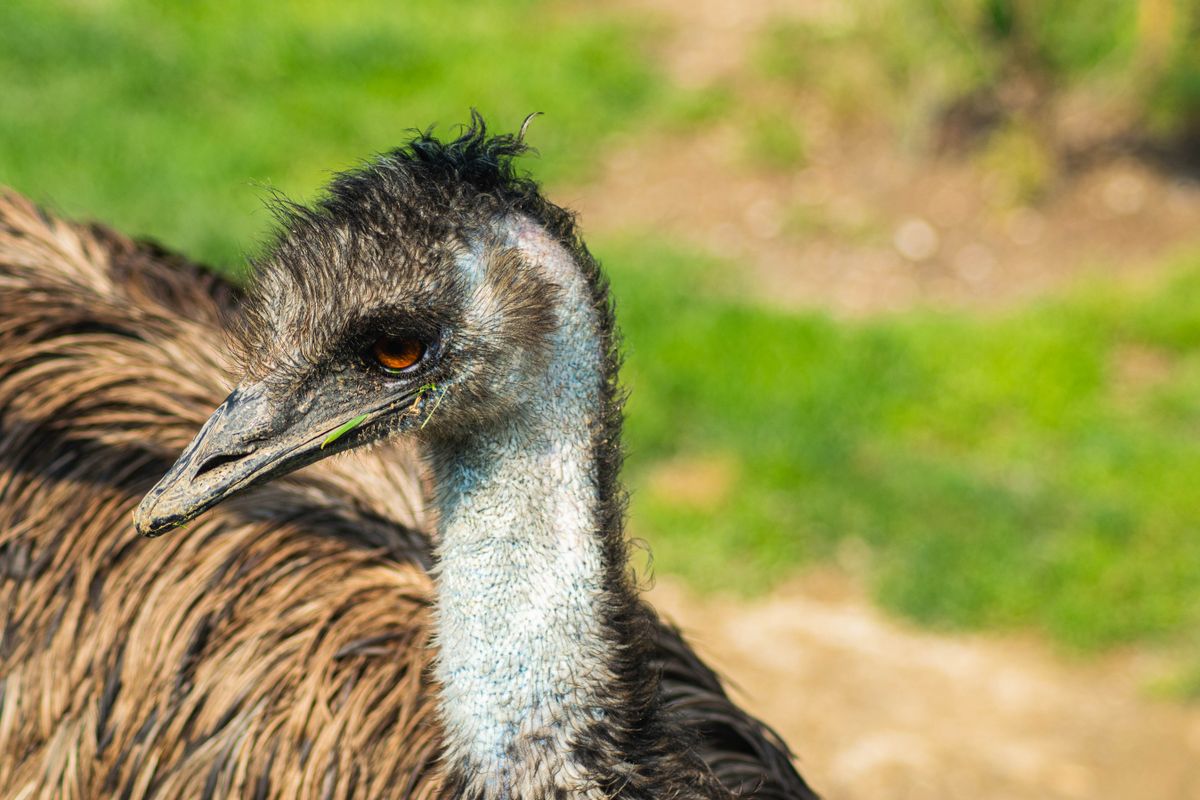
In 1932, the Australian military declared war on a bunch of birds. Seriously. And it lost.
It sounds like a joke, but it’s thoroughly documented: it’s the famous Emu War, one of those episodes that prove reality can be weirder than any sitcom script. Moreover, it all started with good intentions and ended with soldiers retreating, defeated by birds that can’t even fly.
Farmers against an invasion of 20,000 emus
After World War I, the Australian government handed out land in the Wheatbelt region of Western Australia to veterans. The idea was for them to farm wheat. Things went reasonably well until the Great Depression hit. Wheat prices collapsed, and farmers who were already struggling financially found themselves facing an extra, very unwelcome problem.
Every year, emus migrate inland looking for water and food after breeding season. But in 1932, after finding gaps in the fencing meant to keep them out, around 20,000 emus poured into the farmland and started trampling crops. On top of that, they tore holes in fences that rabbits then used to finish the job. Desperate, the farmers asked the government for help. And the government, instead of sending more fencing, decided to send in the army.
Two machine guns, 10,000 rounds, and a humiliating defeat
In November 1932, the Minister of Defence dispatched a small unit led by Major Gwynydd Purves Wynne-Aubrey Meredith. The unit was armed with two Lewis machine guns and roughly 10,000 rounds of ammunition. The plan seemed simple enough: the emus, it was assumed, would bunch up in herds that would be easy to mow down.
Reality turned out very differently. The emus proved fast, slippery, and thoroughly uncooperative, scattering in every direction the moment the shooting started. In fact, according to accounts from the time, some kept running even after taking several hits, thanks to their sheer physical toughness. During one of the first ambushes, the gun jammed just as a group of emus bunched up in front of the troops, and the perfect shot was lost completely.
According to official reports cited by Encyclopaedia Britannica, after several weeks of campaigning Meredith reported around 986 confirmed kills, having fired nearly 10,000 rounds. That works out to more than nine bullets for every emu brought down, against a population that had barely been dented. The major himself reportedly joked, half in jest and half seriously, that if he could raise a military division with the emus’ resilience, it could take on any army in the world.
How the Emu War ended
Facing public ridicule, the government pulled the troops out on December 10, 1932, officially ending the campaign. The press at the time, delighted by the irony, nicknamed the episode the “Emu War,” and that’s how it has gone down in history.
But the crop problem was still very much there, so Australia opted for a far more effective and far less epic solution. It paid bounties to the farmers themselves for every emu they culled. Over the following six months, more than 57,000 bounties were claimed, a number that makes it pretty clear who actually had the solution all along.
It wasn’t the only moment in history that sounds like it belongs in a sitcom — something similar happened with the dancing plague that struck Strasbourg in 1518.
Today the emu remains the world’s second-largest bird and roams freely across much of Australia. It even shares top billing with the kangaroo on the country’s coat of arms. Not bad for an animal that, officially, won a war against a real army.