
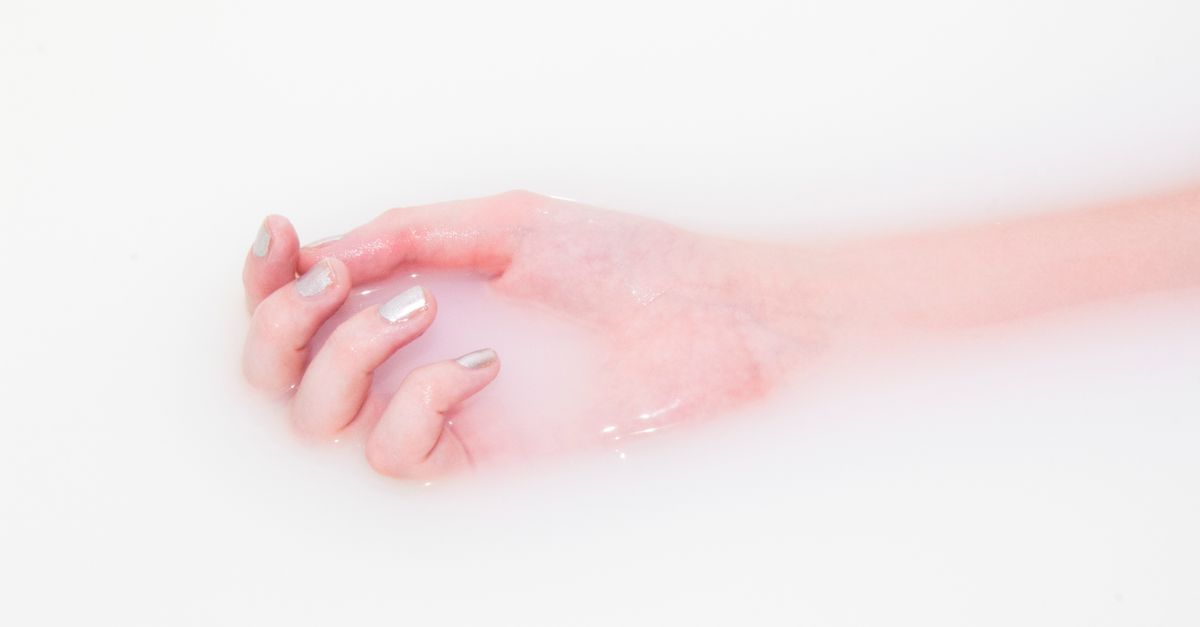
Spend half an hour in the bath and your fingers end up looking like raisins: those are the classic wrinkled fingers everyone recognizes. It’s so ordinary you never question it, but there’s something genuinely odd about it: why do only your fingers and toes wrinkle, never the rest of your skin? For nearly a century, science had the wrong answer. And the real one is far more interesting.
The idea everyone got wrong
The old assumption was that skin, once wet, soaked up water like a sponge and swelled until it puckered. Sounded logical enough, except it couldn’t explain one thing: people with nerve damage in their fingers don’t wrinkle at all when soaked in water, no matter how long they sit there. If it were just physical swelling, the nerve shouldn’t matter one bit.
That detail had been known since the 1930s, and it sat unexplained for decades. The real answer turned out to be that wrinkling is actually a reflex of the autonomic nervous system: water triggers a signal that makes the blood vessels beneath the skin of your fingers constrict. As the volume underneath shrinks, the extra skin has nowhere to go but into folds, which is what gives you those telltale ridges. It’s not your skin absorbing water. It’s your body pressing a button.
What Are Wrinkled Fingers Actually For?
Here’s the fun part. In 2011, researchers floated what’s known as the “rain tread” theory: just like the grooves in a tire channel water away so the wheel doesn’t skid on a wet road, the furrows in wrinkled fingers might work as drainage channels. That, in turn, could improve grip on damp surfaces.
The idea was put to the test in a 2013 study published in Biology Letters, led by neuroscientist Tom Smulders. His team soaked 20 volunteers’ hands in warm water for half an hour, then had them move objects — some dry, some wet — between containers. The result: with wrinkled fingers, people handled wet objects 12% faster than with smooth ones. With dry objects, there was no difference at all. Smulders himself admitted he hadn’t expected the effect to be “so strong and obvious.”
Then why aren’t we wrinkled all the time?
If wrinkling boosts wet grip that much, you’d think it would just be permanent. The likely answer is that it comes at a cost: fingertips stuck in folds all the time would probably lose some fine sensitivity and become more prone to snagging or getting damaged. Keeping skin smooth the rest of the time is likely the trade-off evolution settled on between occasional grip and everyday touch sensitivity.
The deeper evolutionary story — that this helped our ancestors handle wet food, wade through streams, or get better footing on rain-slicked rocks — is still, for now, a reasonable hypothesis rather than a proven fact. What is confirmed, however, is the mechanism itself: this isn’t waterlogged skin, it’s a nerve reflex with a very specific practical job.
It’s not the only body reflex that sounds absurd but has a solid scientific explanation behind it — something similar happens with the brain freeze ice cream triggers.
So next time you climb out of the pool with hands like a hundred-year-old grandmother’s, you can brag that it’s not a manufacturing defect. It’s your nervous system adjusting your grip in real time, like a tire switching tread patterns depending on whether it’s raining.