
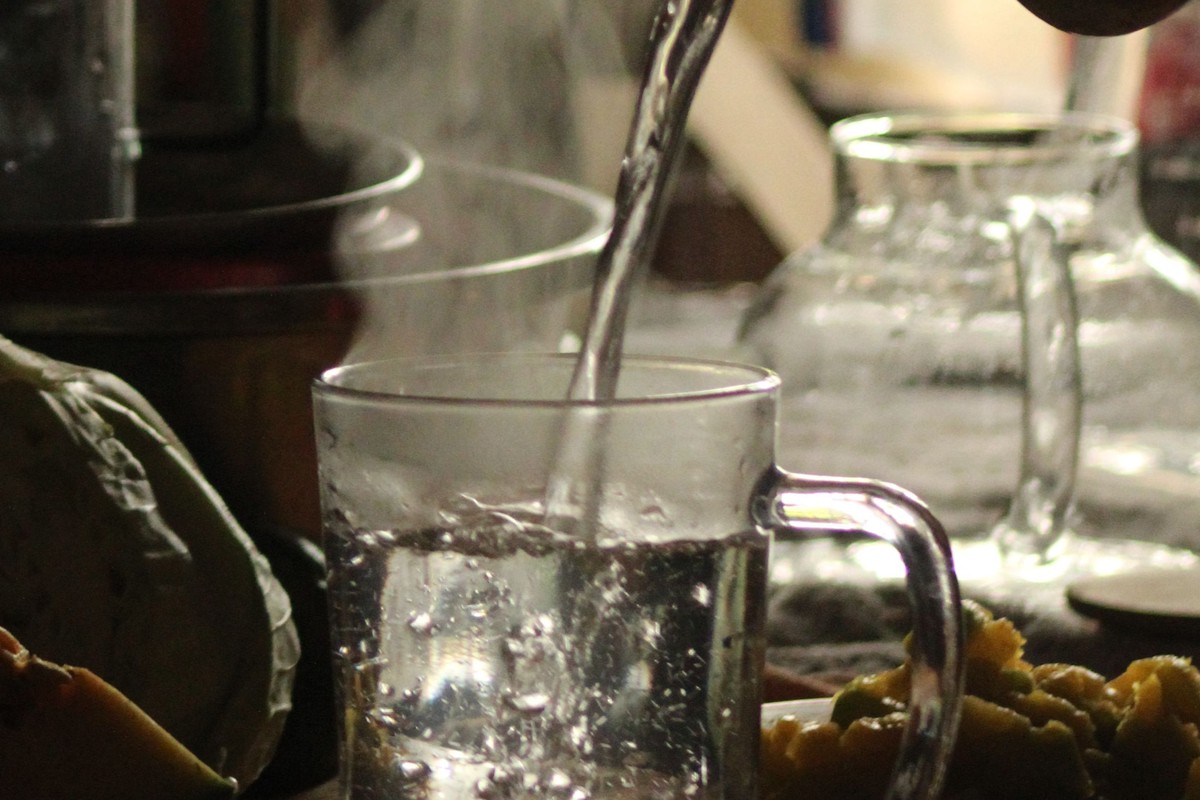
You’re making tea, you grab the prettiest glass in the cabinet, and the second you pour in the boiling water… crack. A perfect fracture just ruined your morning. There’s an old household trick to avoid this, and it’s not grandma’s superstition — it’s plain physics. Just drop a metal spoon into the glass before pouring in the hot liquid.
How to do it
- Grab a metal spoon (the more surface contact with the glass, the better).
- Place it inside the empty glass, resting against the inner wall.
- Pour the boiling water slowly, letting the stream hit the spoon first instead of splashing straight against the glass.
- Leave the spoon in for a few seconds while the glass tempers; you can pull it out afterward once you’re ready to drink.
That’s it. That three-second habit can be the difference between enjoying your tea and sweeping broken glass off the floor.
Why it works: thermal shock
Glass is stubborn when it comes to spreading heat around — it conducts it very slowly. When boiling water (100°C / 212°F) suddenly hits the inner surface of a glass sitting at room temperature, that inner layer expands almost instantly while the outer surface stays cool and barely changes size. The result is enormous mechanical stress squeezed into a tiny space: glass is rigid and has essentially no give, so it has no way to absorb that mismatch and eventually gives way with a crack, usually starting from the rim or from some pre-existing micro-scratch. This is called thermal shock, and it’s the same reason a glass can shatter if you drop ice into it while it’s still hot, or if you pour boiling water into it right after pulling it from a cold dishwasher.
This is where the spoon comes in. Metal is an outstanding thermal conductor — vastly better than glass, depending on the alloy — so the instant the water touches the spoon, it soaks up and spreads that heat rapidly instead of letting it pile up at one single point on the glass. The spoon acts almost like a heat lightning rod: it intercepts the thermal hit, spreads it across its own metal surface, and softens the temperature spike that actually reaches the glass, giving the glass itself time to warm up more gradually and evenly. Less temperature difference between the inside and outside of the glass means less stress buildup, and therefore a much lower chance it cracks. The fact-checking team at Maldita Ciencia looked into this exact household trick and confirmed the effect rests on real physics, not just family folklore.
Does it work with any glass?
The trick helps, but it’s no miracle worker. Thick glasses or ones with chipped rims are far more prone to cracking, because any existing micro-crack concentrates even more stress and acts as the starting point for a fracture. That’s why a thin, flawless glass often handles hot water better than a thick one that looks “tougher.” The undisputed champion against thermal shock is borosilicate glass (the kind used in Pyrex-style cookware and lab equipment): it’s engineered to expand much less when heated, so it shrugs off sudden temperature swings without needing any tricks at all. If you pour boiling liquids daily, swapping your everyday glasses for borosilicate ones is the permanent fix; if not, that metal spoon remains your free, time-tested ally.
1 thought on “The Spoon-in-the-Glass Trick: The Physics That Stops Boiling Water From Cracking It”