
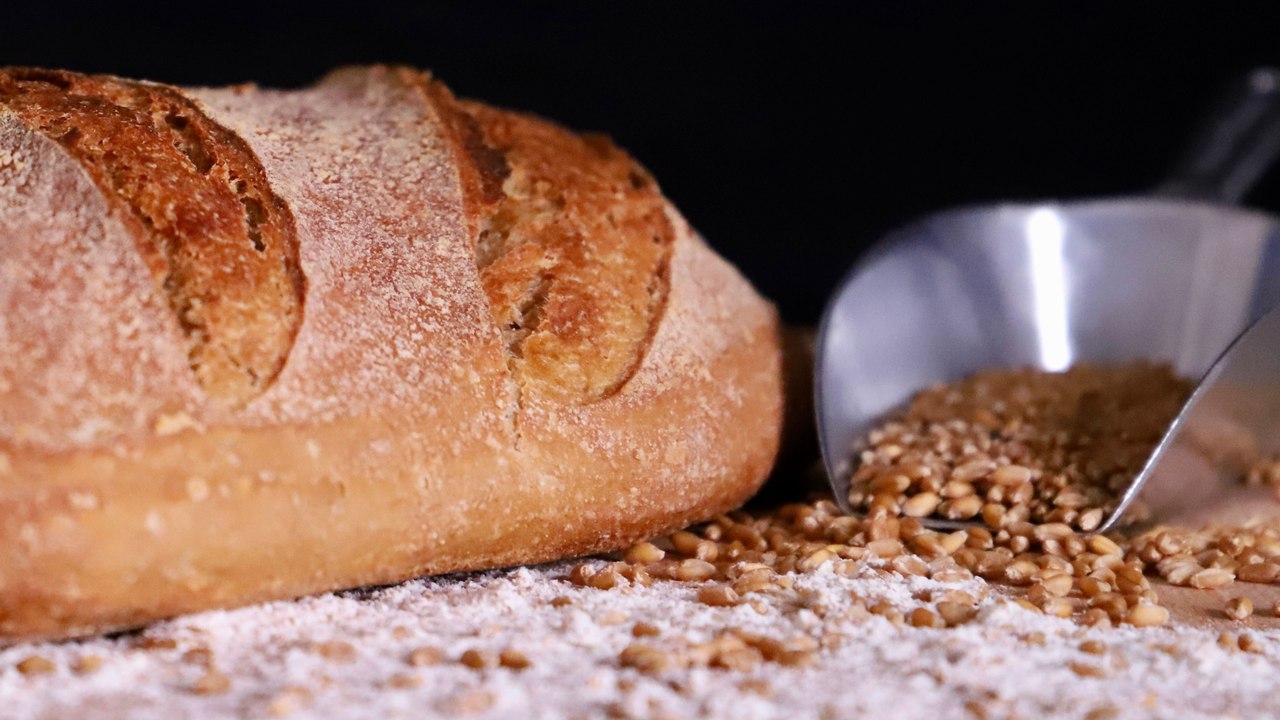
You’ve got yesterday’s loaf sitting on the counter, hard as a brick, and you’re two seconds from tossing it in the bin. Don’t. Run it under the tap for a few seconds, pop it in the oven for ten minutes, and you’ll pull out something that tastes (and crackles) like it just came out of the bakery. It’s not magic, and it’s not a placebo effect — it’s polymer chemistry dressed up as a grandma trick.
How to do it
- Run the whole loaf (or just the piece you want to save) under cold tap water for 5-10 seconds, wetting the crust thoroughly all over. You don’t need to soak it like a sponge, but it should be clearly damp on the outside.
- Preheat the oven to 350°F (175°C).
- Place the bread directly on the oven rack or a baking sheet, unwrapped, and bake for 8 to 10 minutes (a bit longer for a large loaf).
- Take it out and let it rest for 2-3 minutes before slicing — it keeps “settling” on the inside for a moment after it leaves the oven.
The result: crackly crust on the outside, tender crumb on the inside, as if it had just come out of the bakery oven. The effect only lasts a few hours, so eat it soon.
Why it actually works
Here’s the part almost nobody knows: bread doesn’t go stale because it “dries out” — at least not mainly for that reason. What’s actually happening is called starch retrogradation, and it’s a molecular-level process, not simple evaporation.
When bread is baked the first time, heat makes the starch granules — mainly amylopectin — absorb water and swell into a disordered, elastic state. That’s what gives the crumb its soft, springy texture. But as soon as the bread cools, those same starch molecules slowly start reorganizing into a more ordered crystalline structure, squeezing out some of the water they’d absorbed. The bread turns hard, gummy, or crumbly, even though it technically still holds almost the same amount of water as on day one. That’s why “stale” bread doesn’t always feel dry inside: the water is still there, it’s just trapped in the wrong place.
The good news is that this process is reversible with heat. As culinary science writers at The Kitchn explain, heating bread above roughly 105-120°F (40-50°C) melts those starch crystals back down into their original soft state — essentially replaying what happened the first time it was baked. The water is the key ingredient: without added moisture, the oven’s dry heat just dries the crust out further instead of “reviving” the crumb. Wetting the bread first gives those starch molecules the water they need to swell back up once the heat arrives.
America’s Test Kitchen has recommended exactly this water-plus-oven combo for years as the most reliable way to revive stale bread, and technical explainers from sources like ScienceDirect confirm that starch retrogradation is, in fact, reversible through heat.
One catch: the effect is temporary. As soon as the bread cools back down, the retrogradation clock starts ticking again, so this isn’t a trick you can repeat forever on the same loaf. But for rescuing that loaf you were about to throw out tonight, it genuinely works — and now you know it’s not an internet myth. It’s the very same physics that turned flour and water into bread in the first place, just running in reverse.