
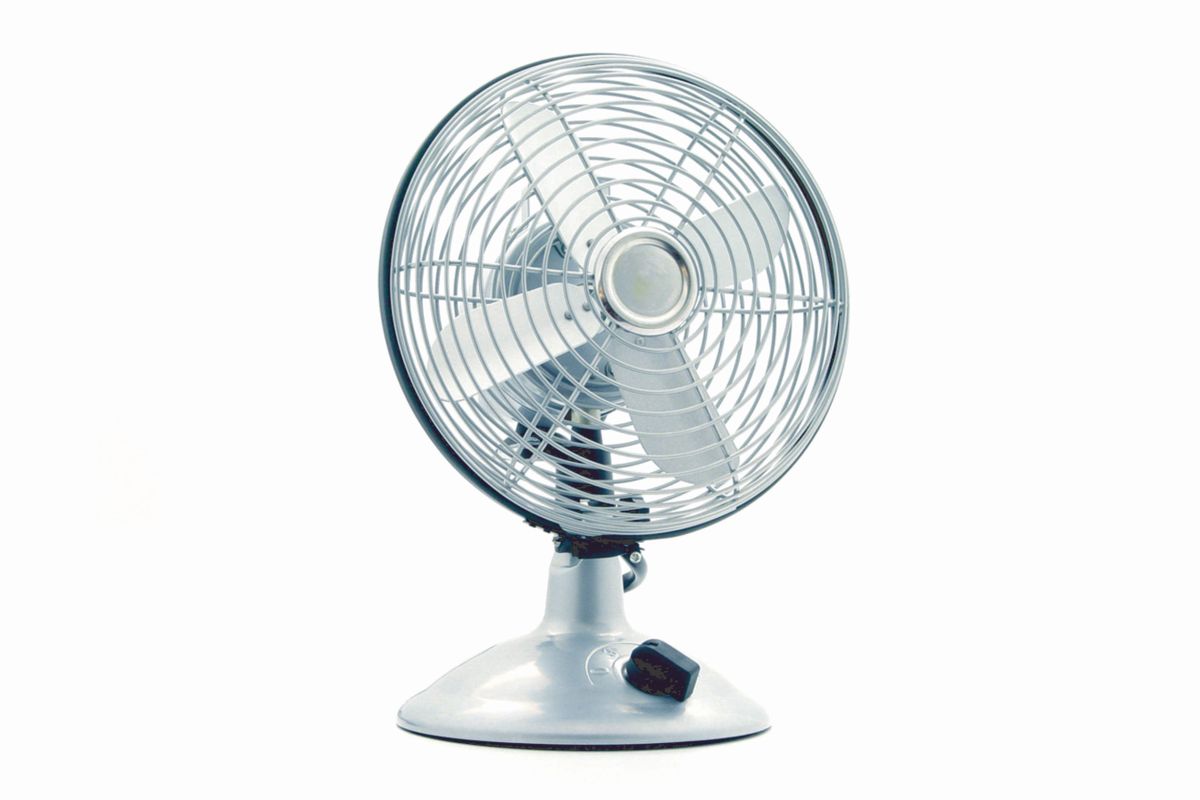
If your fan has basically given up this summer and all it does is push hot air from one corner of the room to another, there’s a low-tech fix that can knock a few real degrees off that breeze: the wet towel trick. Hang a soaked towel or sheet right in front of the blades. This isn’t a wellness-blog myth — it’s the exact same physics behind those “evaporative air conditioner” gadgets sold online, minus the price tag.
How to do it
- Soak a thin towel or a light sheet (the thinner the fabric, the better air moves through it) and wring it out so it’s damp, not dripping.
- Hang it right in front of the fan so the blades blow through the fabric, not just past it. A small drying rack, a curtain rod, or even two chairs work fine as a stand.
- Put a bucket or a dry towel underneath to catch any drips.
- Turn the fan on at medium speed and let the air pass through the wet fabric before it reaches you.
- Once the towel dries out — usually somewhere between 20 and 40 minutes, depending on heat and humidity — soak it again.
An even quicker fix if you have nowhere to hang anything: set a wide bowl of water with a few ice cubes right in front of the fan. Same effect, just a bit weaker since there’s less water surface exposed to the airflow.
Why the wet towel trick actually works
It hinges on something called the latent heat of vaporization: for water to switch from liquid to gas, it needs to “steal” a huge amount of energy, and it pulls that energy straight from the surrounding air. When the fan forces air through the wet fabric, it makes the water evaporate far faster than it would sitting still. That process cools the air coming out the other side before it ever touches your skin.
It’s the exact same mechanism behind so-called swamp coolers, hugely popular in dry parts of the United States: hot air passes through water-soaked pads and comes out several degrees cooler on the other side. According to Wikipedia’s entry on evaporative cooling, under hot, low-humidity conditions these systems can drop the air temperature by 15 to 40 degrees Fahrenheit (roughly 8 to 22 degrees Celsius) before it enters a room. Your wet towel isn’t going to pull off anything close to that, but the same principle at a tiny scale still makes a noticeable difference, especially in the air blowing directly on your face.
There’s an important catch: this only works well when the air is relatively dry. The more humidity already sitting in the room, the less “room” the air has to absorb extra water vapor. That’s why the effect barely registers on a muggy coastal afternoon compared to a dry inland evening. It’s the same reason sweat actually cools you down on a dry summer day but barely does anything on a humid beach afternoon — sweat has to evaporate to cool you, and if the air is already saturated, it has nowhere to go.
You don’t need to spend a cent on this either: an old sheet, a desk fan, and a bit of patience to keep re-soaking the fabric is all it takes. Just don’t overdo it in a poorly ventilated room, since all that extra moisture in the air can get uncomfortable after a while — it’s best used for a few specific hours (naptime, bedtime) rather than as a permanent setup.
If this bit of kitchen-table physics won you over, you’ll probably like the Mpemba effect, the mystery of why hot water can sometimes freeze before cold water does.