
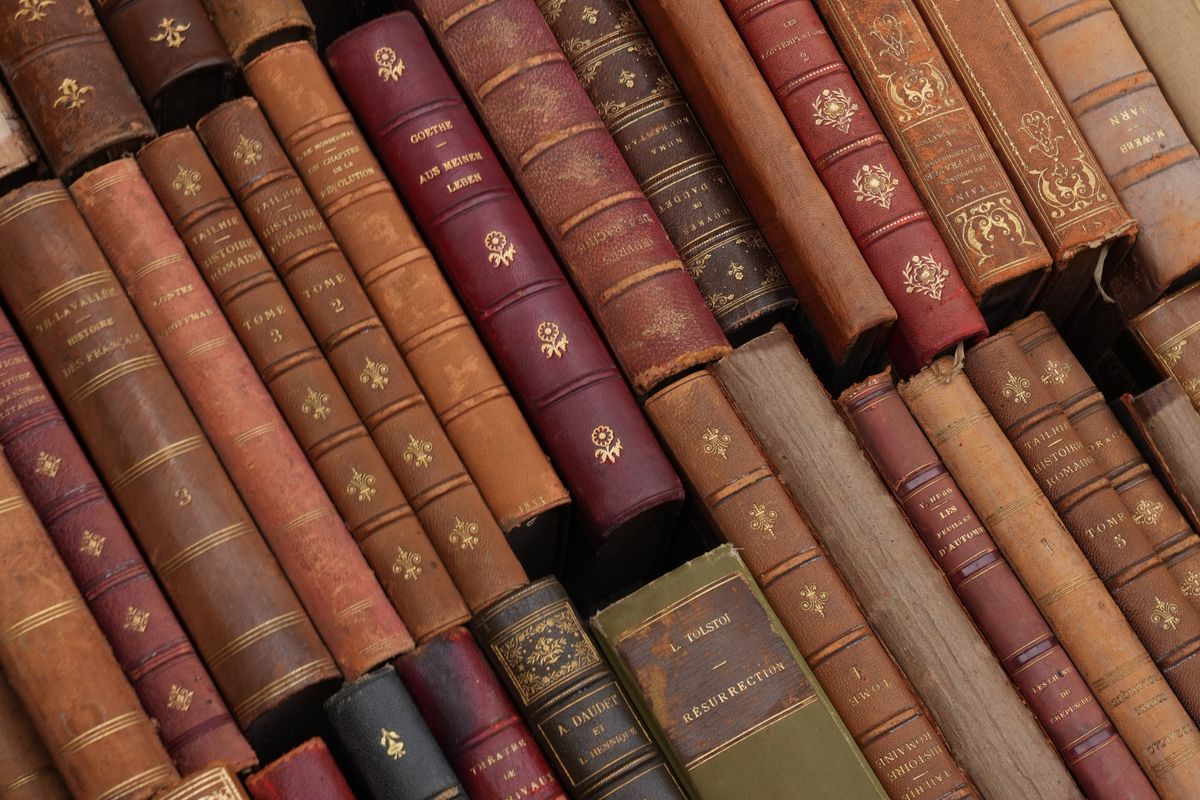
Picture tearing out a fireplace during a renovation and finding, tucked inside an old tea crate, something as unexpected as a book from the local library. That’s exactly what happened to Ross Simmons in Kiama, a seaside town south of Sydney, Australia: a book hidden in a chimney in his own house for 150 years overdue. The story ends with a number so ridiculous it sounds like a punchline: a fine that, had it actually been charged, would have come to roughly 28,000 Australian dollars (about $18,000 USD).
Simmons was renovating his home when he tore out a fireplace that had been bricked up for decades. Inside, instead of ash and rubble, sat a metal tea crate, and inside that, a battered copy of The Antiquities of Athens, published in 1858. A catalog number on the first page — No. 506 — marked it as part of the original collection at Kiama Library, which opened its doors in 1872 with roughly a thousand volumes.
A prime suspect (probably)
Simmons has a pretty good idea of who’s to blame: his great-great-grandfather, John Simmons, an English immigrant who went on to serve as an alderman on Kiama’s local council — and who, as it happens, lived in that very house. The library’s original borrowing records were lost long ago, so there’s no paper trail to confirm it. Still, the circumstantial case is strong: same address, same era, and an ancestor with direct access to the building. The family theory holds up.
What has survived is the fine print inside the book’s cover: the library charged three pence a week for every week a loan ran late — a perfectly reasonable deterrent back in 1872. Nobody, understandably, planned for the possibility that the lateness would stretch on for a century and a half.
From a book hidden in a chimney to worldwide headlines
Kiama librarian Michelle Hudson ran the numbers, applying accumulated inflation to those three pence a week from 1872 to today, and landed on that eye-watering figure of roughly $28,000 Australian dollars. Lucky for John Simmons’s descendant, the library scrapped all overdue fines years ago — as many public libraries worldwide have done, precisely so nobody gets punished for simply forgetting a book — so Ross didn’t have to pay a cent. Quite the opposite: the story has landed him headlines across the globe.
The book itself won’t be going back into circulation, though. Given its historical value and the condition it’s in after a century and a half sealed inside a wall, the library plans to preserve it as an archival piece rather than put it back on the shelves. A fitting ending for a book that, through no effort of its own, has become the most famous overdue loan in Kiama’s history.
The funny thing is that stories like this pop up more often than you’d think: every few years, news breaks of some library book returned decades past its due date, unearthed during a move, inherited from a relative, or, as in this case, literally sealed inside a wall. What makes the Kiama story stand out is the perfect combination of ingredients: a house with history, a family that can trace its own tree straight to the likely culprit, and a fine so absurdly large that a simple home discovery turned into international news.
You can read the original coverage from ABC News Australia, one of the first outlets to report the story with comments from the library itself. If you like objects that resurface decades after everyone gave up on them, don’t miss the megalodon vertebra that sat on the wrong shelf for 35 years.