
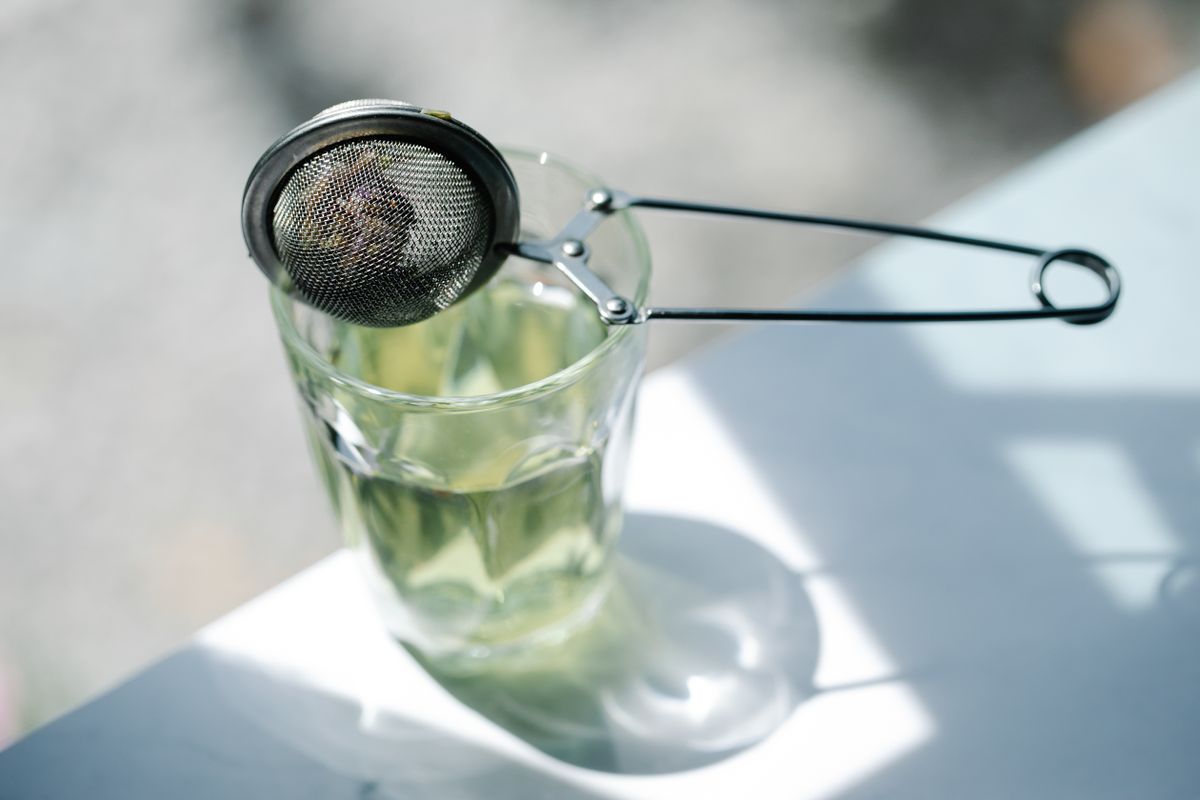
If you’ve ever watched an older relative drop a metal spoon into a glass right before pouring in boiling water or fresh tea, that wasn’t a superstition — it’s actual physics, and it works. The trick is so simple it’s almost suspicious that it can stop a glass from cracking, or outright exploding in your hands.
How to do the metal spoon trick
- Grab a thin glass (thicker ones already have an edge, but the trick works on any glass).
- Drop a metal spoon in — any regular stainless steel spoon will do — letting it rest at the bottom.
- Pour the hot liquid slowly, aiming it straight at the spoon instead of at the glass walls.
- Leave the spoon in while the glass warms up, and pull it out whenever you like, usually once the liquid has settled in for a bit.
That’s the whole trick. No preheating the glass, no special borosilicate glassware — just an ordinary teaspoon.
Why it works
The reason a glass shatters when you pour in boiling water has an official name: thermal shock. The moment hot liquid touches the glass, the inner surface heats up and expands almost instantly, while the outer surface stays cool and at its original size for a few seconds longer. That mismatch in expansion between the inside and the outside creates mechanical stress inside the material itself, and once that stress goes past what the glass can handle, it cracks — usually starting from the weakest point on the surface, like a tiny scratch or a manufacturing flaw.
According to the Wikipedia entry on thermal shock, ordinary glass can start failing this way with a temperature difference of as little as around 40°C (72°F) between its two faces — a gap that boiling water blows past in an instant if the glass started out at room temperature, or worse, fresh out of the fridge.
This is where the metal spoon earns its keep. Metal is an outstanding heat conductor — far better than glass, which is actually a pretty decent insulator. When the stream of boiling water hits the spoon instead of the glass, a good chunk of that heat transfers into the metal almost immediately, spreading across its surface in a fraction of a second. What finally reaches the glass walls is water that’s no longer scalding hot, and more importantly, water that isn’t slamming into one spot all at once. The spoon works like a thermal shock absorber, soaking up that first, most violent burst of heat before the glass has to deal with it alone.
There’s an extra reason this trick makes so much sense with Turkish or Moroccan tea glasses — those narrow, wafer-thin glasses that hold near-boiling tea: the thinner the glass, the less room it has to absorb stress before giving way, so any help spreading out the heat matters far more than it would with a thick, sturdy cider glass.
A couple of extra tips
- Pouring slowly helps just as much as the spoon itself — the more gradual the temperature change, the less stress builds up in the glass.
- If the glass just came out of the fridge or the dishwasher, let it sit for a few minutes first: the bigger the starting temperature gap, the more work you’re asking that poor spoon to do.
- The same principle is why lab glassware and coffee makers use borosilicate glass: it expands far less with heat than ordinary glass, so it can handle much more sudden temperature swings without needing a spoon’s help at all.
Metal’s knack for conducting heat also powers another handy kitchen trick: the metal pan trick that thaws meat in minutes. So next time you’re about to pour boiling water into a regular glass, you know the drill: one metal spoon, a slow pour aimed right at it, and your glass will live to serve many more rounds of tea.
1 thought on “The Metal Spoon Trick to Stop a Glass From Cracking”