
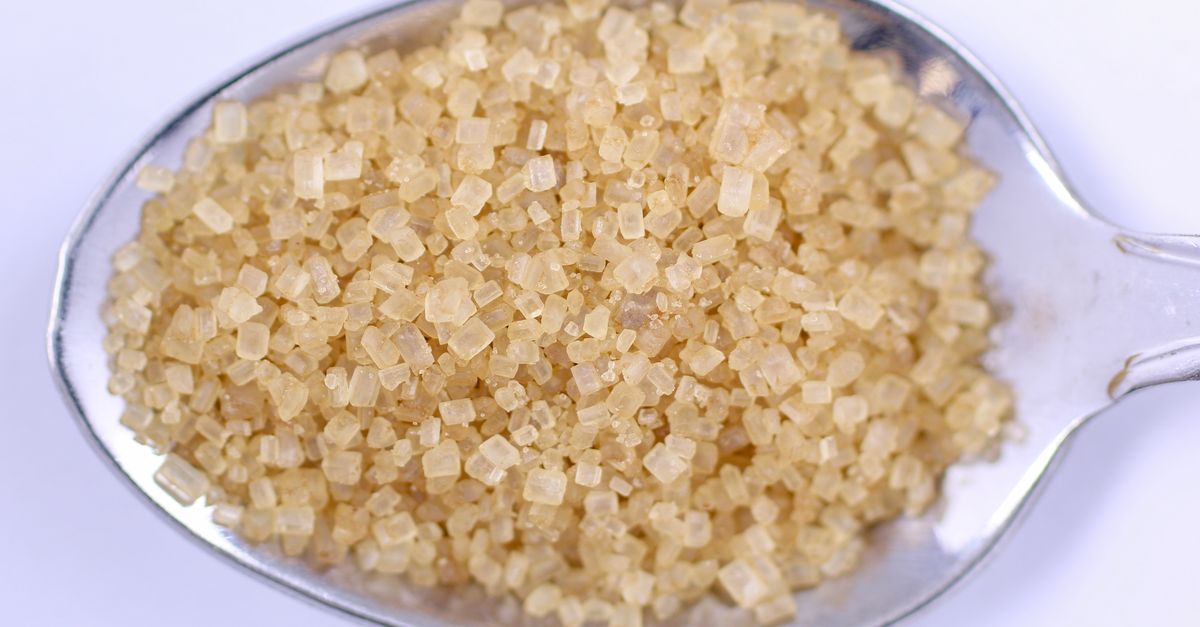
If you’ve ever gone digging for a spoonful of brown sugar, you know the feeling. Sometimes all you find is a brick that would make a mason proud. Here’s how to soften brown sugar without a hammer: bury a slice of sandwich bread in the jar, seal it up tight, and wait a few hours. By the next day the sugar is loose and scoopable again, as if it never had its little existential crisis in the pantry.
How to do it
- Grab a slice of fresh sandwich bread (white or whole wheat, doesn’t matter — just not stale or toasted).
- Bury it directly in the hardened brown sugar, inside its container or a resealable bag.
- Seal the container tightly so the moisture can’t escape into the air.
- Let it sit for 8 to 24 hours, depending on how rock-solid the sugar has gotten.
- Pull the bread out (it’ll probably be stale and stiff by now — fair trade). Then stir the sugar: it should crumble apart with barely any effort.
Short on time? There’s a faster route. Put the sugar in a microwave-safe bowl next to a small cup of water, without them touching. Then heat it in 20-second bursts, stirring in between. Still, it’s a rougher fix, so use the sugar right away before it dries out again.
Why the trick works to soften brown sugar
Brown sugar is really just white sugar with molasses mixed back in. That molasses is what gives it the color, the flavor, and — crucially — the moisture. As long as the jar stays sealed, that moisture stays trapped and the crystals slide past each other easily. However, the moment air gets in, through a loose lid or an open bag, the water slowly evaporates. As a result, the molasses dries out and turns into glue between the grains, which is how you get that oddly rock-like block.
The bread comes in thanks to a simple rule of physics and chemistry. In other words, water always moves from where there’s more of it to where there’s less, chasing equilibrium. Food scientists call this water activity. Fresh bread has far more “available” water than dried-out sugar. So, inside a sealed space, the water vapor the bread gives off slowly migrates toward the sugar. In the end, both reach similar moisture levels: the sugar gets its moisture back, and the bread, having given up its own, ends up stale and hard as a cracker.
When it fails, and what else works
That’s exactly why the trick fails with bread that’s already stale or toasted. Because of this, if it has no water left to give, there’s no migration to speak of, and the sugar stays just as hard as before. The same principle explains why similar tricks work with an apple slice, a marshmallow, or even a dampened terracotta disc — an actual product sold in kitchen stores for this exact purpose. In addition, all of them add ambient moisture inside a sealed space.
One detail that surprises a lot of people: brown sugar never really “goes bad” by hardening, it just loses water. In fact, it stays completely safe to eat, so there’s no need to throw it out. For this reason, just rehydrate it patiently, or with the microwave if dessert can’t wait. As Food Network explains in its guide to softening brown sugar, the trick always boils down to the same thing. Seal the sugar in with a moisture source and give the water time to do its job.
Next time your brown sugar jar puts up a fight, skip the hammer and the trip to the store. All you need is a slice of bread and a little patience. Meanwhile, if it’s dull kitchen scissors giving you trouble instead, the aluminum foil trick that makes dull scissors cut well again is the same kind of everyday fix.