
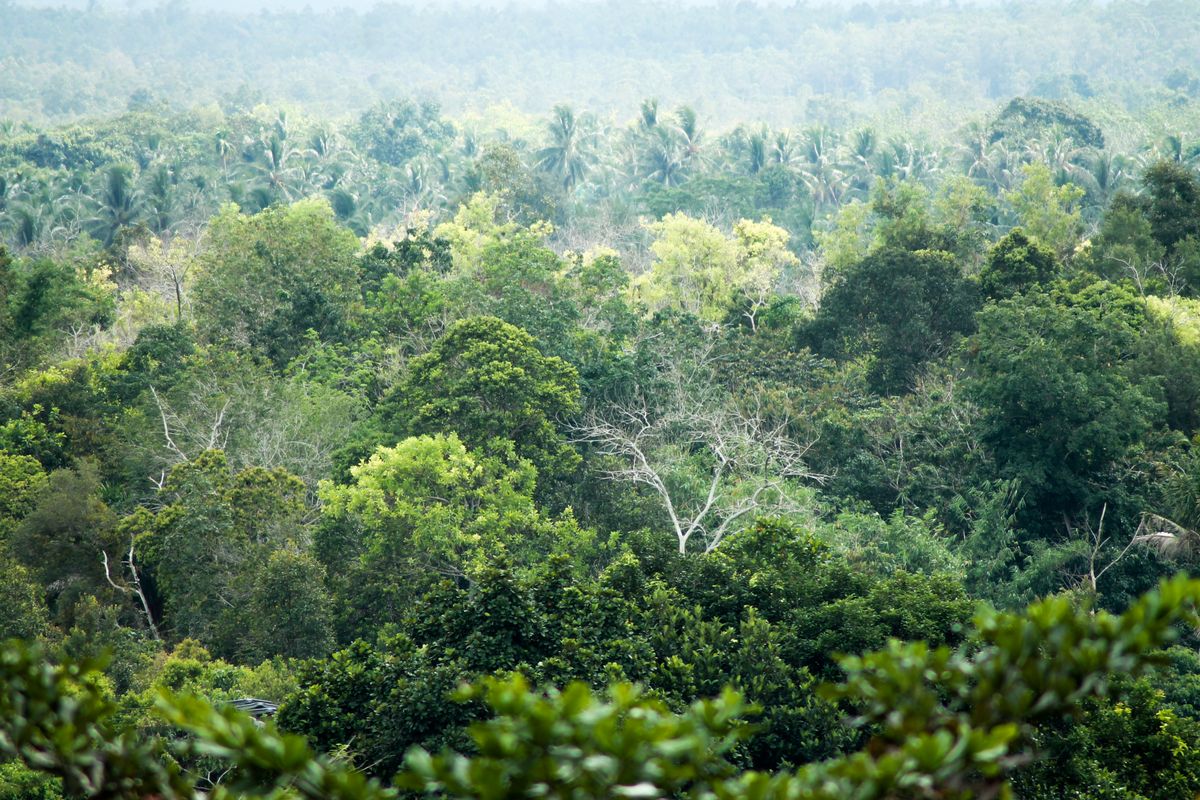
Picture a plant that keeps its entire love life a secret: it flowers underground, gets pollinated underground, and grows its fruit underground, without a single petal ever poking up into daylight. It sounds like a botanical tall tale, but it’s real, it grows in the rainforests of Borneo, and it has a name: Pinanga subterranea, the first underground palm tree ever described as flowering and fruiting almost entirely below the soil.
The discovery, published in 2023 by researchers at the Royal Botanic Gardens, Kew together with colleagues in Indonesia and Brunei, comes with a detective story attached. Malaysian botanist Paul Chai first stumbled on this “odd” palm in the Lanjak Entimau Wildlife Sanctuary, in Sarawak, back in the 1990s, but the find sat forgotten for two decades. It wasn’t until 2018, over a work breakfast with fellow botanists, that Chai mentioned in passing a strange lost palm nobody had documented since. That offhand comment set off the research that eventually confirmed a brand-new species.
An underground palm tree that stumped even the botanists
“We knew immediately that it’s a really odd palm,” said Benedikt Kuhnhäuser, a Kew botanist, after examining the first specimens. And no wonder: among the more than 2,600 palm species catalogued worldwide, not a single other one completes its entire reproductive cycle underground. Pinanga subterranea pushes its flower clusters out from the base of the stem downward instead of upward, and right there, buried in the soil, pollination happens — likely thanks to insects living in the leaf litter — followed by the fruit developing, all without ever seeing the sun.
This evolutionary trick, known as geocarpy, isn’t unique to this palm: peanuts also bury their pods after flowering above ground, and a peculiar Australian orchid, Rhizanthella, lives entirely underground. Still, no other known palm does both — flowering and fruiting — without ever emerging into the light. For now, it’s a one-of-a-kind case within its family, every bit as strange as the devil flower recently found in Thailand, another botanical oddity that has surprised scientists.
Locals were right all along
Here’s the funniest part: while the plant was a total mystery to science, it was no mystery at all to the communities of Sarawak and Kalimantan. Its bright red, sweet, juicy fruit is already eaten as a local delicacy, and the plant had names in at least three indigenous languages long before any scientist paid it any attention. The botanists, in fact, only found ripe fruit by asking local residents where to look — because you actually have to dig for it.
So how did such an extraordinary trait go unnoticed for so long? The answer is almost disappointingly simple: without flowers or fruit in sight, this palm looks nearly identical to the juvenile plants of other common Bornean palm species. Among the roughly 300 palm species already catalogued on the island, it stayed invisible for decades simply because nobody had a reason to start digging.
Why it matters beyond the trivia
Beyond making a great party fact, the story of this underground palm tree is a reminder that Borneo — one of the oldest and most biodiverse rainforests on the planet — still keeps secrets even in species people have been eating for generations. Giving the plant a scientific name isn’t just paperwork: it’s the first step toward assessing its conservation status and protecting it from the deforestation creeping into its habitat in Sarawak and Kalimantan.
So next time you think everything about the natural world has already been discovered, remember this shy little underground palm tree that decided to live its whole life below the soil, no fuss, no spectacle — until one breakfast between botanists finally dragged it, quite literally, into the light.