
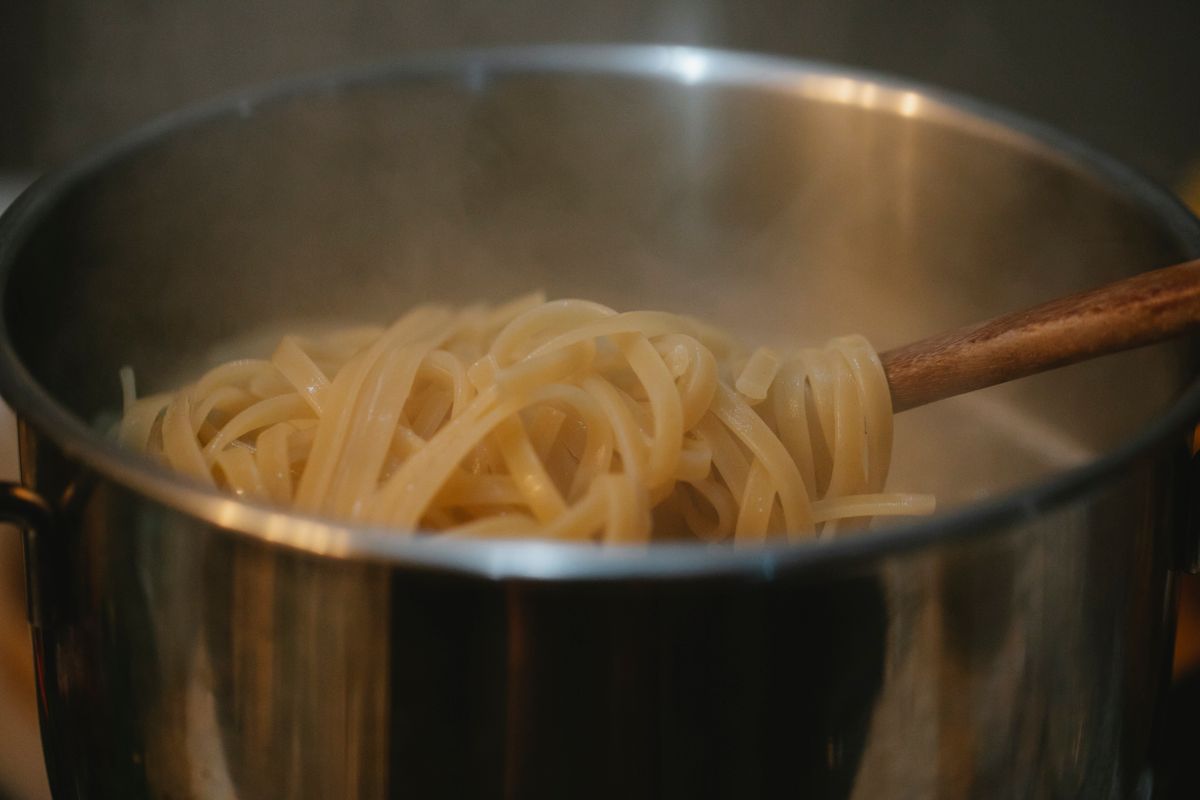
It’s a trick that’s been passed down for generations: lay a wooden spoon across a boiling pot and, as if by magic, the water stops spilling over. Your grandmother did it, you’ve probably tried it yourself without quite knowing why it worked… and it turns out it really does work, just not for the reason most people assume.
How to do it
- When the water in your pot (pasta, rice, potatoes, beans, whatever) starts boiling hard and the foam looks ready to climb over the rim, lay a clean, dry wooden spoon across the top of the pot.
- Position it so it touches the water’s surface, or sits right where the rising foam will hit it.
- Keep an eye on the heat anyway: the trick buys you a few minutes, it doesn’t switch off boil-overs for good.
- If the foam starts creeping up again later, take the spoon off, dry it thoroughly, and put it back, or just turn the heat down a notch.
No special gadgets, no secret ingredients: any wooden spoon from your kitchen drawer will do. The one thing that matters, as you’re about to see, is that it stays dry. And if you cook on induction or ceramic glass and those sticky starchy puddles drive you up the wall every time pasta water boils, this one trick will save you more than one last-minute wipe-down.
Why it actually works
Plain boiling water almost never overflows: bubbles rise, pop at the surface, and that’s the end of it. The trouble starts when there’s starch (pasta, rice, potatoes) or protein (milk) in the water — those molecules cling to the bubble surfaces and make them stretchier and tougher, so instead of popping they pile up on top of each other into a foam that keeps climbing until it spills over the edge.
That’s where the wooden spoon comes in. Wood is porous, and as long as it’s dry, it soaks up some of the air and steam from the bubbles the instant they touch it. At the same time, its rough surface stretches the bubble’s thin film past its breaking point, so it pops right on contact. Wood is also a poor heat conductor, unlike metal, which means it stays a bit cooler than the boiling water — and that cooler surface helps destabilize the foam exactly where it touches.
The trick’s limit is baked into the same mechanism: as soon as the spoon gets wet and heats up, it stops being porous and stops being cool, so it loses its effect. That’s why the overflow doesn’t disappear entirely — it’s only delayed by a few minutes, just long enough for you to turn down the heat or pull the pot off the burner in time. Science writers have recently revisited the phenomenon and confirmed this mechanism, as covered in this article from The Conversation: boiling over turns out to be a foam physics problem more than a heat problem, which is why simply adjusting the burner doesn’t always fix it on its own.
Some cooks take it further and stack the trick with other old standbys: rubbing a little oil around the rim of the pot (so the foam slides instead of climbing it), leaving the lid slightly ajar instead of sealing it shut, or just using a bigger pot than seems necessary so the foam has more room before it reaches the top. None of these fully replaces the wooden spoon on its own, but combined, they’re the difference between hovering over the pasta with one eye and calmly setting the table for a couple of minutes.
One fun detail: try the same move with a metal spoon and you’ll barely notice a difference, because metal isn’t porous and doesn’t trap air the same way — plus it conducts the pot’s heat almost instantly instead of staying cool. So next time someone tells you it’s “just an old wives’ kitchen tale,” you’ll know exactly what to say back: it’s textbook physics, applied with a stick of wood.