
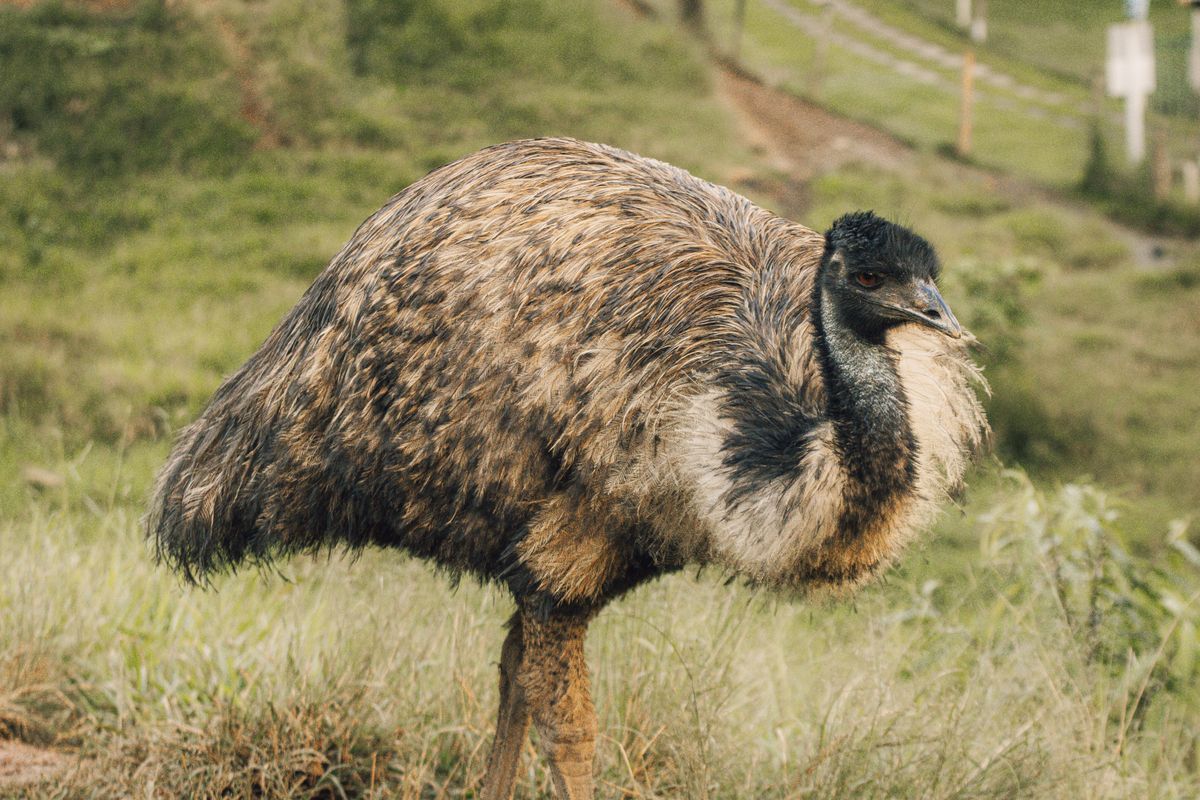
Yes, you read that right: in 1932, Australia sent army machine guns after a bunch of birds — and the birds won. This isn’t an urban legend or an internet joke: it really happened, between November and December of that year. In fact, it’s sitting right there in Australian military records under a name officials took entirely seriously: the Emu War.
An army of veterans versus a plague with feathers
It started with a spectacularly bad combination of circumstances. After World War I, the Australian government had settled thousands of ex-soldiers as farmers on marginal land in Western Australia, promising them prosperity through wheat. The soil turned out to be poor, and the Great Depression was squeezing every budget. Meanwhile, a drought pushed roughly 20,000 emus to migrate straight into those same farmlands in search of water. The birds trampled crops and flattened miles of fencing, leaving gaps that let rabbits pour in too. Desperate, the farmers asked the military for help, and to everyone’s surprise, the Department of Defence said yes: the Emu War had officially begun.
Lewis guns versus birds that sprint at 50 km/h
On November 2, 1932, Major G. P. W. Meredith of the Royal Australian Artillery arrived in the town of Campion. He brought two soldiers, two Lewis machine guns, and 10,000 rounds of ammunition. The plan looked simple enough on paper: corner the flocks and open fire. However, reality had other ideas. Emus turned out to be terrible targets. Moreover, they run in unpredictable zigzags at over 50 km/h and scatter the instant the first shot cracks.
Meredith ended up half-admiring his “enemy,” almost against his will: “If we had a military division with the bullet-carrying capacity of these birds it would face any army in the world. They can face machine guns with the invulnerability of tanks,” he said after the campaign, according to History Hit.
They even mounted a machine gun on a truck
The soldiers tried everything: ambushes near watering holes and coordinated firing lines with local farmers. They even bolted one of the Lewis guns to the back of a truck to chase flocks cross-country. The vehicle’s rattling over rough terrain made aiming nearly impossible, and the emus kept slipping away. Over a little more than a month of operations, from November 2 to December 10, the soldiers fired thousands of rounds. However, they only managed to bring down, by official counts, just under 1,000 confirmed emus — with perhaps a few hundred more later dying of their wounds — a tiny fraction of the estimated 20,000-strong population.
Retreat: how the Emu War ended, and a press that couldn’t stop laughing
The results were so dismal that the troops were pulled out ahead of schedule. Therefore, the Australian Parliament itself debated the episode, not without mockery, as a full-blown military failure. The press of the day had a field day at the army’s expense. Meanwhile, in the United Kingdom, one member of parliament reportedly joked about whether medals would be handed out to the surviving emus. The bird problem was eventually solved in a far less dramatic way: through a simple bounty system paid per emu culled, run by the farmers themselves. Therefore, it achieved in a few months what the artillery never could.
Nearly a century later, the Emu War remains one of those episodes that sound made up but aren’t. It even left a curious mark on the country’s identity: Australia’s coat of arms features both a kangaroo and an emu. The traditional explanation — not without some debate among biologists — is that neither animal can easily walk backwards. Still, it’s a fitting symbol for a nation that, at least once, had to concede defeat to an opponent that only knew how to move forward.
If you enjoyed this kind of historical oddity, you’ll also love the shortest war in history, a conflict between Britain and Zanzibar that lasted just 38 minutes.