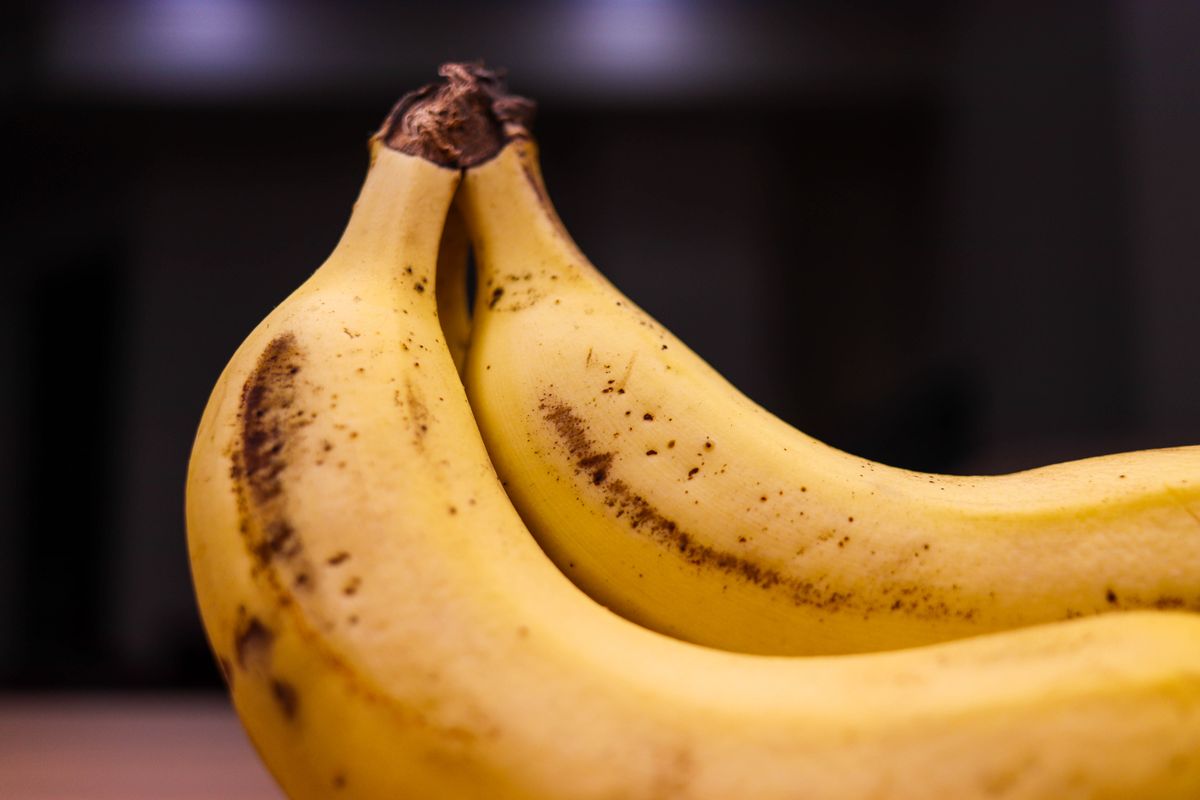
Every time you eat a banana, you’re eating something radioactive. Radioactive bananas aren’t a WhatsApp-forward urban legend. It’s actual physics, and it’s been carefully measured. It even lent its name to a unit that scientists genuinely use to explain what “a tiny amount of radiation” looks like. It’s called, with a completely straight face, the banana equivalent dose.
Where does the radioactivity in radioactive bananas come from?
The culprit is potassium, a mineral your heart and muscles need to function. Bananas, in turn, are loaded with it. What most people don’t realize is that a small slice of all the potassium in nature is radioactive. In fact, just 0.0117% is an isotope called potassium-40. It’s nothing exotic or lab-made: it’s in the soil, in water, in your own body, and, naturally, in fruit.
A medium banana contains roughly 14 to 15 becquerels of radioactivity from potassium-40, according to the Wikipedia entry on the banana equivalent dose. This figure is well documented with nuclear physics sources. A becquerel measures how many atomic decays happen per second. So yes — right now, in whatever fruit bowl is nearest to you, atoms are quietly falling apart and nobody’s noticing.
The unit physicists invented to explain themselves better
Here’s the fun part. Most people struggle to picture what a microsievert or a becquerel actually means. That’s why radiation communicators started using the banana as a yardstick: one banana equivalent dose (BED) works out to roughly 0.1 microsievert. That’s the radiation your body absorbs from eating one.
For perspective: a dental X-ray comes in around 50 banana-doses. A long-haul transatlantic flight, thanks to greater cosmic-ray exposure at altitude, can run into the hundreds. The annual added-exposure limit allowed for the general public under many safety regulations, however, works out to tens of thousands of bananas. As the University of California explains in a public-science piece on the topic, the point of the BED isn’t to scare anyone. Quite the opposite: it gives people an everyday reference point. That way, “you were exposed to some radiation” stops sounding automatically like “you’re in danger.” That’s exactly why radioactive bananas have become science communicators’ favorite comparison.
Should you stop eating bananas? (Spoiler: no)
With all that in mind, the obvious question is whether radioactive bananas pose any real risk. Here’s the catch: according to physicists themselves, the BED is a slightly misleading unit. Eating a banana does not actually raise your total accumulated radiation dose. Your body regulates potassium with remarkable precision through homeostasis. So if you eat more than you need, your kidneys simply flush out the excess within hours. You could eat twenty bananas in a row, something we don’t recommend for reasons that have nothing to do with nuclear physics. Still, your internal potassium-40 level would snap right back to its usual equilibrium.
The banana isn’t even the reigning champion of radioactive produce. Brazil nuts, for instance, also pick up traces of radium-226 from the tree’s famously deep root system, making them noticeably “hotter” radioactively than bananas. Potatoes, beans, and nuts in general all chip in their own bit of potassium-40 too. We live on a planet with a slightly radioactive background hum, and we’ve been coexisting with it just fine for generations.
So next time someone tells you something “has radiation” as if that were automatically synonymous with danger, you’ll know exactly what to say back: well, so do bananas. As with almost everything, the dose makes the poison. By the way, if what worries you about your radioactive bananas isn’t the radiation but how fast they turn brown, here’s a plastic-wrap trick to keep them fresh longer.