
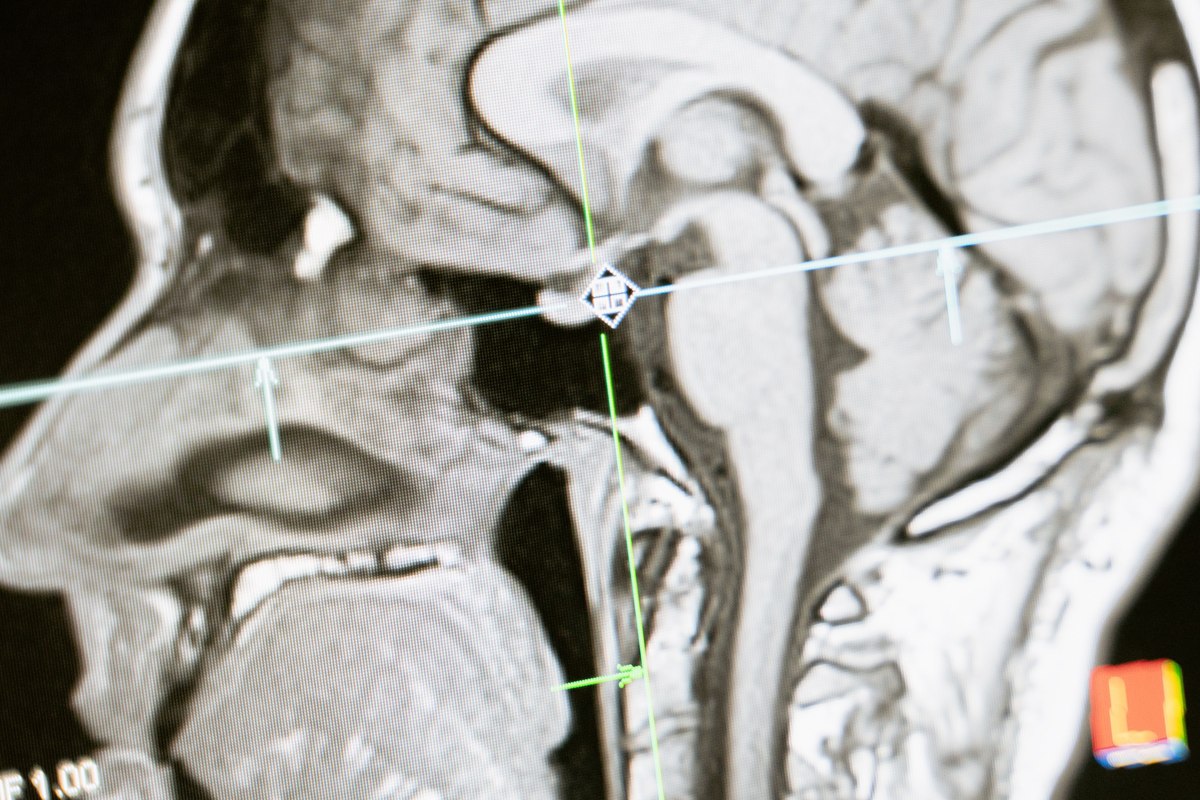
You’ve spent your whole life assuming you have one brain. However, according to a study published this month by Stanford researchers, you actually have two fused brains, stitched together over hundreds of millions of years of evolution. That’s not a poetic exaggeration — it’s what the data suggests, and it might explain why scientists have been stuck for decades trying to grow certain neurons in a dish.
The Model Everyone Took for Granted (and Might Be Wrong)
For decades, neuroscience assumed the entire brain sprouts from a single type of progenitor cell in the embryo. That cell, the classic theory held, branches out to form every region: one origin, one family tree of cells.
The team led by neuroscientist Kyle Loh, with Carolyn Dundes and Rayyan Jokhai as co-first authors, found something different after tracking embryonic development in detail. The forebrain and midbrain (the “front” part, responsible for language, reasoning and consciousness) come from their own progenitor cell. In contrast, the hindbrain (the “back” part, which handles breathing, heartbeat and other automatic functions) arises from a completely different one. It isn’t one branch splitting off from another — they’re two parallel developmental pathways that end up fused together. The study was published on September 18 in Nature Neuroscience.
Two Fused Brains, From Jellyfish to Chickens
The strangest part is that this “double origin” pattern isn’t unique to humans. The researchers found it in chickens, zebrafish, and — remarkably — in acorn worms. These are odd little creatures that live on the seafloor and, in fact, share an extremely distant common ancestor with us. In fact, jellyfish, which split off from our evolutionary lineage some 600 to 700 million years ago, already have two separate nervous systems at opposite ends of their bodies.
In other words, evolution didn’t design a brain from scratch as a single piece. It took two ancient nervous systems that already existed separately: one primitive, focused on keeping you alive, and one more “modern,” capable of writing poetry or wondering about its own origins. It then spliced them together, generation after generation, until they fit inside the same skull. As Loh himself put it, having the brain as one organ would probably be more efficient, but we’re stuck relying on this primordial patch job.
Why This Is More Than a Lab Curiosity
Here’s the practical payoff. For years, growing hindbrain neurons in the lab — the very cells that fail in diseases like ALS and spinal muscular atrophy — has been far harder than growing forebrain neurons. Nobody quite knew why. After all, they’re two fused brains with entirely different cellular recipes, so it makes sense that techniques designed for one wouldn’t work as well on the other.
Armed with this new developmental map, the Stanford team pulled off something that hadn’t been done before: turning human stem cells into functional hindbrain motor neurons in a lab dish, complete with the characteristic electrical activity of the real thing. Moreover, that opens a door to studying diseases affecting the brainstem, a region that had stubbornly resisted being recreated outside the body.
So next time someone tells you to “use your brain,” feel free to point out that you’re actually running two fused brains as a team. Still curious about what your head gets up to overnight? Here’s why you forget your dreams the moment you wake up. You can read the full study details at Stanford Medicine.