
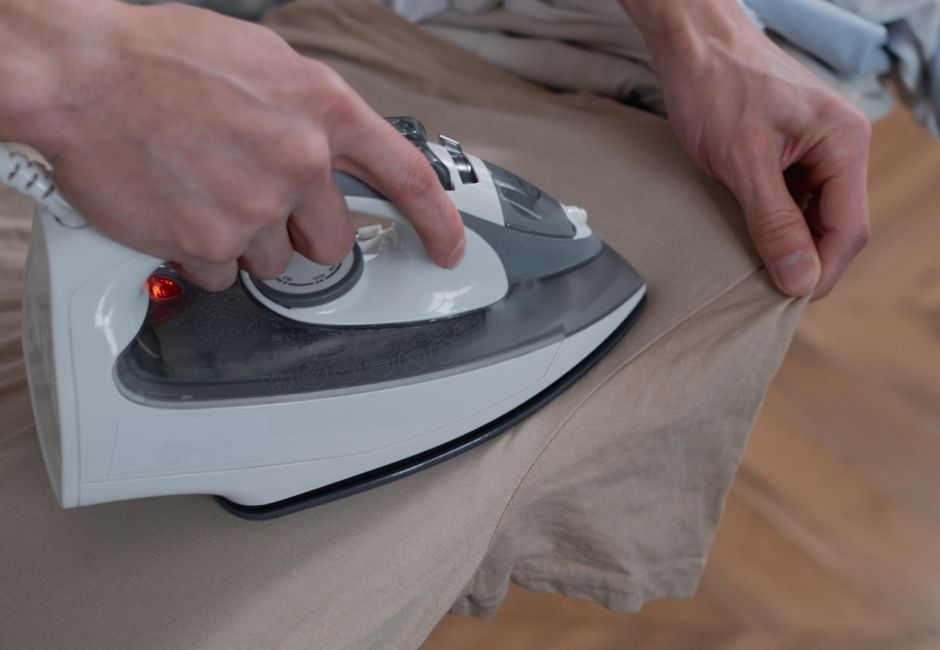
That dent you left in the coffee table when you set down a box too carelessly, or the round mark a chair leg has pressed into the floorboards over the years — none of that has to be permanent. This iron trick needs nothing more than a damp cloth and the iron you already use for shirts, and it can make most of those dents in wood puff right back up almost on their own.
This isn’t an internet myth with no science behind it: it’s a classic trick among furniture restorers and woodworkers, documented by workshops like the Woodworkers Guild of America, who’ve been using it for decades before ever reaching for wood filler.
How to do the iron trick, step by step
- Clean the area of dust and grease, and check whether the wood has a thick coat of varnish or paint on it (if it does, test on a hidden spot first — heat can damage a finish).
- Fold a thin cotton cloth — a kitchen towel works fine — and soak it in water until it’s wet but not dripping.
- Lay the damp cloth directly over the dent.
- Press the iron on top, with steam turned off and set to medium-high heat, for 5 to 10 seconds, moving it slightly so neither the cloth nor the wood scorches.
- Lift the iron, let the cloth cool for a second, then repeat the process 3 or 4 times, checking the dent between passes.
- Let the wood air-dry for a couple of hours. If the grain feels a little rough afterward, smooth it with very fine sandpaper (220 grit) before reapplying wax or oil if the piece normally has one.
On shallow dents, the results can be genuinely surprising: the mark shrinks dramatically, or vanishes completely, after a single round. On deeper dents it might not disappear 100%, but you’ll see a clear improvement.
Why it actually works
Wood isn’t rigid like metal. It’s made of cellulose fibers that behave in a viscoelastic way, meaning they deform more like a squeezed sponge than something that simply snaps. When an object hits wood, it usually doesn’t tear material away: it just crushes and compresses those fibers, leaving them packed down below the surrounding surface. So most dents in wood aren’t actually missing material at all — they’re compressed fiber.
That’s where the water and heat behind the iron trick come in. The steam the iron generates from the damp cloth soaks into those crushed fibers and rehydrates them, softening the wood and letting it regain some of its original elasticity. As the cellulose reabsorbs moisture, it swells and pushes the fiber back up toward its original volume, very much like a dry sponge springing back into shape the moment it hits water. The heat speeds that process along and also helps the water evaporate quickly, before it can soak in too deep.
Where the trick falls short
The trick does have limits worth knowing, so you don’t end up disappointed. It works best when the fiber is compressed but not torn: if the impact actually chipped off splinters or cut across the grain, there’s no fiber left to “reinflate” and the method won’t help. It’s also less reliable on very hard woods or on pieces with a thick varnish coat, which blocks the steam from ever reaching the fiber underneath. And since heat can slightly darken the spot or raise the grain, it’s worth testing on an inconspicuous corner before going at the middle of the dining table.
Best of all, you don’t need to buy a single thing you don’t already own, and this iron trick turns a repair that sounded like “better call a carpenter” into a five-minute fix you can knock out between ironing and your morning coffee. If your kitchen woodware gives you trouble too, there’s a similar fix for pasta pots boiling over: the wooden spoon trick that keeps the water from spilling. So next time someone drops a book on the wood table, you’ll know exactly what to do before resigning yourself to living with the mark forever.