
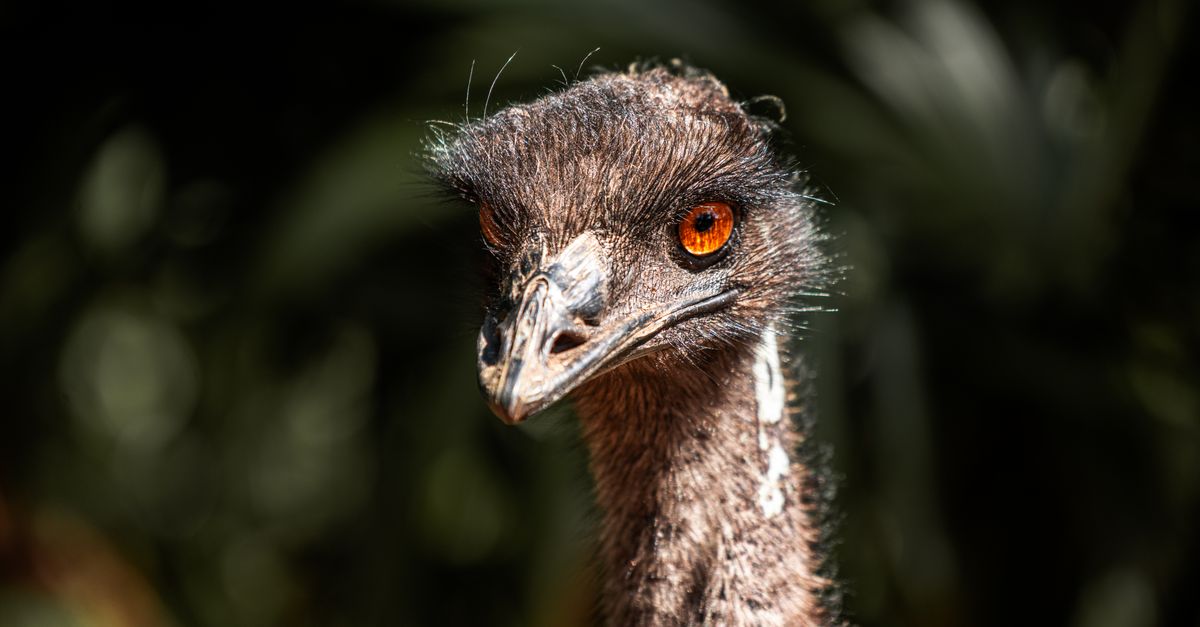
In November 1932, the government of Western Australia waged the Emu War. It sounds like a joke, but it genuinely happened. The government declared war on roughly twenty thousand emus. It sent in the army, armed with machine guns, to sort the problem out. It lost. Not even close.
The backstory is less funny than the outcome. After World War I, the Australian government had settled hundreds of veterans as wheat farmers in the Campion district, out west. It promised them fertile land. What nobody mentioned was that the area had always been an emu migration route. Every year, the birds move inland looking for water and food once breeding season ends. With fresh wheat fields now sitting right in the way, tens of thousands of these giant birds found an all-you-can-eat buffet. These birds stood up to 1.9 metres tall. Together, they tore through fences and entire harvests.
Send in the army: Australia’s Emu War begins
Desperate farmers asked for military help. Defence Minister Sir George Pearce approved sending soldiers armed with two Lewis machine guns and 10,000 rounds of ammunition. He put Major G. P. W. Meredith in command. The plan looked simple on paper: emus travel in groups, machine guns fire fast, problem solved. However, reality disagreed.
Emus turned out to be terrible targets. They don’t run in neat lines like in the movies — they scatter in every direction the moment they’re startled. What’s more, they can hit speeds of 50 km/h (31 mph), faster than any soldier lugging a heavy machine gun could track. In one of the campaign’s most-cited moments, the troops set an ambush near a dam. But the gun jammed after dropping barely a dozen birds. The rest ran off before anyone could reload.
The report that says it all
By the time the campaign wound down in December, with gaps in between, Major Meredith filed an official report. Its numbers sounded generous even at the time: 986 confirmed emu kills using almost all the available ammunition, plus roughly 2,500 wounded birds he claimed would “probably die later.” Historians have since questioned those figures. Independent estimates put the real death toll anywhere from a few dozen to, at most, a few hundred.
What did survive is one of the most quoted lines of the whole affair, attributed to Meredith himself. It compared the emus to the most disciplined infantry: “they can face machine guns with the invulnerability of tanks.” The major reportedly also joked that if Australia had a military division with the emus’ “bullet-carrying capacity,” it could take on any army in the world. The official report closed, fittingly, on a note of unintentional comedy: no soldier was wounded, “except in his pride.”
Officially, nobody declared a winner. Still, the press of the day had no mercy. It coined the name the conflict is still known by: the Emu War. After just a few weeks, the army withdrew without solving the underlying problem. Farmers asked for military help again in 1934, 1943 and 1948. Even so, the government turned them down every single time. The real fix came through a far less cinematic route: a bounty scheme that paid out for every emu culled. In just six months of 1934, more than 50,000 bounties were claimed. Purpose-built fencing, added alongside the bounty scheme, helped keep the birds out of the crops.
Today the episode is a favourite footnote in military history. It’s a reminder that the fanciest weapons don’t always beat an opponent. That opponent, quite simply, refuses to play by the expected rules. In fact, the Emu War wasn’t the only military episode where cutting-edge technology fell short — something similar happened with the ice aircraft carrier that almost changed World War II. As for the emu, it remains the unofficial national bird nobody dared put on an endangered list. It still roams freely across half of Australia, blissfully unaware it once sent an entire army running.
You can read the documented details of this episode on Wikipedia’s entry on the Emu War.