
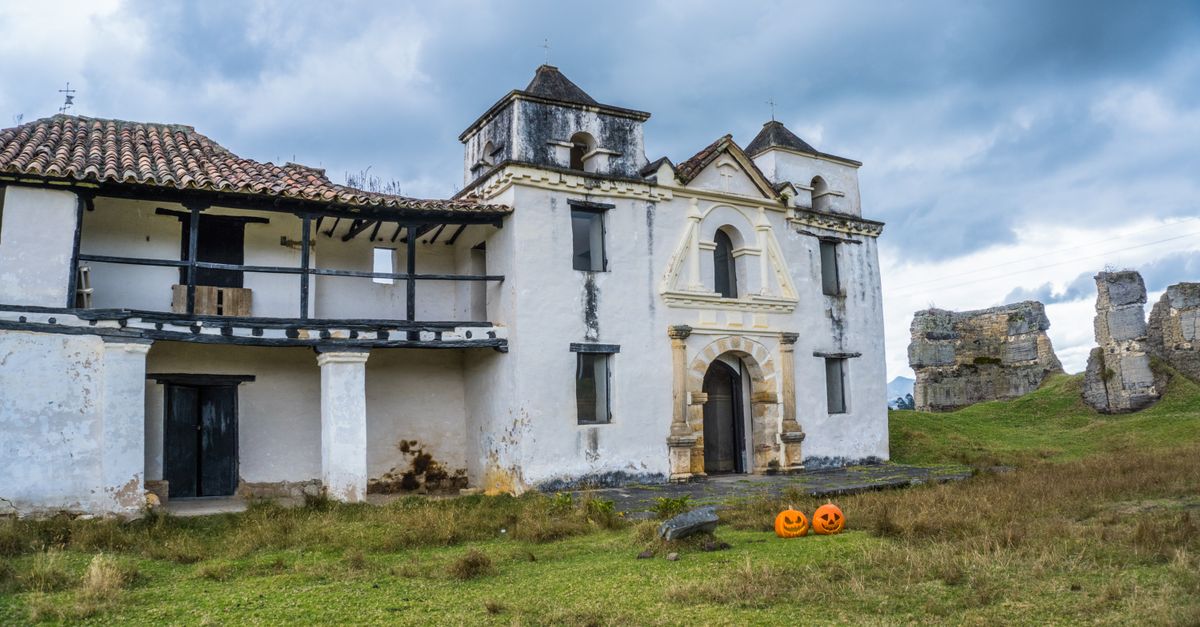
It’s October 31st. At some point tonight, someone is going to scare the living daylights out of you. Maybe it’s a friend jumping out from behind a door, or a cheap small-town haunted house. Or maybe it’s a horror movie you really shouldn’t have agreed to watch. A few seconds later, you’ll be laughing. That seeming contradiction, feeling terrible on purpose so you can feel great afterward, actually has a name in psychology. And, surprisingly, it has an unlikely real-world fear lab dedicated to studying it: an honest-to-goodness haunted house in Pittsburgh.
Inside the fear lab: a haunted house turned research site
It’s called ScareHouse. For most of its life it was, to the public, just another Halloween attraction: dark corridors, costumed actors, cheap jump scares. But sociologist Margee Kerr, who worked there as the house’s resident “fear consultant,” spotted a rare opportunity. Science had barely examined, under real conditions, what happens inside the human brain when people voluntarily choose to be terrified.
Kerr teamed up with researchers Greg Siegle and Rachel Orsini. Together they recruited 262 people who had already bought tickets for the haunted house. A hundred of them wore sensors that tracked brain activity before and after going through. All of them reported their mood at both points, too. The study was published in 2019 in the American Psychological Association’s journal Emotion. It became one of the most-cited references on the subject, in a field the researchers dubbed VANE — “Voluntary Arousing Negative Experiences.”
The finding: walking out happier than you walked in
The headline result was as simple as it is counterintuitive. After 35 minutes of deliberate scares, a large share of visitors left in a better mood than when they arrived. In fact, that was especially true for the ones who’d shown up bored, stressed, or frustrated. The adrenaline spike, combined with the certainty of actually being safe, worked almost like an emotional reset button. Among the people whose mood improved, the sensors also picked up lower brain reactivity on tasks given afterward. The brain came out of the initial shock calmer, not more rattled.
Still, the payoff was even bigger for people who felt the experience had genuinely challenged them. Going in for a mild scare wasn’t the sweet spot. The more authentic the fright, the longer the afterglow of relief and satisfaction lasted. You can read a detailed write-up of the study in this Time magazine feature, which includes comments from the researchers themselves.
Why “safe” fear feels so good
The biology behind it comes down to a quirk of the amygdala, the brain’s threat-detection center. However, it isn’t always great at telling real danger from fake danger. It fires off the same fight-or-flight response, adrenaline and cortisol included, no matter the trigger. A clown jumping out of a closet gets almost the same reaction as something genuinely dangerous. But once the prefrontal cortex confirms there’s no real risk, all that leftover arousal sheds its stress component. It turns into pure euphoria instead, not unlike the rush you get coming down from a roller coaster.
It’s the same mechanism, just scaled down, behind why people enjoy controlled risk sports. The same urge explains why kids beg to be chased “just to be a little scared.” The body gets to practice handling fear in an environment with zero real consequences. That emotional training, what’s more, comes free of charge, wrapped in a handful of fun-size candy bars. It’s a milder cousin, too, of phenomena like the 1518 dancing plague. There, fear and collective suggestion fed off each other among hundreds of people at once, just in a far less entertaining way.
So if someone makes you scream at a Halloween party tonight, thank them. According to the science, you’re probably about to have a better night than if you’d just stayed quietly on the couch.