
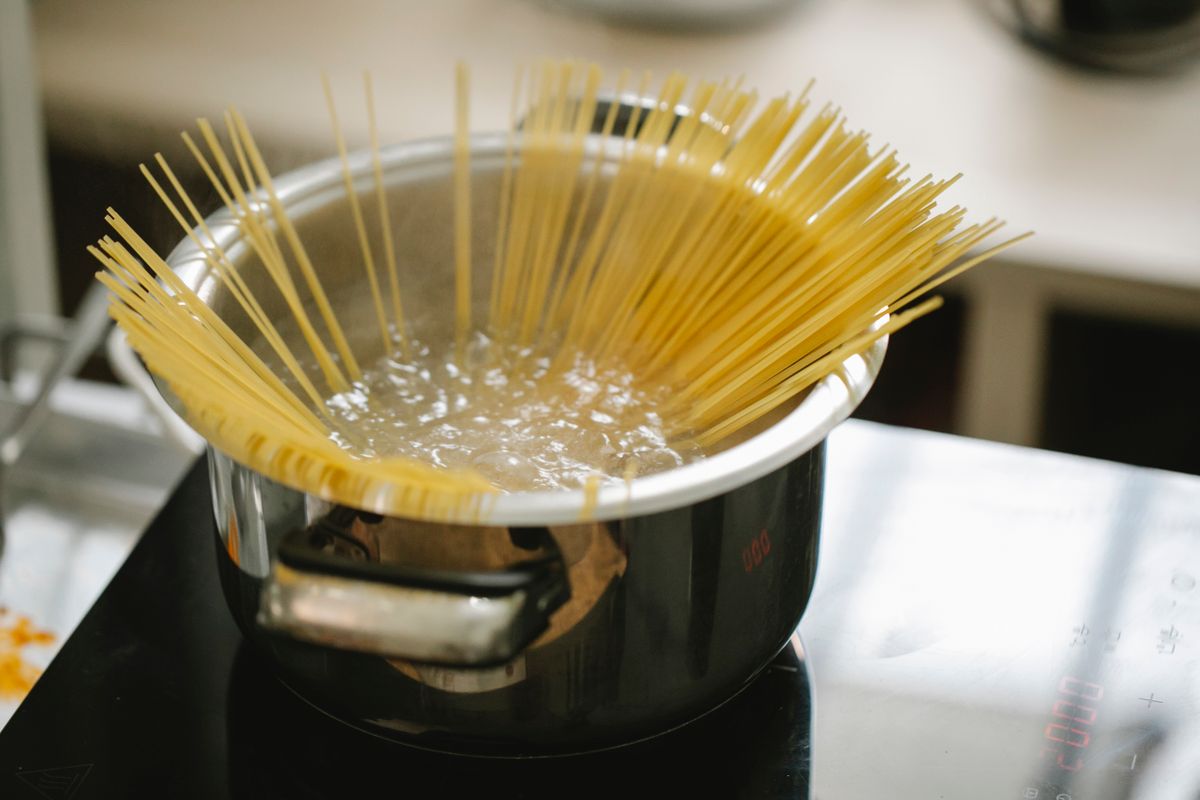
Lay a wooden spoon across a boiling pot and, as if by magic (or rather by physics), the water suddenly stops spilling over the sides. It’s the wooden spoon trick your grandma swore by, and it sounds like pure superstition. However, it turns out there’s solid science behind it, confirmed this year by researchers who actually bothered to test it.
Why the Water Boils Over in the First Place (Hint: It’s Not Just the Heat)
Here’s the part that surprises almost everyone: plain water at a rolling boil doesn’t usually overflow a pot. The real culprit is starch. Once you drop the pasta in, its starch molecules dissolve into the water and form a sticky, gel-like film around the steam bubbles, making them far tougher than ordinary bubbles. Instead of popping the second they reach the surface, the way a clean water bubble would, these “armored” bubbles pile up on top of each other. That’s how they form a foam that climbs the sides of the pot and spills over without warning.
It’s the same reason the water from boiling chickpeas, potatoes, or rice can boil over too: any dissolved starch or protein stabilizes that stubborn foam.
How to Use the Wooden Spoon Trick
- Bring the water to a boil as usual and add the pasta (or beans, rice, whatever you’re cooking).
- As soon as the boil starts picking up intensity, lay a wooden spoon flat across the mouth of the pot, resting on the rim.
- Leave it there while you keep an eye on things; if it seems to stop working after a few minutes, pull it off, give it a shake to dry it out a bit, and set it back down.
- Pair it with turning the heat down slightly if you’re using a small pot — the spoon helps, but it’s not a miracle worker against a raging flame.
Why the Wooden Spoon Trick Actually Works
According to an analysis published by The Conversation, wood has two key properties that make it the perfect tool for popping stubborn bubbles. First, it’s a terrible heat conductor: the spoon’s surface stays cooler than the boiling water. So, when a steam bubble hits it, the vapor inside instantly condenses back into tiny water droplets and the bubble collapses. Second, wood is porous, and since it starts out relatively dry, it “steals” moisture from the thin film wrapping the bubble, breaking the surface tension that was holding it together.
The end result is that the foam climbing up the pot deflates right before it reaches the rim. There is a catch, though: the trick has an expiration date. As the spoon heats up and soaks in moisture, it gradually loses its cooling and absorbing power, so the effect lasts minutes, not the whole cooking time. That’s why it’s still worth keeping an eye on the pot, and swapping in a dry spoon if needed.
What makes this trick so satisfying is that it isn’t just another kitchen myth. It’s a neat example of how the science of everyday materials, in this case something as humble as a chunk of wood, can explain why our grandmothers’ odd little habits actually worked, even if they never knew exactly why. And as a bonus, it saves you from scrubbing down the stovetop.
If you like kitchen tricks with real science behind them, check out the stainless steel trick against garlic smell — another grandma habit put to the test.
1 thought on “Wooden Spoon Trick: Stop Pasta Water From Boiling Over”