
On October 27, the International Astronomical Union’s Minor Planet Center confirmed the discovery of an icy object. For now, it only carries a decidedly unglamorous name: 2026 ED138. It’s not exactly a catchy headline. Still, this little rock might turn out to be one of the largest dwarf planet candidates found beyond Neptune. We haven’t seen one this size in quite a while. And here’s the kicker: it had been hiding in plain sight for more than ten years. In short, a hidden dwarf planet sitting right under the nose of anyone who happened to look up.
Credit goes to astrophysicist Matthew Holman of the Harvard-Smithsonian Center for Astrophysics. He spotted it in some of the very first test images from the brand-new Simonyi Survey Telescope at the Vera C. Rubin Observatory in Chile. The observatory is funded by the National Science Foundation and the US Department of Energy. Astronomer Mario Jurić of the University of Washington then joined in to refine the observations. He also confirmed this wasn’t a camera glitch or just another asteroid drifting through the frame.
Why did nobody spot this hidden dwarf planet sooner?
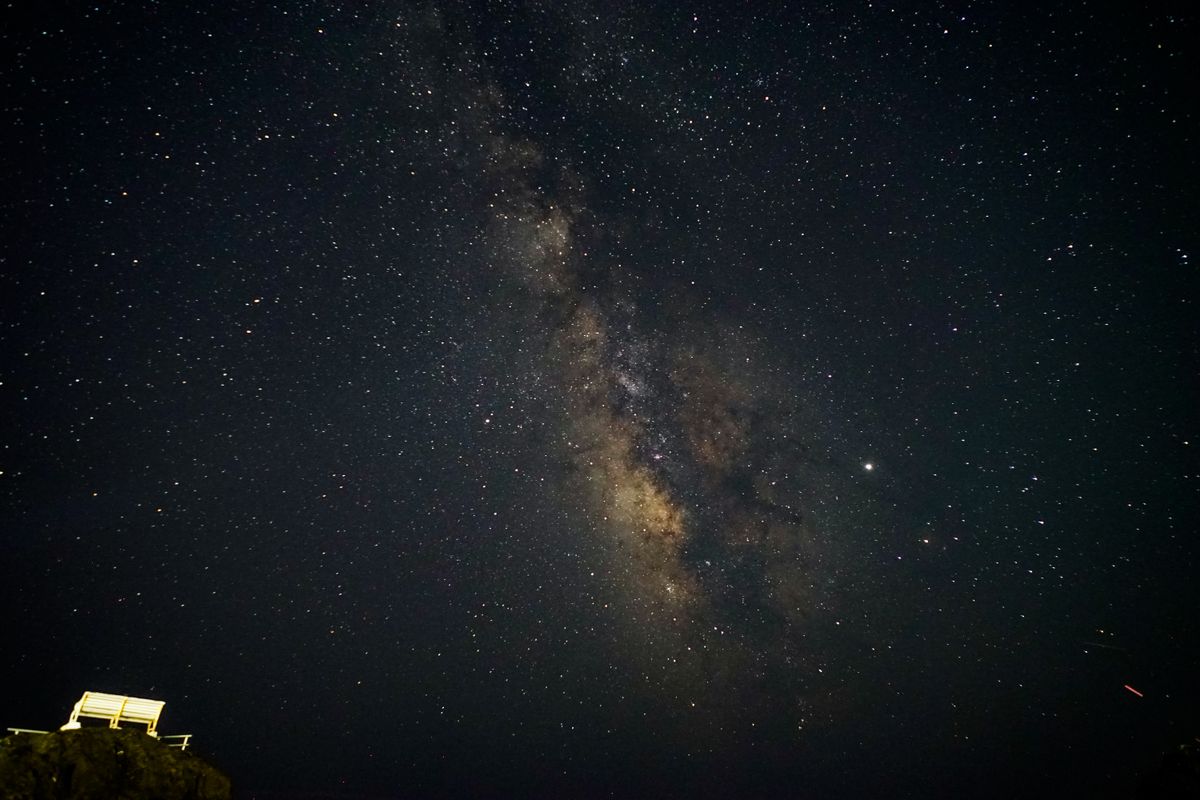
The answer is basically a cosmic joke. 2026 ED138 sits in a patch of sky that lines up with the plane of the Milky Way. That’s the single most crowded stretch of the entire night sky. Hunting for one faint, slow-moving dot among millions of bright ones is quite a challenge. It’s a bit like trying to find a single grey marble on a beach made entirely of colorful marbles. What’s more, those marbles also happen to be shuffling around. Automated sky-survey algorithms tend to avoid that region precisely because it throws up so many false alarms. That’s why the object simply slipped through unnoticed for years.
Once it was flagged, the team did something like pulling up the neighborhood’s old security footage. They dug through archives from other major sky surveys. There they found the object quietly sitting in images going all the way back to 2016. That let them reconstruct more than a decade of its orbit. They didn’t have to spend ten actual years watching it in real time.
A distant cousin of Pluto, but harder to pin down
Right now, 2026 ED138 sits about 46 astronomical units from the Sun. One astronomical unit equals the Earth-Sun distance. That puts it a bit farther out than Pluto, which orbits at an average of 40 AU. Early brightness measurements place it among the largest dwarf planet candidates ever spotted in that region. However, there’s a catch: nobody actually knows its real size yet.
That’s a classic headache in the study of trans-Neptunian objects. From Earth, all we can measure is how much sunlight the object reflects, not its size directly. A small but highly reflective icy rock can look exactly as bright as a much larger, coal-dark one. Until astronomers measure its color and rotation, this hidden dwarf planet stays a “candidate,” not a confirmed dwarf planet. With any luck, they’ll also pin down its diameter more precisely. One way is by timing how it blocks the light of a background star, in what’s called an occultation.
It’s also worth not getting carried away with the words “Planet Nine.” This find will probably stir up fresh chatter about undiscovered giant bodies lurking at the solar system’s edge. Still, the researchers themselves are clear that 2026 ED138 is its own, separate object. In fact, tying it to that hypothetical ninth giant rock is, for now, pure speculation.
We’re only just getting started
What’s most striking is that the Rubin Observatory has only just begun operating. In its first major data release, back in April 2026, it had already uncovered more than 11,000 new asteroids. That happened in a matter of weeks. That number beats anything any other telescope catalogued in a comparable stretch of time. If that was just the appetizer, the coming years of systematic sky-scanning promise plenty more. More long-hidden neighbors should come out of the shadows. Like this hidden dwarf planet, many of them have been sitting there all along. They’re simply waiting for someone to finally point a telescope the right way.
Source: National Science Foundation.