
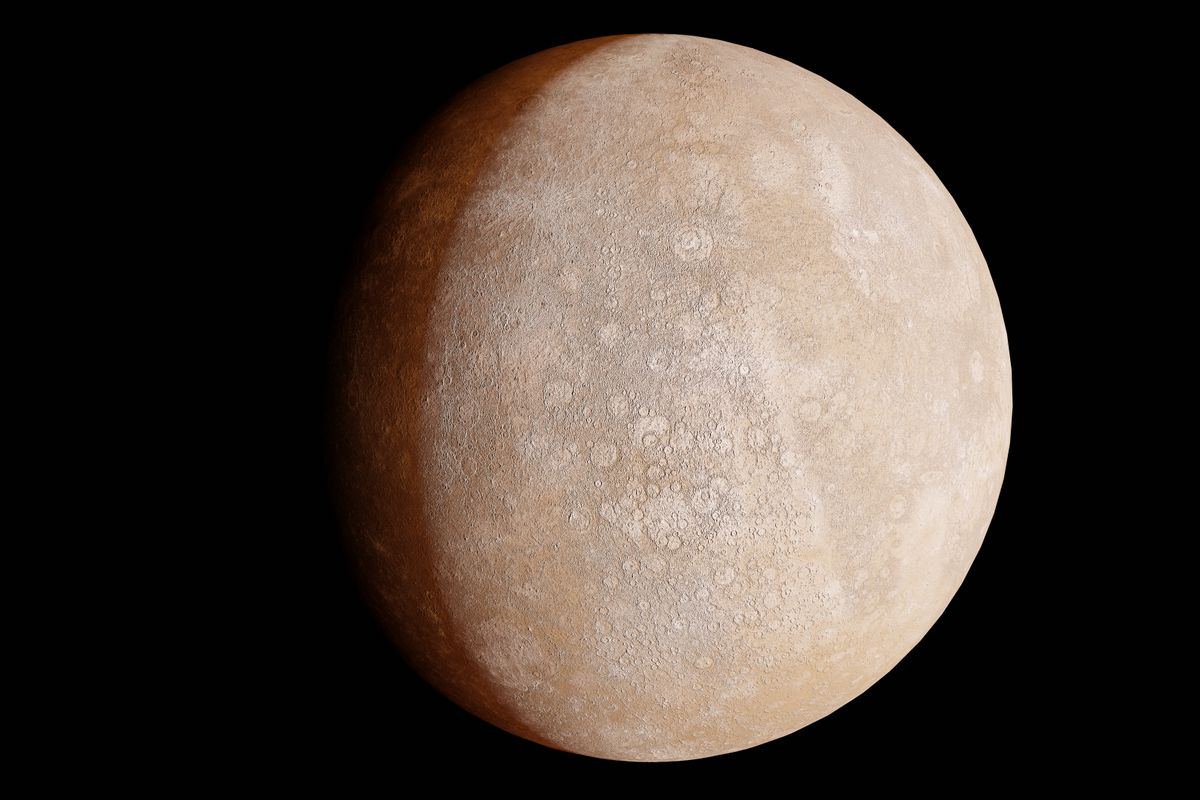
Here’s a fact that sounds like a typo but isn’t. Reaching Mercury is taking the European-Japanese probe BepiColombo almost as long as NASA’s New Horizons took to reach Pluto. And that’s despite Mercury being the planet right next door to us, while Pluto sits out on the solar system’s back porch. New Horizons took nine and a half years. BepiColombo, launched on October 20, 2018, will finally slip into orbit around Mercury on November 21, 2026. That’s over eight years of travel to cross what is, cosmically speaking, four houses down the street.
So why does reaching the closest planet to the Sun take so long? The answer comes down to a paradox that has been driving spacecraft engineers slightly mad since the 1970s.
Nine brake taps: the trick to reaching Mercury
To settle into orbit around Mercury, BepiColombo doesn’t need to speed up — it needs to slow down, a lot. The closer you get to the Sun, the harder its gravity pulls, and the faster you fall toward it. That’s why a spacecraft heading from Earth to Mercury arrives going far too fast to be captured by the planet’s comparatively feeble gravity. Brake too little, and you simply sail straight past it.
The mission’s fix, designed by the European Space Agency (ESA), has been to use the planets themselves as a giant emergency brake. Over its journey, BepiColombo has pulled off nine flybys: one past Earth, two past Venus, and six — yes, six — past Mercury itself. On top of that come long stretches powered by low-thrust ion engines that shave off speed a little at a time. Each flyby “steals” a bit of orbital energy from the spacecraft, the same way you’d tap the brakes repeatedly on a long downhill instead of slamming them once.
A last-minute hiccup
The original plan targeted December 2025. But in September 2024, ESA’s team noticed the spacecraft’s electric thrusters were delivering less push than expected, right before the fourth Mercury flyby. The fix was to stretch the trajectory out by nearly another year to make up for the lost thrust, pushing arrival to November 2026. In early September this year, BepiColombo jettisoned the transfer module that had carried it since launch. That was the last step before the final approach.
Once in orbit, the spacecraft will split into two separate orbiters around December 9-10, each with its own instruments. It’s really two spacecraft bolted together, one European and one Japanese. Neither will be running at full science capacity until March or April 2027: reaching Mercury, clearly, isn’t a sprint — it’s an obstacle-course marathon.
Why it’s worth all the trouble
Mercury is a genuinely strange planet, and we barely understand it. It’s the only rocky planet besides Earth that still has an active global magnetic field. Standard models say it technically shouldn’t have one, since it’s too small and should have cooled off too fast to keep a churning metal core going. On top of that, its core is enormous: it takes up roughly 85% of the planet’s volume, compared to about 15% for Earth’s. Nobody is entirely sure why. Nobody is fully sure, either, why Mercury isn’t even the solar system’s hottest planet, despite sitting closest to the Sun.
BepiColombo will be only the second mission in history to orbit Mercury, after NASA’s MESSENGER probe (2011-2015). It’s carrying sharper instruments to study that magnetic field, map the surface’s composition, and hunt for water ice tucked into polar craters that never see sunlight. If all goes well, within a few months we’ll finally start to understand what’s going on inside that sunburnt, magnetically-impossible neighbor sitting 48 million miles away. For a planet this odd, reaching Mercury the slow way was worth it.