
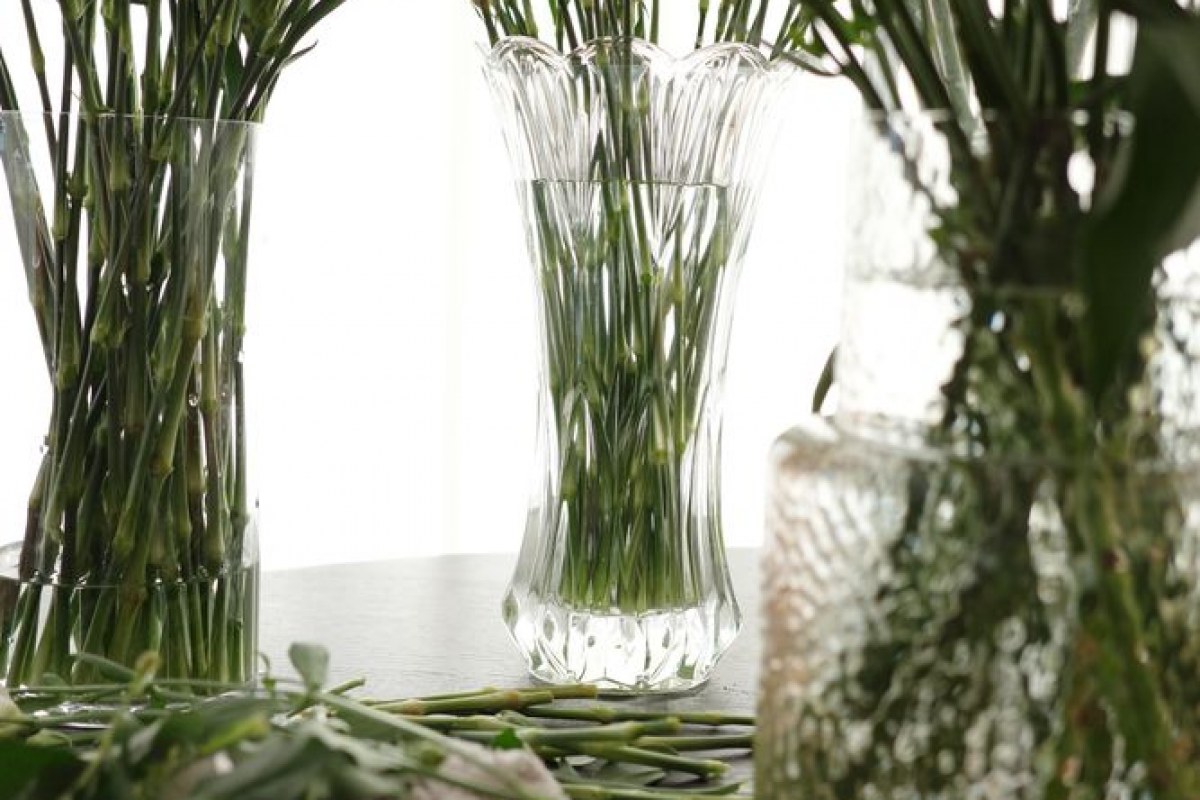
The trick: skip the little preservative packet that comes with the bouquet. What actually keeps cut flowers alive longer is regular lemon-lime soda (never the diet version) mixed with water, plus a splash of bleach. It sounds like a slightly deranged grandma hack, but it outperforms a lot of what’s sold for this exact purpose — and university research backs it up.
How to do it
- Fill the vase with room-temperature water.
- Add regular lemon-lime soda (Sprite or 7Up, never diet — no sugar means no point) at a ratio of about one part soda to three or four parts water.
- Mix in a quarter teaspoon of bleach per liter of solution — it keeps bacteria in check without harming the stems.
- Cut the stems at an angle, about an inch, right before placing them in the water. If you can make the cut under running water, even better: it keeps an air bubble from getting trapped inside the stem.
- Replace the water (with the same mix) every two or three days, and trim the stems a little each time you do.
Why it works
Researchers at North Carolina State University, led by horticulture professor John Dole, tested dozens of homemade flower-preserving recipes against commercial florist preservative. The result, reported by Scientific American, was that regular lemon-lime soda — or, as an alternative, a mix of citric acid and sugar — matched or beat the commercial products.
The reason breaks down into three parts, and all three are basic high-school chemistry. First, the sugar acts as food: a cut flower loses access to its roots, so it stops receiving the carbohydrates it needs to keep its petals firm and keep gradually opening over the following days. Second, the acidity in the soda (citric and phosphoric acid) lowers the water’s pH, which makes it easier for the stem to draw the liquid up — plants pull water more efficiently through a slightly acidic solution than through tap water, which tends to be neutral or a bit alkaline. And third, that’s where the bleach comes in: it controls the bacteria that multiply in standing water and, left unchecked, literally clog the stem’s internal plumbing — the same tissue, the xylem, that carries sap upward in a tree — cutting off the water supply even when the vase is full to the brim.
Dole’s original study, published through the Association of Specialty Cut Flower Growers, tested these formulas on a range of species — lisianthus, snapdragon, stock, and zinnia — and found that both lemon-lime soda and the citric acid-plus-sugar mix (roughly 400 mg of citric acid and 20 grams of sugar per liter) ranked among the best recipes in the whole trial, well ahead of other internet favorites like plain vinegar or crushed aspirin, which barely outperformed tap water.
One important caveat, so nobody goes overboard with the bleach bottle: vinegar and bleach used alone, at high doses over many consecutive days, can actually end up doing more harm than plain water, because they damage the stem’s tissue the same way they’d damage your skin. That’s why the recipe that actually works isn’t “just dump in bleach” — it’s the balanced combination of sugar (food), a mild acid (to help the water travel up), and a touch of antimicrobial (to keep the water from rotting). Which is, essentially, the same chemical formula packed into those little commercial preservative sachets — just made with what’s already sitting in your kitchen.
So next time someone hands you a bouquet and you inevitably lose the preservative packet, reach for the soda instead: it’s cheaper, works just as well or better, and gives you the perfect excuse to finally finish that half-flat bottle of Sprite that’s been sitting in the fridge for days.