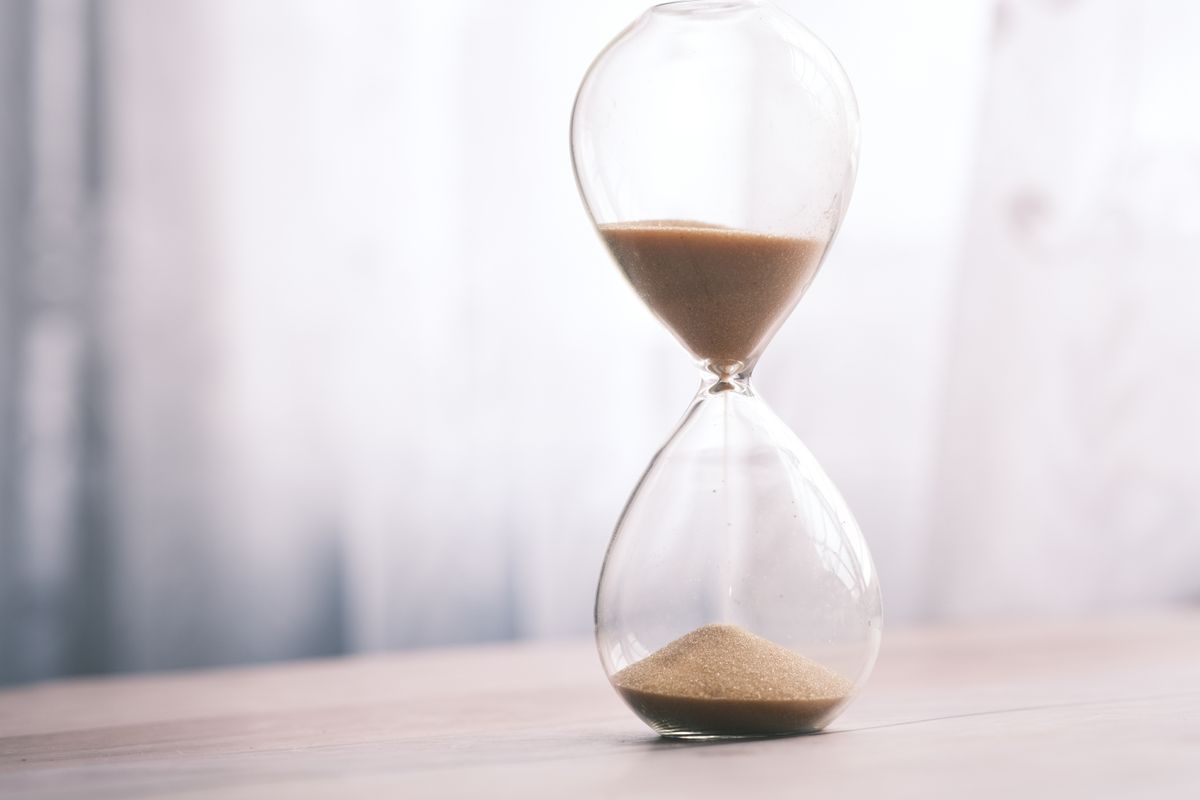
Think about it for a second: that summer when you were eight, with its three endless free months, feels in memory almost as long as the last five years combined. And yet last year, with a full 365 days on the calendar, seems to have lasted about as long as a long weekend. You’re not losing your mind: this is a real, measurable effect with a proper name, and science has spent over a century trying to explain it.
In 1877 the French philosopher Paul Janet proposed an idea so simple it’s almost unsettling: we perceive the length of a stretch of time in proportion to how much life we’ve already lived. For a 5-year-old, a summer is one-fifteenth of everything they’ve ever experienced; for a 50-year-old, that same summer is barely one two-hundredth of their life. The calendar counts the same ninety days for both of them, but the brain weighs them completely differently. This is known as Janet’s Law, and it explains why the decade between 40 and 50 can, subjectively, feel just as “long” as those childhood holidays.
The brain files away the new, not the repeated
That mathematical proportion is only half the explanation. The other half has to do with how memories actually get built. The brain doesn’t record time like a continuous tape — it archives moments, and the more distinct moments it stores from a given stretch, the longer that stretch feels afterward. As kids, almost everything is new — school, friends, riding a bike without training wheels, the taste of an ice cream flavor you’d never tried — so every week leaves behind a pile of mental “snapshots.” As adults, on the other hand, so many days resemble each other (the same commute, the same routine, the same faces) that the brain files them together, almost as if they were one single day. Looking back, a year full of routine takes up far less “narrative space” than a summer full of firsts, even though it objectively lasted longer.
The internal clock slows down too
There’s a third, more biological piece to this: as we age, the speed at which the brain processes visual information gets somewhat slower, partly because our neural networks grow larger and signals have farther to travel. Some researchers compare the effect to a camera recording at a lower frame rate — the fewer “frames” perceived per unit of time, the faster everything seems to fly by when you play the mental recording back later. It’s the same logic, at a different scale, that gives a child’s racing heartbeat more “beats per hour” to live through than an adult’s calmer pulse.
Can you actually slow time down?
The good news is that if novelty is what inflates our sense of time, all you need to do is manufacture more of it. You don’t need to move to another country: learning something you don’t already know, taking a different route to work, trying an unfamiliar dish, or striking up a conversation with a stranger all add fresh “snapshots” to the album. The more distinct experiences you pack into a single month, the longer that month will feel when you look back on it twenty years from now. So the next time a whole year seems to have slipped through your fingers, it’s not just you — it’s proportional math, selective memory, and slightly slower neurons, all working together. You can read more about the theories behind this effect in this Scientific American article.