
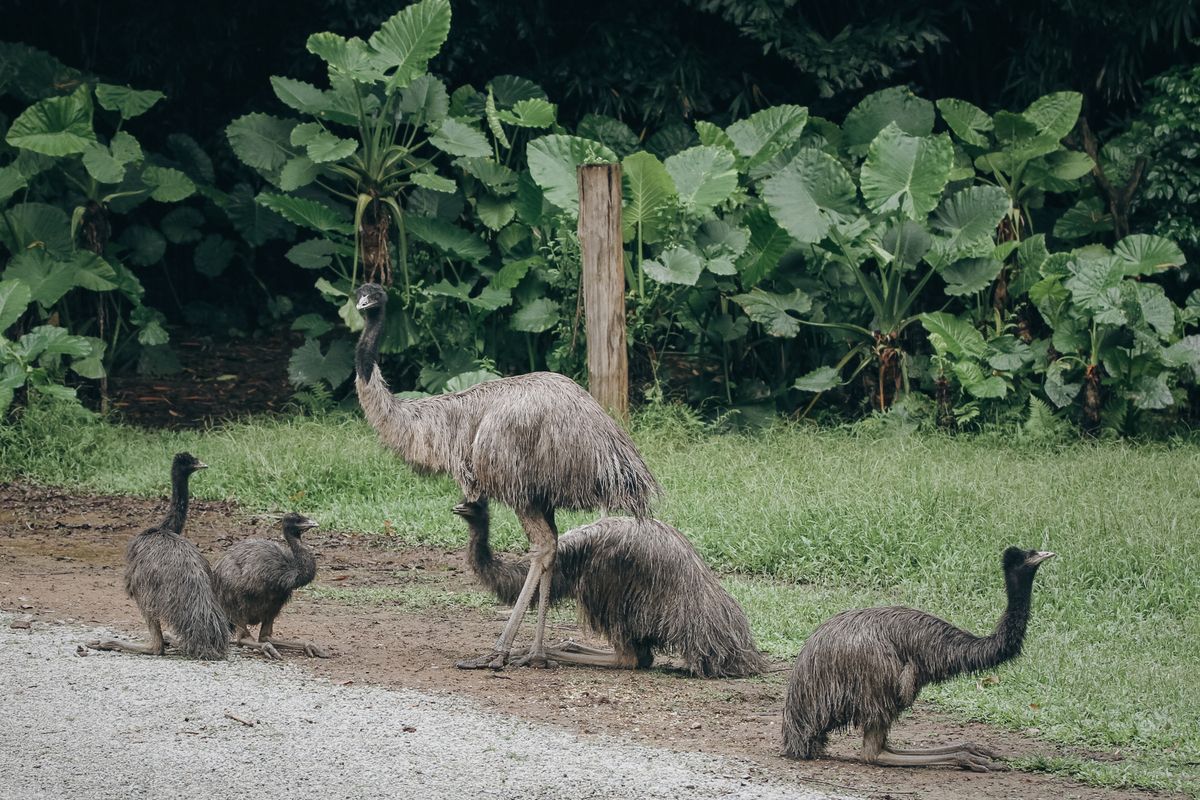
In November 1932, the Australian army went to war against an enemy that carried no weapons, flew no flag, and technically had no idea it was even at war: roughly 20,000 emus. And the army lost. This isn’t an exaggerated internet legend — it’s a real chapter of Australian military history, remembered today, with a completely straight face, as the Great Emu War.
It all started with a very unglamorous problem: farming. After World War I, the Australian government had handed out land in Campion, in the west of the country, to veterans to farm. Unfortunately, they arrived right in the middle of the Great Depression, with wheat prices already in the gutter, and then thousands of emus showed up on their seasonal migration inland in search of water and food. The birds — enormous and endlessly curious — found the freshly planted wheat fields to be an all-you-can-eat buffet and trampled everything in sight.
When you call in the army to hunt birds
Desperate farmers appealed to the government, and someone came up with an idea that looked foolproof on paper: send in the army armed with Lewis machine guns, the very same weapons used in the trenches of World War I. In command was Major Gwynydd Meredith, who was confident a couple of soldiers with automatic weapons could wrap up the job in an afternoon.
Reality had other plans. Standing nearly 1.9 meters tall, emus turned out to be surprisingly difficult targets: they can sprint up to 50 km/h while zigzagging, scatter the moment they sense danger, and if a shot doesn’t land cleanly, they just keep running as if nothing happened. In one of the most talked-about ambushes, more than a thousand emus approached a dam, but the machine gun jammed after downing barely a dozen birds before the rest bolted.
Meredith himself ended up paying the enemy an almost respectful tribute with a line that has gone down in history: “they can face machine guns with the invulnerability of tanks,” he said, comparing them to Zulu warriors that even dum-dum bullets couldn’t stop. After nearly two months of operations, more than 10,000 rounds fired, and fewer than a thousand emus killed out of a population numbering in the tens of thousands, the army officially withdrew from the campaign.
The defeat that made headlines worldwide
The story became a running joke in the international press, and the fiasco was debated in Australia’s own parliament with more than a little sarcasm. One of the few military consolations was that, according to official reports, there were no human casualties — just a good deal of wounded pride. In the end, the government settled on a solution that was far less glorious but a lot more effective: paying bounties to the farmers themselves for every emu they culled. In just six months, around 57,000 bounties were claimed — far more than the entire army managed with machine guns over two months of active campaigning.
Today the Great Emu War is studied as a curious case study on the limits of throwing military solutions at problems that are, at their core, ecological ones. And the emu remains, half-jokingly, a national symbol of resilience in Australia — it even appears on the country’s coat of arms, right next to the kangaroo, as if to remind everyone who actually won that particular fight. You can read more about this bizarre episode over at Britannica.