
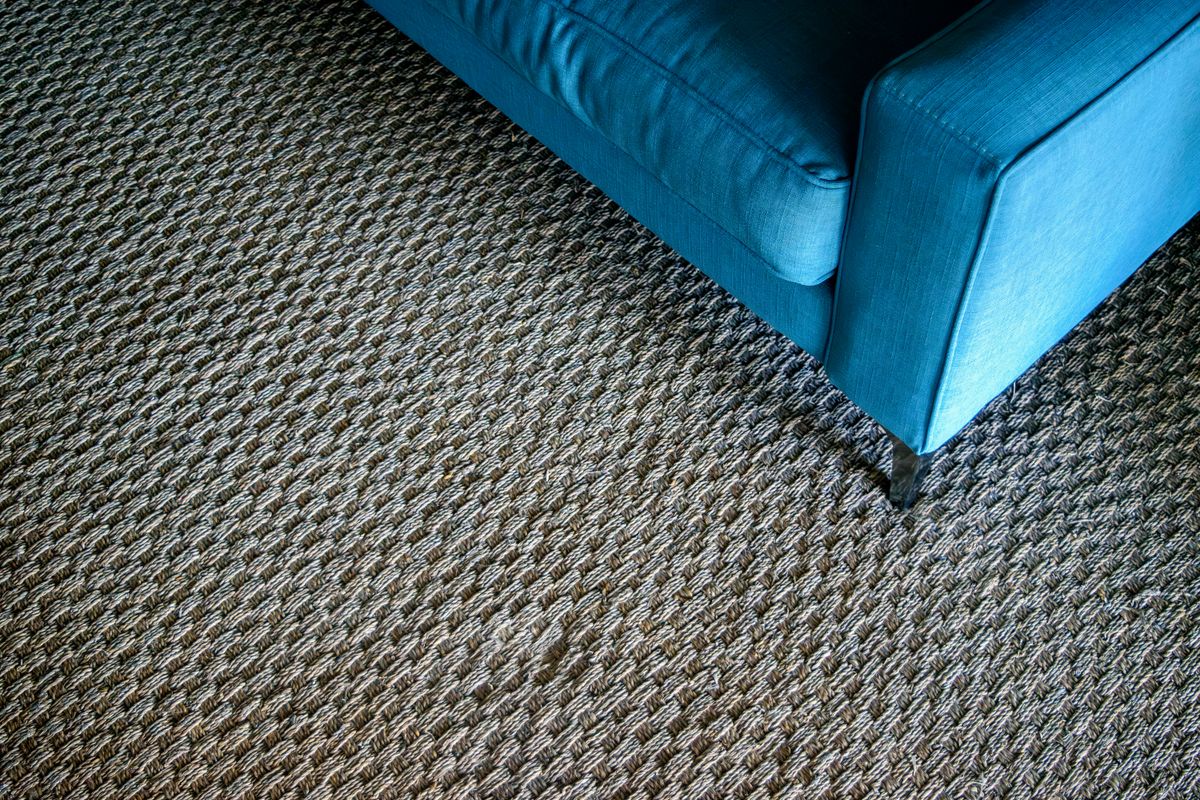
One ice cube. That’s it. That’s the trick that erases those sunken marks left by a sofa, table, or bed leg on your carpet after months (or years) sitting in the exact same spot.
How to do it
- Take a regular ice cube and set it right on top of the dent. If the flattened area is large, use two or three cubes spread across the whole mark.
- Leave it alone for about 8-12 hours (overnight is easiest). The ice will melt slowly, and the water will seep down into the base of the fibers.
- Once the ice is completely gone, blot the spot dry with a towel or paper towel — don’t rub.
- Run the edge of a spoon or a coin against the flattened fibers, gently coaxing them back upright.
- If the dent is deep, finish with a hair dryer on medium heat held about 6-8 inches away, so the fibers dry out already standing tall.
Give it a little while and the dent is pretty much gone, as if the furniture had never lived there.
Why it works
Most carpets and rugs are made from synthetic fibers like nylon or polyester, or from natural fibers like wool. They all share one key property: they’re hygroscopic, meaning they absorb and hold onto water molecules within their structure. In nylon specifically, the amide groups along its molecular chain form hydrogen bonds with water, which makes the fiber swell slightly as it gets damp.
When a heavy piece of furniture crushes a carpet for a long time, the fibers stay compressed and effectively “remember” that flattened shape — a bit like hair that keeps the crease of a ponytail long after you take it out. Water temporarily breaks that memory: as it slowly soaks into the base of the fiber, it makes it more pliable and lets it spring back to its original volume as it dries.
The slow part is exactly what makes it work. Soak the carpet all at once with a wet cloth and you risk the water reaching the carpet’s backing too fast, which can weaken the adhesive holding the fibers in place or, on colored carpets, cause dyes to bleed and leave a visible water stain. An ice cube, on the other hand, releases its water drop by drop over several hours, giving the fiber time to absorb it evenly without flooding the backing underneath.
As Family Handyman explains, the trick works especially well on medium- to high-pile carpets made of nylon or polyester, which are the best at “remembering” their original shape once rehydrated. On very flat, thin-pile carpets, or ones that have been crushed permanently for many years, the results can be more modest, though there’s almost always some improvement.
One practical note: skip colored ice or cubes made from very hard, mineral-heavy water if your carpet is a light color — in rare cases they can leave a faint mineral ring behind as they dry. With regular tap water on a normal high-traffic spot in your home, you shouldn’t run into any trouble.
So next time you shift the sofa and spot those four ghostly footprints in the carpet, you know what to do: before you resign yourself to living with them, give your freezer a shot.