
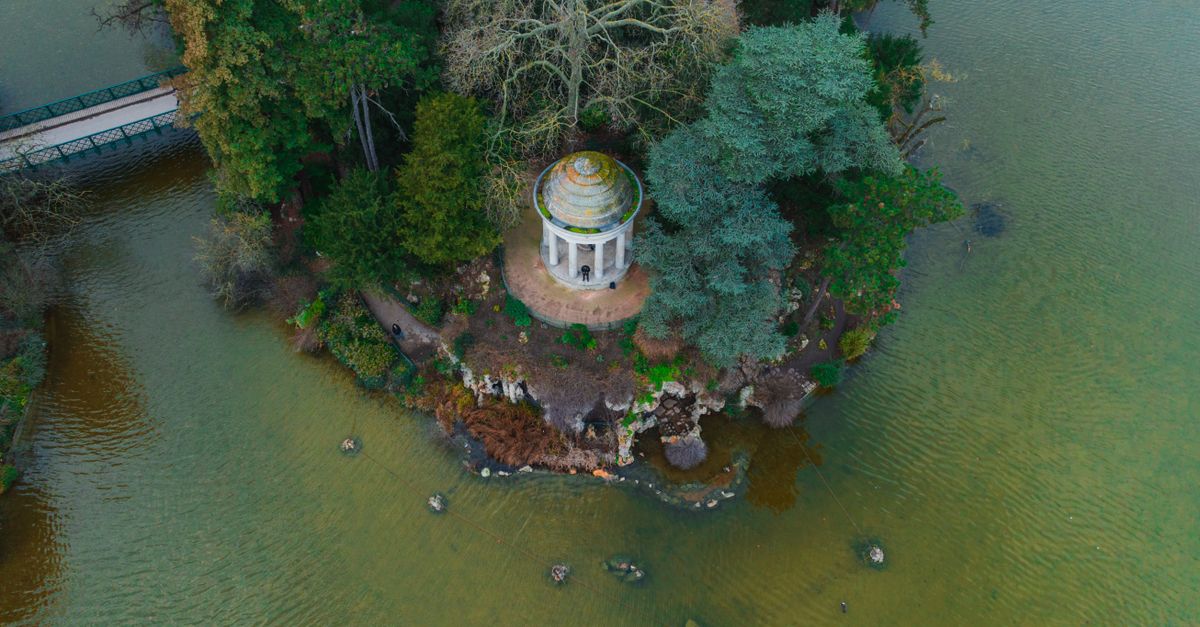
There’s a patch of land in Europe that switches countries twice a year, with no war, no referendum, and barely anyone noticing. It’s called Pheasant Island (or Île des Faisans, depending on whose turn it is), it’s barely bigger than a football pitch, and it has belonged to both Spain and France at once since 1659. It’s not a disputed island — it’s a deliberately shared one, and the arrangement has run smoothly for more than 350 years without a single diplomatic incident.
It sits in the middle of the Bidasoa River, right on the natural border between Irun, Spain, and Hendaye, France, and nobody lives there. In fact, you can’t even visit it: both countries keep it closed to the public. But every six months, something happens there that doesn’t happen anywhere else on the planet.
A split signed to end a war
The island became shared territory after the Treaty of the Pyrenees, the 1659 agreement that ended 24 years of war between Spain and France. Delegations from both kingdoms met precisely on that neutral islet, in the middle of the river, to negotiate and sign the peace — and a year later it hosted another historic moment: the proxy wedding of Louis XIV of France to the Spanish infanta Maria Theresa, sealing the treaty with a royal alliance.
Since neither kingdom wanted to hand the island over to the other, they settled on something unusual for the time: sharing it. Ever since, Pheasant Island has been what lawyers call a condominium — a territory under the joint sovereignty of two states. It’s widely cited as the oldest condominium of its kind still in effect anywhere in the world.
Six months each, ceremony included
The time-sharing arrangement is simple but strictly observed: Spain administers the island from February 1 to July 31, and France takes over from August 1 to January 31. The handover isn’t a quiet affair. Twice a year, officers from the Spanish Navy and the French Navy travel out to the islet, lower the outgoing country’s flag, raise the incoming one, and sign the transfer document, as detailed in the island’s entry on Wikipedia.
In practice, it’s the calmest transfer of sovereignty on Earth: it takes a few minutes, never makes the news, and its only witnesses are usually a handful of military officers and, occasionally, a curious onlooker with binoculars on the riverbank.
A shrinking island
The islet measures barely 200 meters long by 40 meters wide, and its highest point sits under 6 meters above the water. The very river that created it is slowly eroding it away, forcing authorities on both sides to reinforce its banks with retaining walls to keep the current from eventually washing it out entirely. That would be a rather anticlimactic way to end 350 years of peaceful power-sharing — not through conflict, but because the river simply swallowed the disputed territory.
Today the island has no practical use beyond the symbolic, and that’s exactly what makes it so striking: in a world where borders are usually a source of tension, this small sandbank on the Bidasoa proves that two countries can trade sovereignty over the same territory for centuries without anyone fighting over it. All it takes is agreeing once — and then keeping the promise, religiously, every six months.