
It sounds like the tagline for a B-movie, but it’s real, peer-reviewed science: when your diet runs low on fiber, the bacteria living in your gut don’t just quietly starve. They switch menus. And the new main course is you — specifically, the thin layer of mucus that lines and protects the walls of your colon.
The mucus layer nobody thinks about until it fails
Your large intestine is coated in a layer of mucin, a gel-like substance that acts as a buffer zone between the trillions of bacteria living in your gut (your microbiota) and the cells of your intestinal wall. Without that barrier, bacteria would have direct access to the tissue underneath, with a real risk of inflammation and infection. The catch is that this mucus layer isn’t infinite — it’s constantly being produced and broken down, in a balance that depends heavily on what you eat.
When fiber runs short, bacteria change their diet
Researcher Eric Martens and his team at the University of Michigan have spent over a decade studying exactly this. In experiments with mice fed low-fiber diets — the rodent equivalent of a “Western diet” heavy on processed food and light on vegetables, legumes, and whole grains — they found that certain gut bacteria, deprived of their usual food source (the fiber our own bodies can’t digest but bacteria happily ferment), don’t simply vanish. Instead, they start feeding on the proteins and sugars that make up the mucin itself. The result is a mucus layer that gets thinner and thinner, until bacteria end up dangerously close to the intestinal tissue. In the mice studied, this translated into more inflammation and greater susceptibility to infection by opportunistic pathogens.
The unsettling part is that fiber doesn’t need to disappear entirely for this to happen — it just needs to stay chronically low, which describes a lot of typical Western diets, where average fiber intake tends to fall well below recommended levels.
The good news: there’s a bacterium that repairs the damage
This is where the story stops being purely alarming. In a follow-up study published in Nature Communications, the same research group identified an unexpected hero: Blautia, a genus of gut bacteria whose numbers rise when we eat more fiber. Blautia doesn’t nibble on mucus — quite the opposite. It ferments fiber and releases short-chain fatty acids that directly signal intestinal cells to produce more mucin. When researchers transplanted Blautia into mice on a Western diet, the mucus barrier’s function improved noticeably, similar to what happens when those mice receive a full microbiota transplant from a donor on a high-fiber diet.
In other words, fiber doesn’t just stop the “bad” bacteria from attacking your gut lining — it also feeds the “good” bacteria responsible for keeping it repaired. It’s a two-way cycle, and fiber is the switch that decides which way the balance tips.
So what does this mean for your next meal?
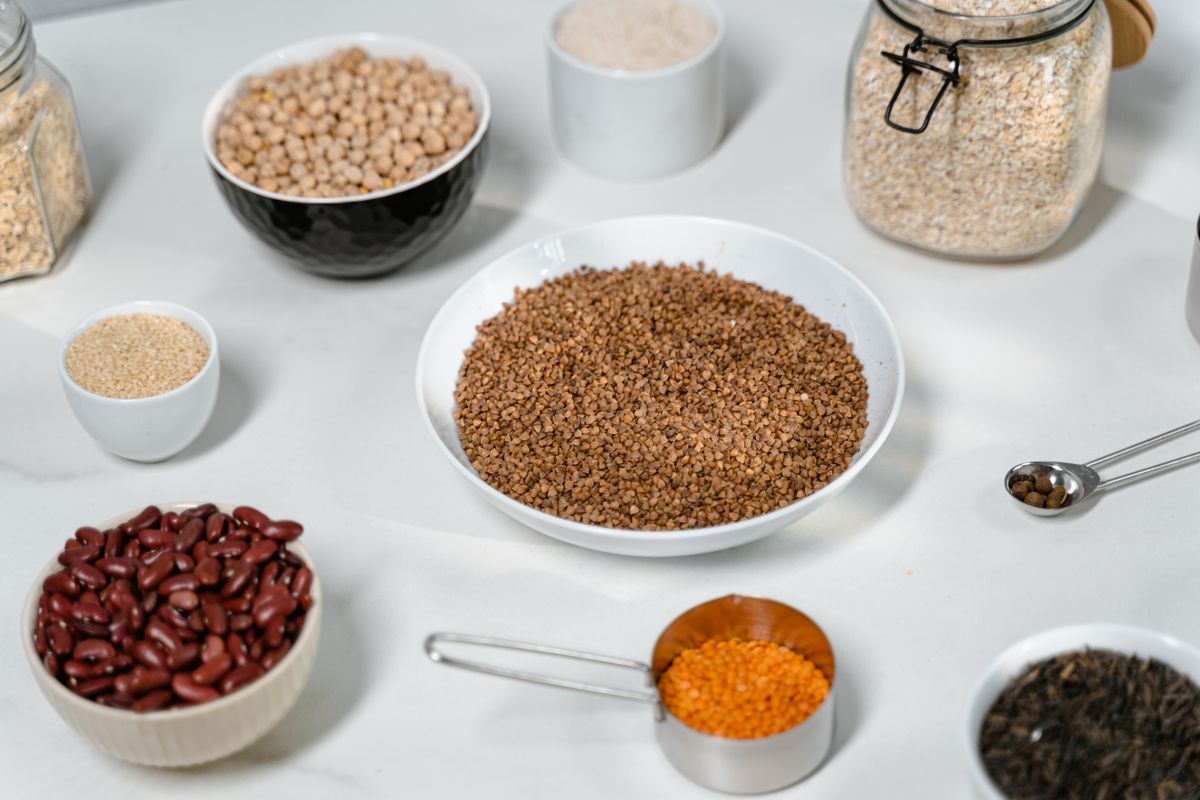
This isn’t a reason to panic — your gut barrier isn’t going to collapse because you skipped a salad one day — but it is a good reminder of why nutrition guidelines harp on fiber so much. Legumes, oats, fruit with the skin on, vegetables, and whole grains aren’t just vaguely “good for digestion.” They’re literally the fuel that keeps the right bacteria fed and the mucin-hungry ones in check — because if you take away their favorite food, they won’t hesitate to try yours.
You can read more about this research in the Michigan Medicine article, the University of Michigan’s medical center where much of this work has been carried out.