
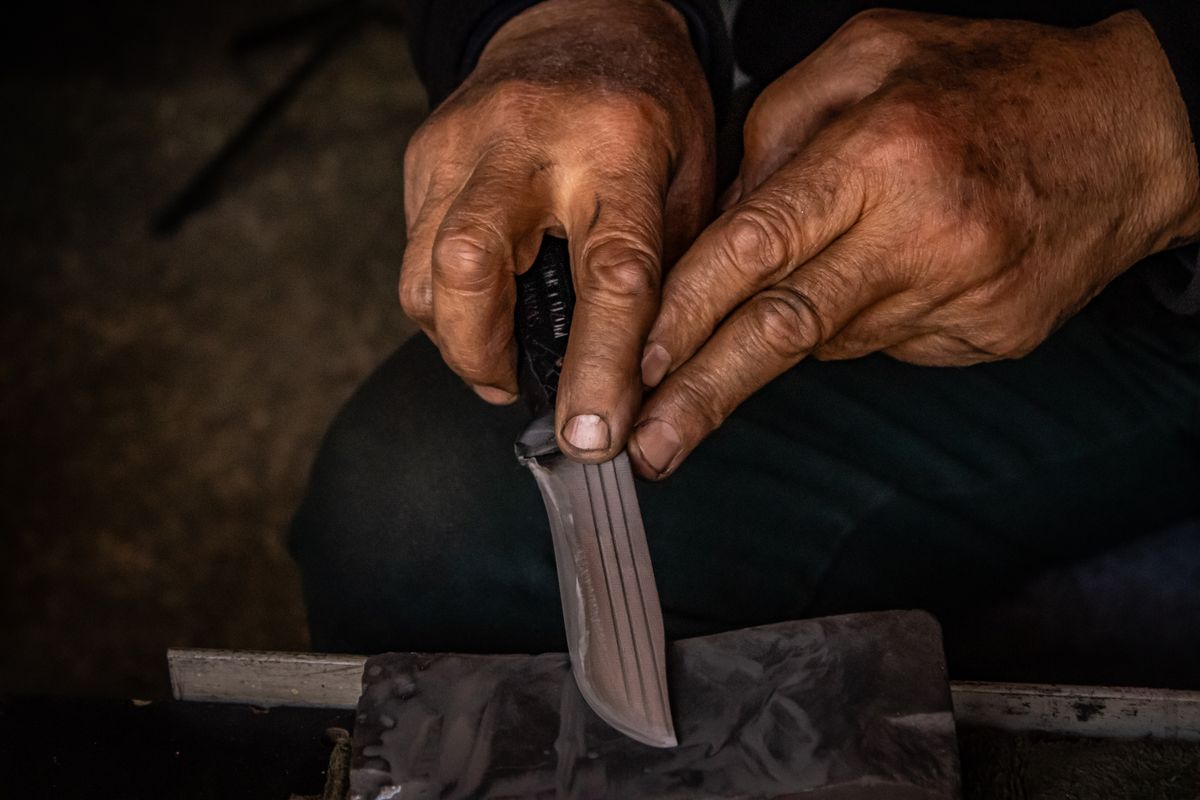
Knife gone dull right as you’re about to slice a tomato, and no sharpening stone in sight? You can sharpen a knife with a mug you probably already own. In fact, all you have to do is flip your coffee mug over. Seriously: the rough ring on the bottom can bring the edge back in under a minute.
This isn’t an internet myth or a shaky grandma-trick with no science behind it. Chefs, knife nerds, and more than a few skeptics have put it to the test. In fact, it genuinely works, with a few caveats worth knowing before you drag your favorite blade across your favorite mug.
How to sharpen a knife with a mug
- Grab any ceramic mug or bowl (skip fine porcelain or glass) and turn it upside down.
- Find the unglazed ring around the base. It looks duller, rougher, and a different shade than the rest of the mug.
- Hold the knife at a low angle, roughly 15-20 degrees against the surface. That’s similar to the angle you’d use on an actual sharpening stone.
- Drag the edge across the rough ring from heel to tip. Do it as if you were shaving off a thin sliver of ceramic: two or three light passes per side is plenty.
- Alternate sides so you don’t push the edge off to one side. Then, test the cut on a piece of paper or a tomato.
Less pressure is better here. In fact, you’re not trying to grind the blade down — you’re letting the ceramic’s natural roughness do the work.
Why it actually works
The reason you can sharpen a knife with a mug is baked into how mugs are made, literally. During firing, ceramic pieces sit on kiln shelves. However, to keep the glaze from fusing the piece to the shelf, potters leave the ring that touches the shelf unglazed.
In fact, that ring stays as raw, exposed ceramic: porous and matte. Most importantly, it’s harder than the steel most kitchen knives are made from.
That combination — superior hardness plus a slightly rough surface — is exactly what a sharpening stone needs to do its job. In fact, it’s a hard material that shaves off microscopic bits of metal and realigns the edge. According to several knife-enthusiast tests, the grit of an unglazed mug ring is roughly equivalent to a 1,000-1,200 grit sharpening stone. In sharpening terms, that’s a fine grit, meant more for polishing and realigning an edge than for rebuilding a badly chipped or damaged one.
That’s why the mug trick won’t replace an actual sharpening stone if your knife hasn’t seen one in months. However, it’s a great emergency fix. It restores that “just sharpened” bite to a blade that’s simply lost some edge from everyday use.
One important detail: it only works on the unglazed part. The rest of the mug, the shiny, colored part, is covered in a smooth glaze. Moreover, that glaze won’t bite into metal at all, and it could actually chip your knife if you keep trying there anyway. Also, be careful with fine bone china or glass, since they’re usually too smooth, or hard and brittle enough that you risk chipping the edge instead of sharpening it.
Still, the same trick works on any plate, bowl, or ceramic tile with that visible unglazed ring. So next time you’re doing the dishes, take a look at what’s sitting in your cabinet. In fact, you might already own half a dozen “sharpening stones” disguised as dinnerware. Still, several outlets that tested the trick agree on one caveat. Don’t expect miracles on cheap knives made from soft steel, and don’t turn your favorite mug into your go-to sharpening tool, since the ring wears down over time too. As House Digest notes in its breakdown of the trick, it works best as quick maintenance between real sharpenings. Meanwhile, it’s not a permanent substitute for a stone.
So next time a bell pepper puts up a fight against your knife, you don’t need to run out and buy a whetstone. However, the fix might have been sitting at the bottom of your kitchen cabinet all along, quietly serving coffee. In fact, you can sharpen a knife with a mug the very next time yours goes dull. If you like these edge-reviving tricks, also check out the aluminum foil trick for dull scissors.