
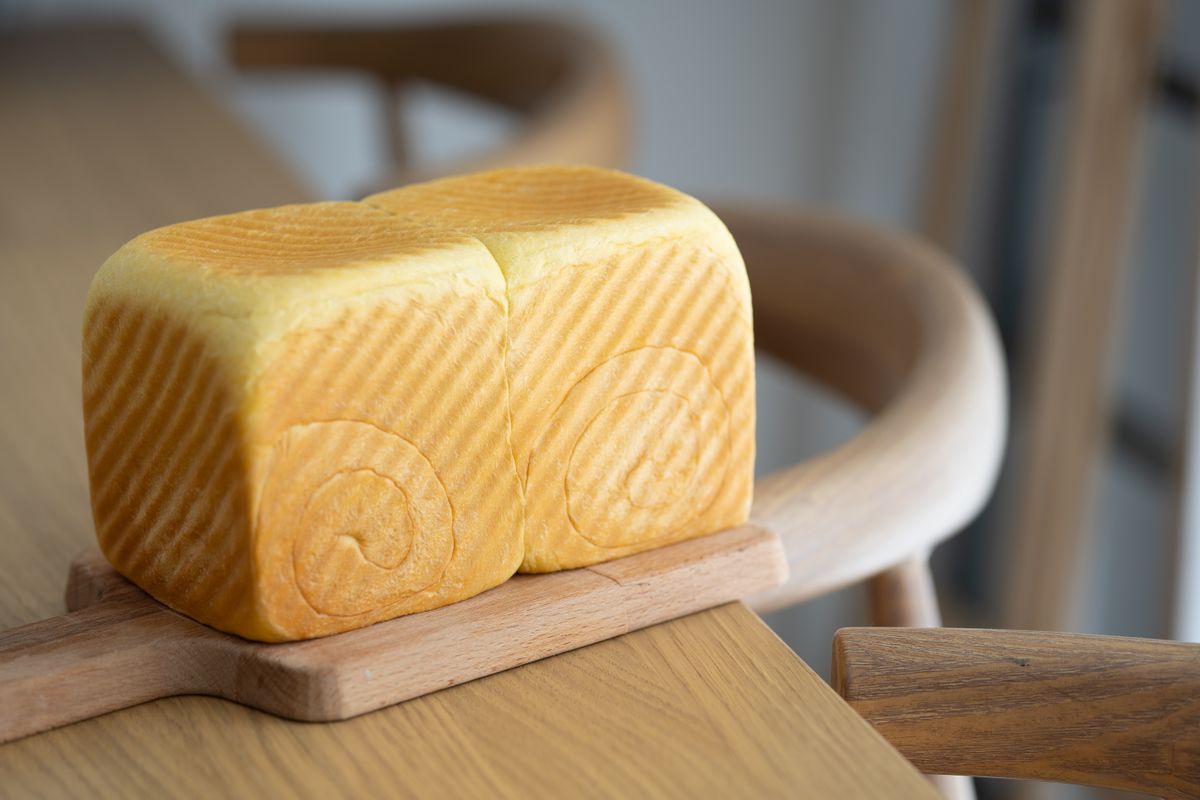
Today’s trick goes against what most families have been doing for generations, but it’s exactly what will help you keep bread fresh for longer: if you want your loaf to stay soft, never put it in the fridge. Moreover, that instinct to “protect” it in the fridge is actually the fastest way to turn a soft loaf into a doorstop.
How to Keep Bread Fresh, Step by Step
- Eating it within 1-2 days: keep the bread at room temperature, wrapped in a paper bag or cloth towel (skip plastic if it has a crusty exterior, since plastic softens the crust and lets moisture collect unevenly).
- Eating it beyond 2-3 days: slice it or cut it in half and freeze it right away in a bag with as much air pressed out as possible. That stops the aging process almost completely.
- Reviving bread that’s already gone stale: wet your hands and lightly dampen the crust, then pop it in the oven at 180°C (350°F) for 5-10 minutes. It brings back much of the original texture, though only temporarily.
- Never stash it in the fridge “just in case,” not even wrapped up. It’s actually the worst possible temperature for storing bread.
Why It Works (or Why the Fridge Ruins Everything)
To really understand how to keep bread fresh, it helps to know what happens to starch when bread bakes: heat and water make the granules swell and burst open in a process called gelatinization. That’s what gives fresh-baked crumb its soft, springy texture. However, as soon as the bread starts cooling, those starch molecules (amylose and amylopectin) begin retracing their steps, slowly reorganizing into more ordered, crystalline structures — a phenomenon food chemists call starch retrogradation. As the starch crystallizes, it squeezes out the water it had trapped, which migrates toward the crust and evaporates. What’s left is dry, hard, crumbly crumb: that’s technically what “stale” bread actually is.
Here’s where the fridge sets a trap: starch retrogradation doesn’t slow down steadily as temperature drops. It has a sweet spot, and unfortunately that sweet spot sits right in the range of a typical home refrigerator, roughly 0°C to 10°C (32°F to 50°F). As The Kitchn explains in its breakdown of the science behind stale bread, that’s precisely the temperature window where amylopectin crystallizes fastest. In fact, food science research backs this up in practice: a loaf stored in the fridge can go stale up to six times faster than the same loaf left out on the counter at room temperature.
Meanwhile, why doesn’t the freezer, which is also cold, do the same damage? Because at temperatures well below freezing (a home freezer sits around -18°C/0°F), water locks into ice so fast and the molecules become so immobilized that starch has almost no room left to reorganize itself into those crystalline structures. Therefore, frozen bread, once thawed and warmed, comes back much closer to its original texture than a loaf that spent a couple of days in the fridge.
The oven trick has its own logic too: reheating bread above the gelatinization temperature lets the starch molecules soak up some of the available moisture and “relax” again, softening the crumb. The effect is temporary — reheated bread goes stale again faster than a freshly baked loaf. Still, it’s enough to rescue yesterday’s baguette before it heads to the bin.
So next time you’ve got half a loaf left over, resist the urge to “protect” it in the fridge — now you know how to keep bread fresh without it. And if your problem isn’t the bread but rock-hard brown sugar in the pantry, this other trick using a slice of bread will save you too. Tomorrow-you, enjoying a much more respectable slice of toast, will thank you for it.