
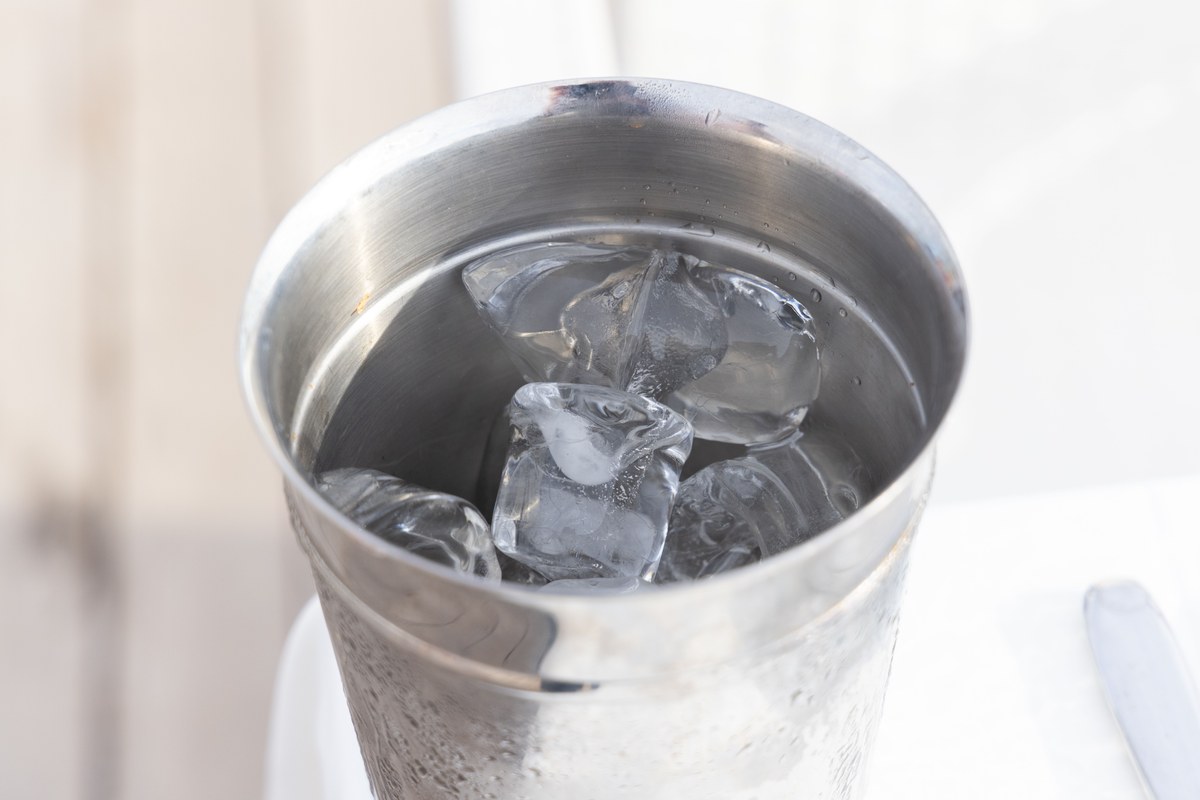
You’ve probably seen the frozen coin trick on social media, especially in the US right before a hurricane or a big snowstorm: fill a cup with water, freeze it solid, then balance a coin on top of the ice. The logic is simple — if you come home after a few days away and the coin is still sitting on top, your freezer never lost power. But if you find it sunk at the bottom of the cup, everything melted (and refroze) while you weren’t looking. It sounds like flawless kitchen-table science. However, the catch is a basic physics loophole almost nobody mentions, and it can hand you false confidence about the exact food you least want to lose.
How to do it
- Fill a small cup or container halfway with water and put it in the freezer.
- Let it freeze completely — overnight is usually enough.
- Set a coin on top of the ice, roughly in the center.
- Put the cup back in the freezer and leave it there for however long you’ll be away.
- When you get back, before touching anything else, check where the coin ended up: on the surface, partway down inside the ice, or at the very bottom.
If the coin turns up at the bottom, it means the ice fully melted at some point and then refroze. That’s a sign the power was out long enough that your freezer stopped being a freezer, so you should probably be suspicious of everything that was inside it.
Why the frozen coin trick isn’t as foolproof as it sounds
Here’s the loophole nobody mentions: ice floats on liquid water because it’s less dense, so a coin resting on the ice’s surface stays put no matter what, unless that ice melts completely. That means if the power outage lasted, say, six or eight hours, and the freezer warmed up without the ice ever fully liquefying, the coin will be sitting exactly where you left it. Yet your food may have spent a good while in the temperature danger zone where bacteria multiply. If you find that kind of counterintuitive water behavior fascinating, you might also enjoy the Mpemba effect, the phenomenon where hot water sometimes freezes faster than cold.
Fact-checking outlets like Snopes have looked into the trick and reached the same verdict: at best, it confirms a total meltdown happened. But it can’t tell you how long the freezer stayed warm or how high the temperature actually climbed — which is precisely what determines whether your food is still safe. In other words, the coin can flag a total catastrophe, but it’s blind to a “moderate” outage that may have already ruined your groceries quietly. It’s an all-or-nothing test, and food safety is rarely that black and white.
What to do instead of trusting the coin alone
Food safety authorities recommend something far less shareable but much more reliable: a plain old fridge-and-freezer thermometer. As a general rule, a freezer should stay around -18°C (0°F), and any food that’s spent more than two hours above 4°C (40°F) should go straight in the trash. Don’t taste-test “just to check” either, since many of the bacteria behind food poisoning don’t change how food smells or tastes at all, so trusting your palate is a real gamble.
None of this makes the frozen coin trick useless. As a free, battery-free early warning that “something major happened” while you were out, it still does its job. But if you actually want to know whether that bag of shrimp or that leftover stew survived a long blackout, the coin won’t fully settle it. A thermometer that costs a few dollars, on the other hand, will. In short, the frozen coin trick works as a first alarm, not as a full food-safety check.