
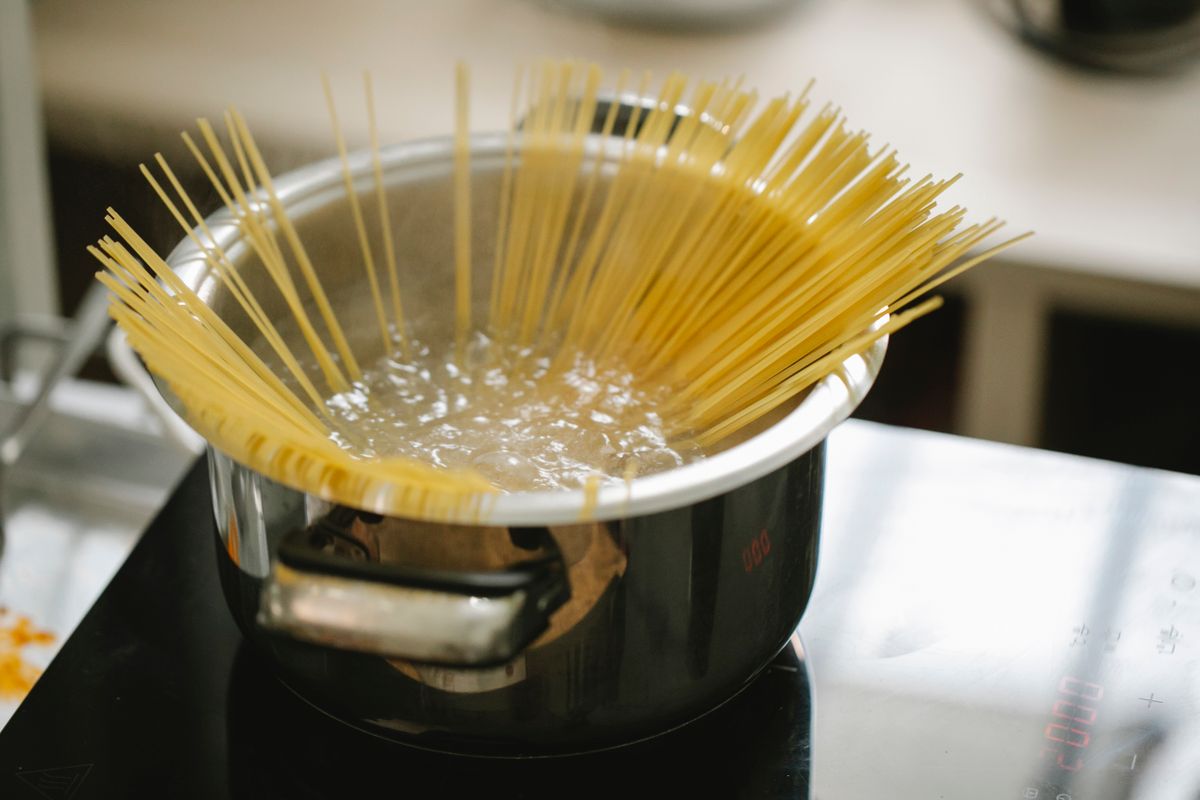
Lay a wooden spoon across the pot while your pasta, rice, or potatoes are boiling, and you’ll buy yourself a few extra minutes before the water climbs over the edge and starts hissing on the stove. This isn’t some baseless kitchen superstition — there’s real physics (and a bit of food chemistry) behind it, and in fact actual experts have bothered to explain why.
How to do the wooden spoon trick
- Bring the water to a boil as usual and add your pasta, rice, or whatever you’re cooking.
- As soon as you see foam starting to build and the water creeping toward the rim, lay a long wooden spoon across the mouth of the pot, resting on the edges.
- Leave it there while things cook, checking on it now and then — the spoon should stay dry on the outside, not dunked in the water.
- If the level starts rising again after several minutes, turn the heat down a notch: the trick slows the overflow, it doesn’t cancel it forever.
That’s really it. No oil, no timers, no standing guard over the pot like a worried sentinel.
Why it works
The real culprit isn’t the water itself but the foam that builds up when you’re cooking something starchy, like pasta, rice, or potatoes. Starch released into the water acts as a natural stabilizer. As a result, the steam bubbles rising from the bottom turn out tougher than usual, so instead of popping right away at the surface, they survive. The result is a foam layer that keeps thickening until it finally spills over the rim.
That’s where the wooden spoon comes in. According to materials engineer Michelle Dickinson, in an explainer picked up by ScienceAlert, wood is a porous material. While dry, it absorbs a bit of moisture and runs cooler than the boiling water around it, so when the foam’s bubbles touch that dry, relatively cool surface, they burst: the steam trapped inside escapes instantly instead of adding to the pile-up. It’s almost as if the spoon is popping the foam, bubble by bubble, every time one brushes against the wood.
There’s a second piece to the puzzle too: because wood is porous, it lets some of the air inside those bubbles leak out on contact, which also helps deflate the foam before it can climb any higher.
How far the trick goes (and why it’s not endless magic)
The spoon isn’t a permanent shield. Once it heats up and soaks up water and starch, it stops being dry and cool, so it loses its bubble-popping power. At that point, it’s basically just a warmer spoon floating on top of your pot. That’s why the effect is temporary, not a magic seal against overflow for the whole cooking time.
For a pot that’s genuinely misbehaving, the tried-and-true fixes still win. Use a bigger pot than you think you need, turn the heat down once it’s at a strong boil, and stir occasionally so the starch doesn’t all pile up at the surface. The wooden spoon trick is a great emergency fix to buy yourself those critical two or three minutes while you finish setting the table — not a substitute for actually keeping an eye on the pot.
The nice part is that a gesture you’ve probably watched someone do in the kitchen your whole life, one that felt like pure folklore, turns out to have a textbook explanation straight out of surface physics. Sometimes the science has been hiding behind the stove the entire time — the same way tapping a ketchup bottle in exactly the right spot gets the sauce out faster.