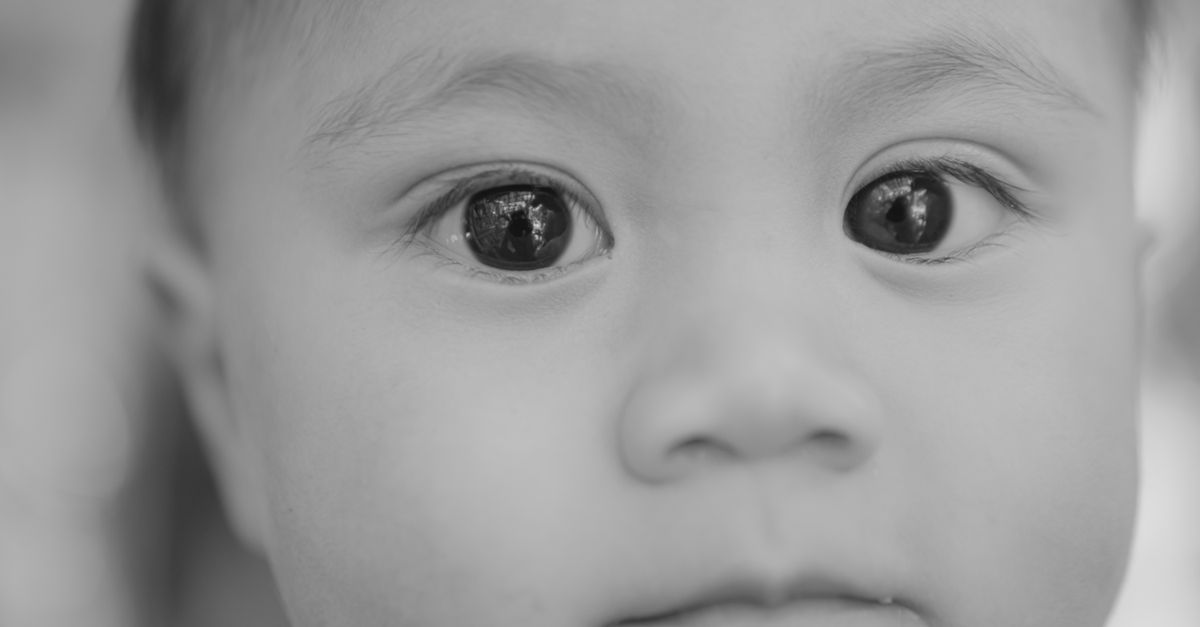
You learned to walk, said your first word, and probably sobbed your heart out the day your parents dropped you off at daycare. These are some of the most intense moments of your life… and you don’t remember a single one. Why does the brain wipe out the first two or three years of existence completely? For decades, the textbook answer was simple: baby memories simply didn’t have the “hardware” to form yet. A recent study from Yale University just turned that idea on its head.
Putting an awake baby in an MRI scanner (without the meltdown)
The technical challenge was huge: to find out whether a baby’s brain records memories, you need to look inside their head while they’re awake, still, and ideally not having a panic attack inside a loud tube. The team led by Tristan Yates and Nick Turk-Browne pulled it off with 26 babies between 4 and 25 months old. They showed the babies images of faces, objects, and scenes while an fMRI scanner tracked activity in their hippocampus, the brain region that acts as the memory filing cabinet in adults.
Afterward, each baby was shown pairs of images: one they had already seen, and one that was brand new. Like anyone recognizing something familiar, the babies stared longer at the image they knew. That extra staring time was the clue researchers used to measure whether something had actually been remembered, published in the journal Science and reported by Scientific American.
Baby memories were real, past a certain age
The result was clear: the more activity a baby’s hippocampus showed while viewing an image for the first time, the longer they stared at it afterward — a sign that it had been memorized. The region involved was the posterior hippocampus, the same one linked to episodic memory in adults (the kind that files away specific experiences: what, when, and where).
Here’s the important catch: the effect was barely detectable in the youngest babies and grew much stronger from around one year of age onward. In other words, the wiring behind baby memories seems to switch on gradually, not all at once at birth. So if you ever doubted your eight-month-old nephew was taking anything in, you were partly right — his mental filing cabinet was still under construction.
So are memories erased, or just missing their key?
This is the question that really keeps neuroscientists up at night. The study doesn’t fully settle it: it makes clear that babies do encode memories, but it doesn’t prove whether those memories:
- get physically erased over time, like a file being overwritten, or
- stay stored away, while the adult brain simply loses the ability to find the “key” to retrieve them.
Previous animal studies point toward the second option: in young mice, memories that appeared “forgotten” could be artificially reactivated in the lab, suggesting the trace was still intact in some drawer of the brain. If the same turns out to be true in humans, your first birthday party might technically still be “in there” somewhere, just without access to the unlock code.
The Yale team already has a long-term follow-up underway, with families recording a weekly video of their babies’ lives while the infants get MRI scans every three months. The goal is to catch, in real time, the exact moment a memory forms — and later, the exact moment it stops being accessible.
In the meantime, next time someone tells you “you don’t remember because nothing important happened,” you now have the scientific ammunition to reply that it absolutely did happen — baby memories and all. If you’re curious about other ways your brain quietly runs the show, check out why you can’t tickle yourself: your baby hippocampus, for what it’s worth, worked harder than anyone has ever given it credit for.