
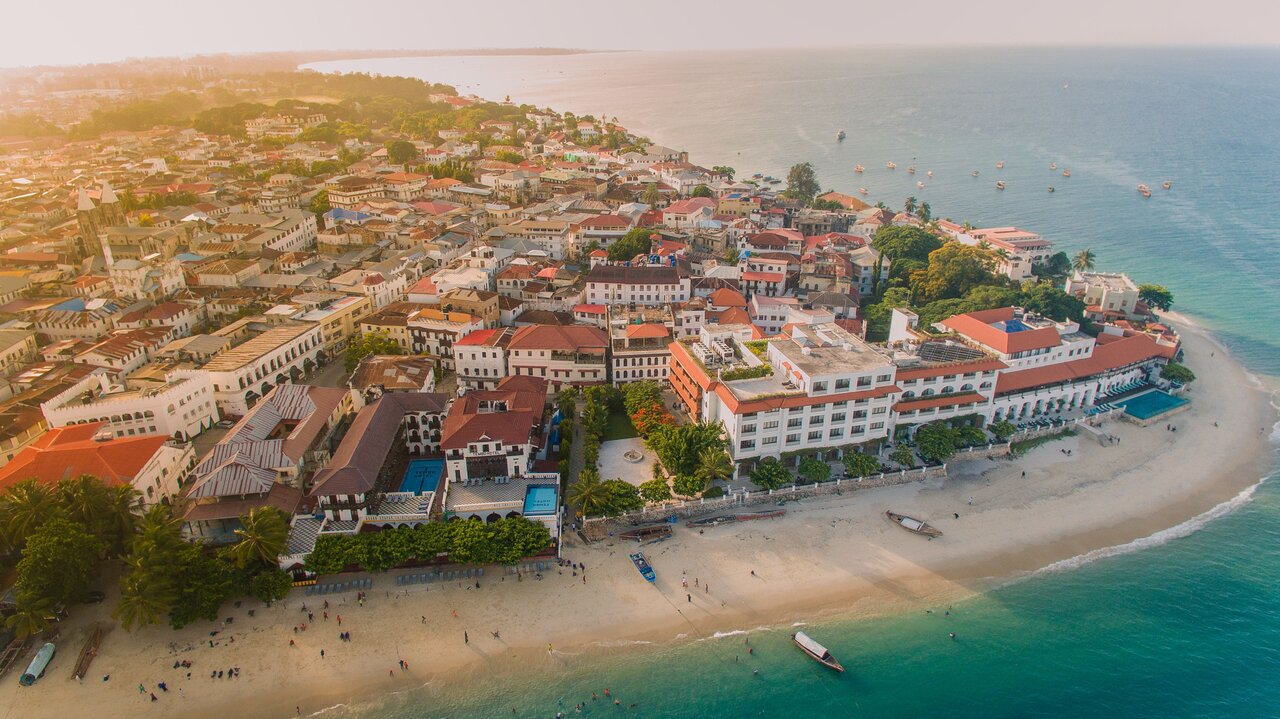
Some wars drag on for years, others for decades. Then there’s this one: the 38-minute war between Britain and Zanzibar, a conflict that started, got decided, and ended in less time than it takes to watch an episode of your favorite show. On August 27, 1896, historians consider it the shortest recorded armed conflict in history — somewhere between 38 and 45 minutes, depending on the source. Not even enough time to pop popcorn.
Zanzibar, an archipelago off the coast of what is now Tanzania, was at the time a British protectorate with its own sultan, though London kept a very close eye on who sat on that throne. On August 25, 1896, Sultan Hamad bin Thuwaini died. The British had seen him as a convenient, easy-to-manage ally. The trouble started hours later, when his cousin Khalid bin Barghash declared himself sultan without waiting for British approval — a direct violation of an earlier treaty requiring the UK consul’s sign-off on any succession to the throne.
An ultimatum with a built-in clock
Unsurprisingly, the British were not amused. Consul Basil Cave demanded Khalid leave the palace and drop his claim. Khalid, instead, dug in with roughly 2,800 men, a handful of aging cannons, and a royal yacht hastily repurposed as a warship, the HHS Glasgow. Waiting in the harbor were five Royal Navy ships carrying vastly more modern firepower.
The British ultimatum came with an exact deadline: 9:00 a.m. on August 27. Khalid didn’t budge. At 9:02, the Navy’s guns opened fire on the sultan’s palace. In little more than half an hour, the wooden structure had been reduced to rubble, and the royal yacht sank on the very first shot. By around 9:40, the sultan’s flag had come down and the fighting was officially over. The only British casualty was a single injured sailor. On Zanzibar’s side, however, the numbers vary by source — most historians cite around 500 dead and wounded, mostly palace guards and civilians caught in the crossfire.
The back-door escape
While the first shells of this 38-minute war were still landing, Khalid bin Barghash didn’t stick around to see how the story ended. He slipped out of the palace mid-bombardment and took refuge in the German consulate next door, which was considered neutral territory at the time. British forces surrounded the building but couldn’t storm it without violating German sovereignty. So for days there was an almost absurd standoff: warships training their guns on a consulate while the deposed sultan sat inside sipping tea. Germany eventually smuggled him out of the country by sea, and Khalid lived out his exile first in German East Africa, later getting captured by the British themselves during World War I.
After the surrender, Britain installed its preferred candidate all along, Hamoud bin Mohammed, who was far more willing to take orders from London. One of his first acts as sultan was the formal abolition of slavery in Zanzibar in 1897 — a meaningful change, even if it came courtesy of a government installed at gunpoint.
Why does this 38-minute war still get remembered?
Beyond the novelty of the stopwatch, the episode has become the go-to example in record books for showing just how lopsided a military mismatch can be, decided before the fighting even really starts. There was no strategy, no trenches, no grand battles: just an ultimatum, a miscalculated response, and a colonial power with vastly superior artillery willing to prove the point in minutes. According to the Historical Association, much of what we know about the exact sequence of events comes from British naval reports of the time. That explains why the version of events that survived is, inevitably, the winners’ version.
If this one left you wanting more, don’t miss the Emu War, another real-life conflict just as absurd, where Australia came out on the losing end against a flock of birds. So next time someone complains that a work meeting “went on forever,” remind them that in 1896 an entire country lost this 38-minute war in less time than that meeting took. Given the choice, staying in the conference room sounds like the better deal.