
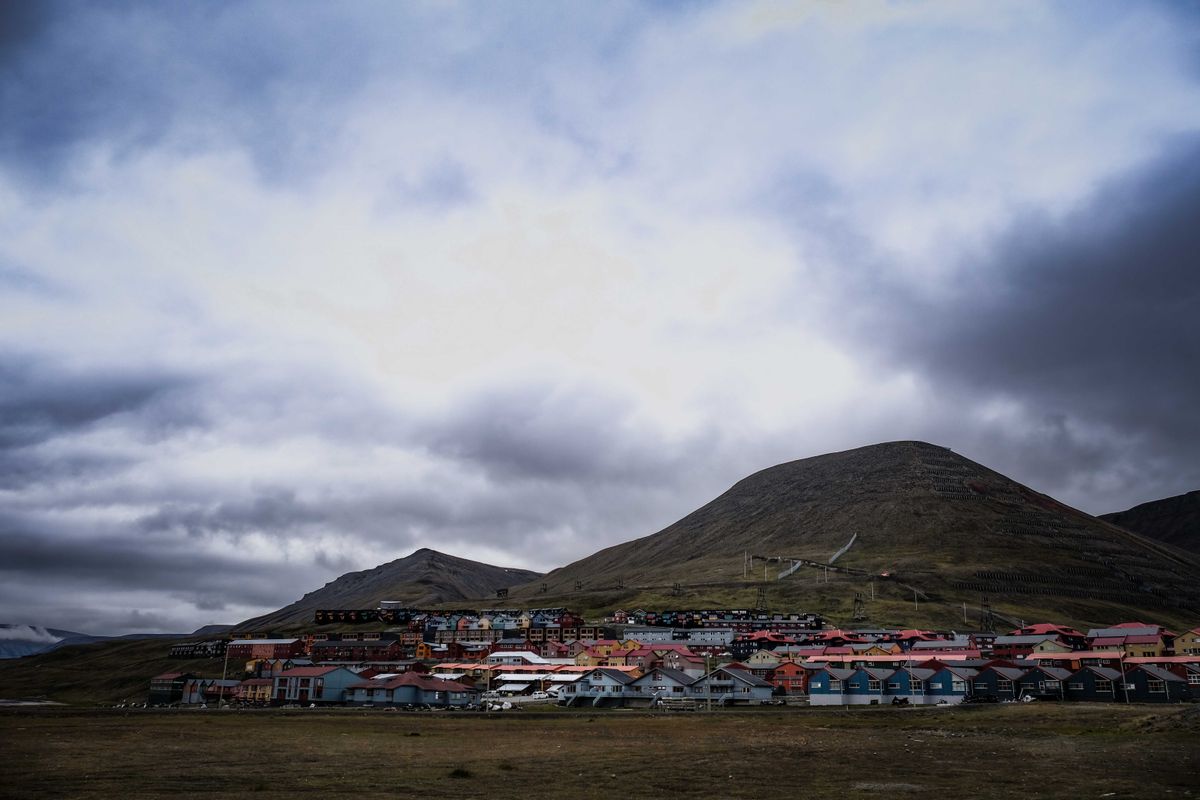
There’s a headline that’s been floating around the internet for years, and it sounds like a tasteless joke. People say you can’t die in Longyearbyen, the northernmost town on Earth with more than a thousand residents. Yes, really. However, spoiler: it’s not quite true. Still, the real story behind the myth is even stranger than the urban legend.
The myth: why you can’t die in Longyearbyen
Longyearbyen is the capital of the Norwegian archipelago of Svalbard, just over a thousand kilometers from the North Pole. There’s no actual law fining you for dying there. It is true, though, that since 1950 the town’s cemetery hasn’t accepted any new “residents.” If someone falls seriously ill or is about to give birth, authorities usually fly them to mainland Norway. The destination is typically Tromsø, reached before things get too far along in either direction. So it’s not a legal prohibition in the strict sense — it’s more of a strongly worded suggestion. In fact, practically everyone follows it, as Polarpedia explains — the EU-funded polar science outreach portal.
The real reason: permafrost won’t let anything decompose
The reason has nothing to do with mystery or legislation — it’s plain physics. The ground in Svalbard is permafrost, soil that stays frozen year-round, permanently. A body buried there doesn’t decompose the way it would in any ordinary cemetery. Instead, the cold mummifies it, freezing it almost in place, suspended in time. In theory that shouldn’t be a problem… until someone remembered exactly what had been buried there since 1918.
That year, the Spanish flu killed eleven people in what was then a coal-mining settlement. All of them were buried in the local cemetery. Nobody thought much of it for decades. In the 1990s, though, a team of scientists led by Canadian researcher Kirsty Duncan asked themselves a genuinely unsettling question. If permafrost can preserve mammoths for millennia, could it also have preserved the 1918 flu virus inside those bodies?
What scientists found when they dug them up
In 1998, an international team from six countries traveled to Svalbard and exhumed the graves of several miners. The bodies weren’t quite as pristine as hoped, because the permafrost had fluctuated more than expected over the decades. Even so, the researchers still pulled genetic fragments of the 1918 flu virus from the victims’ bodies. They found it in the lungs, the liver and the brain. It turned out to be one more piece of the puzzle. Not long after, it helped other scientific teams reconstruct the genome of one of the deadliest viruses in modern history. It was the same virus that killed tens of millions of people worldwide.
Ever since, Longyearbyen’s cemetery has remained closed to new burials. Still, that’s not just a health precaution, either. Nobody’s especially keen on some future generation having to dig up frozen surprises a century from now.
A town with more than its fair share of odd rules
And while we’re at it, it’s not only that you can’t die in Longyearbyen: the town doesn’t stop at just one oddity. Authorities require anyone leaving the town limits to carry a rifle or another serious means of scaring off polar bears. It’s not for show: across the whole Svalbard archipelago there are more bears than people. There are roughly 3,000 bears versus just over 2,500 residents. Meanwhile, in the same way you can’t really die “permanently” in Longyearbyen, being born there isn’t simple either. The local hospital isn’t equipped for high-risk deliveries, so many expectant mothers also end up flying to the mainland weeks before their due date.
All of it, once again, comes down to the same mix of extreme isolation and a climate that doesn’t forgive mistakes. Meanwhile, other remote Norwegian towns have had to adapt in equally striking ways. In Rjukan, for instance, residents installed giant mirrors just to get sunlight onto the town square in winter.
So next time someone tells you that you can’t die in Longyearbyen, you’ll know exactly how to respond. Technically, you can die there just fine — what you’re not allowed to do is stay underground forever.
1 thought on “Why You Almost Can’t Die in Longyearbyen”